

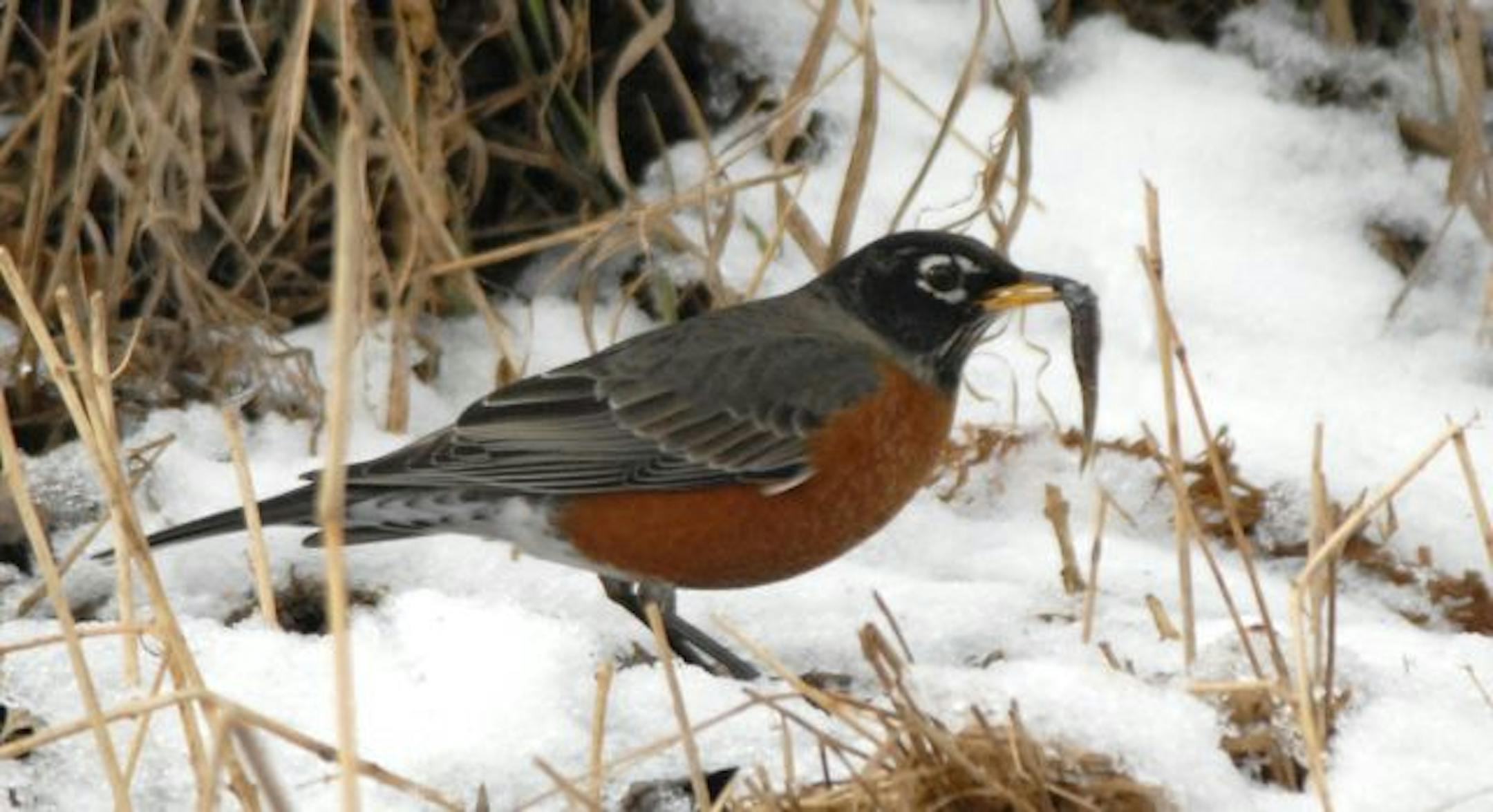
Q I feel sorry for a robin visiting my back yard. I bought some dried mealworms to feed him but what else can I do to help him?
A In wintertime, the robin diet is made up primarily of fruit. In the natural world in our area, this generally means hackberry, buckthorn, crabapple and mountain ash fruits. Robins don't often visit feeders, since their diet is made up of so much wild food. But studies of robin diets suggest their first choices are dark blue and red fruits, so try offering raisins, currants, dried or frozen blueberries and craisins. You could place fruit on the ground near where the robin perches, or on a platform feeder.
You could also offer small pieces of suet or bird pudding. Robins can be opportunists and even have been reported eating frozen minnows on shorelines and seed under feeders.
Mourning dove concerns Q A mourning dove is sitting in the snow under my feeder. Isn't this unusual?
A Mourning doves are year-round residents in our area. If they can find grains to eat (cracked corn is a favorite) and water to drink, they can withstand the winter in good shape.
Homemade seed mixes Q I'd like to mix up my own finch feeding mix. Do you have any suggestions?
A Goldfinches are big fans of those little black needles called nyger seed, and they snap up small chips of sunflower seed, as well. Buy 5 or 10 pounds each of nyger seed and sunflower chips, mix them together, store in a cool place, and you have an ideal diet for goldfinches. House finches use their larger beaks to crack open black-oil sunflower and safflower seeds. No need to mix these for house finches, just offer one or the other, or both, in a feeder.
Where do hawks sleep? Q We have a number of red-tailed hawks in our area and a red-tailed hawk nest close to our house. Do they sleep in their nests in winter?


