

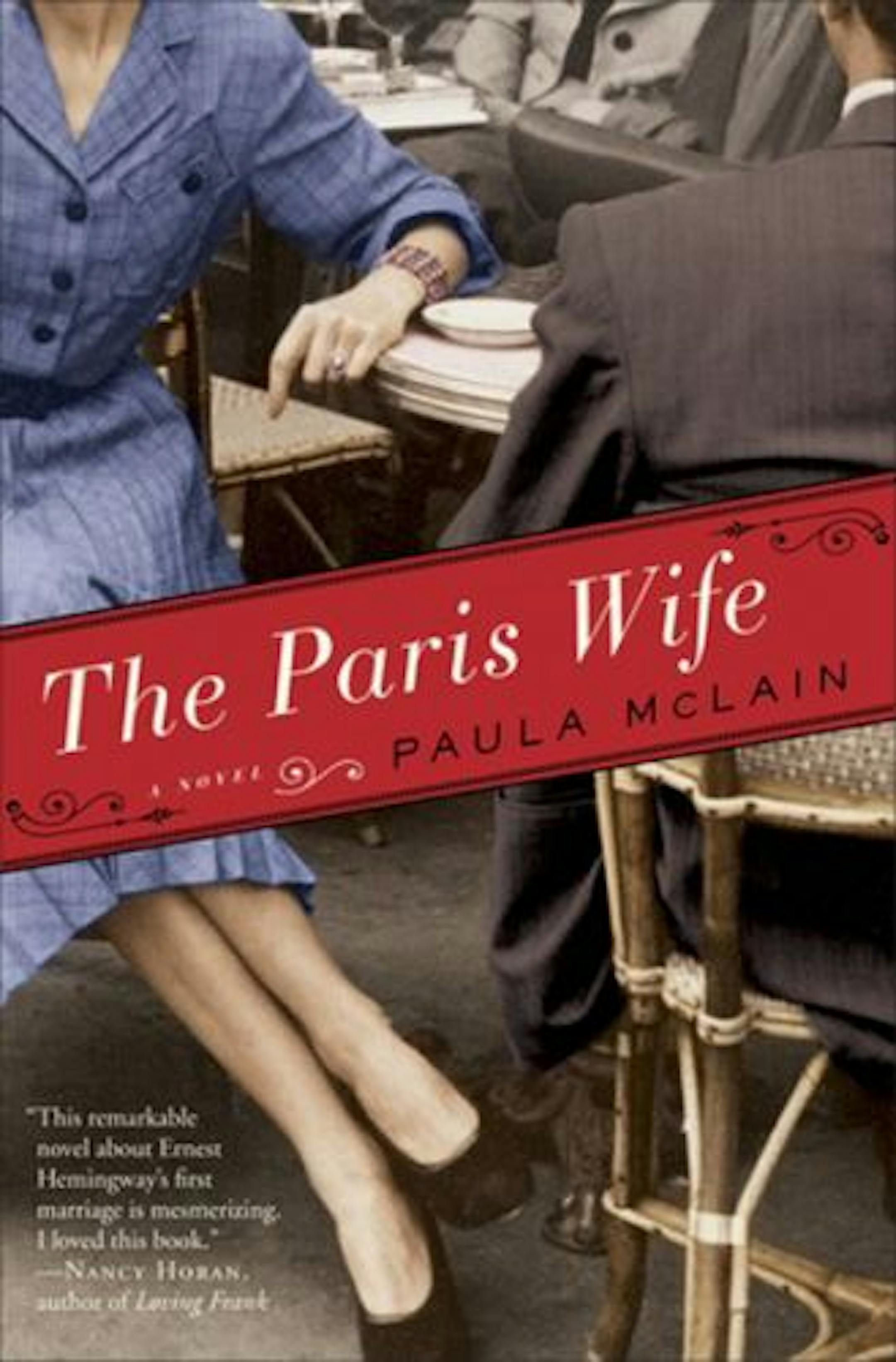
Even the most committed Ernest Hemingway fan must concede that the author couldn't have been an easy husband.
Between late-night carousing, a dogged writing schedule, the flirtations and full-on affairs, Hemingway would have driven the most patient woman to fits.
It is high time someone told the story of Hadley Hemingway, first spouse of the legendary author, and Paula McLain's novel, "The Paris Wife," does so. Told in Hadley's voice, it takes readers into the heart of the woman who was muse, helpmate and mother to the famous war correspondent's first son.
Sure, purists and scholars will be wary of a fictional reenactment of the marriage, but McLain's gangbusters writing forces doubts to dissolve by page three.
Hadley didn't stand a chance when she met the much-younger Hemingway at a Chicago house party. Her dreary St. Louis upbringing and the recent suicide of her father (irony: both families had their share of unnatural deaths) made her all the more susceptible to the attentions of the carnival-like man who changed her life instantly and forever.
The newly married duo set off for the 1920s Paris, which Hemingway chronicled in "A Moveable Feast," at a time when, he wrote, they were "young and nothing was simple there, not even poverty, nor sudden money, nor moonlight, nor right and wrong nor the breathing of someone who lay beside you in the moonlight."
McLain draws upon a dizzying number of sources and her research is methodical, yet here's the best part: At the start, Hadley's voice smacks of the small-world primness of a sheltered young woman. As time goes by and Hemingway's influence grows, so, too, does Hadley's metamorphosis into the Paris wife who uses the distinctive vernacular of her husband. Of course, lovers always influence each other's parlance over time, but this detail, quite subtle, is masterful.
Your heart will break when Hadley travels by train from Paris to Lausanne and loses a valise full of her husband's early work, carbons and all.


