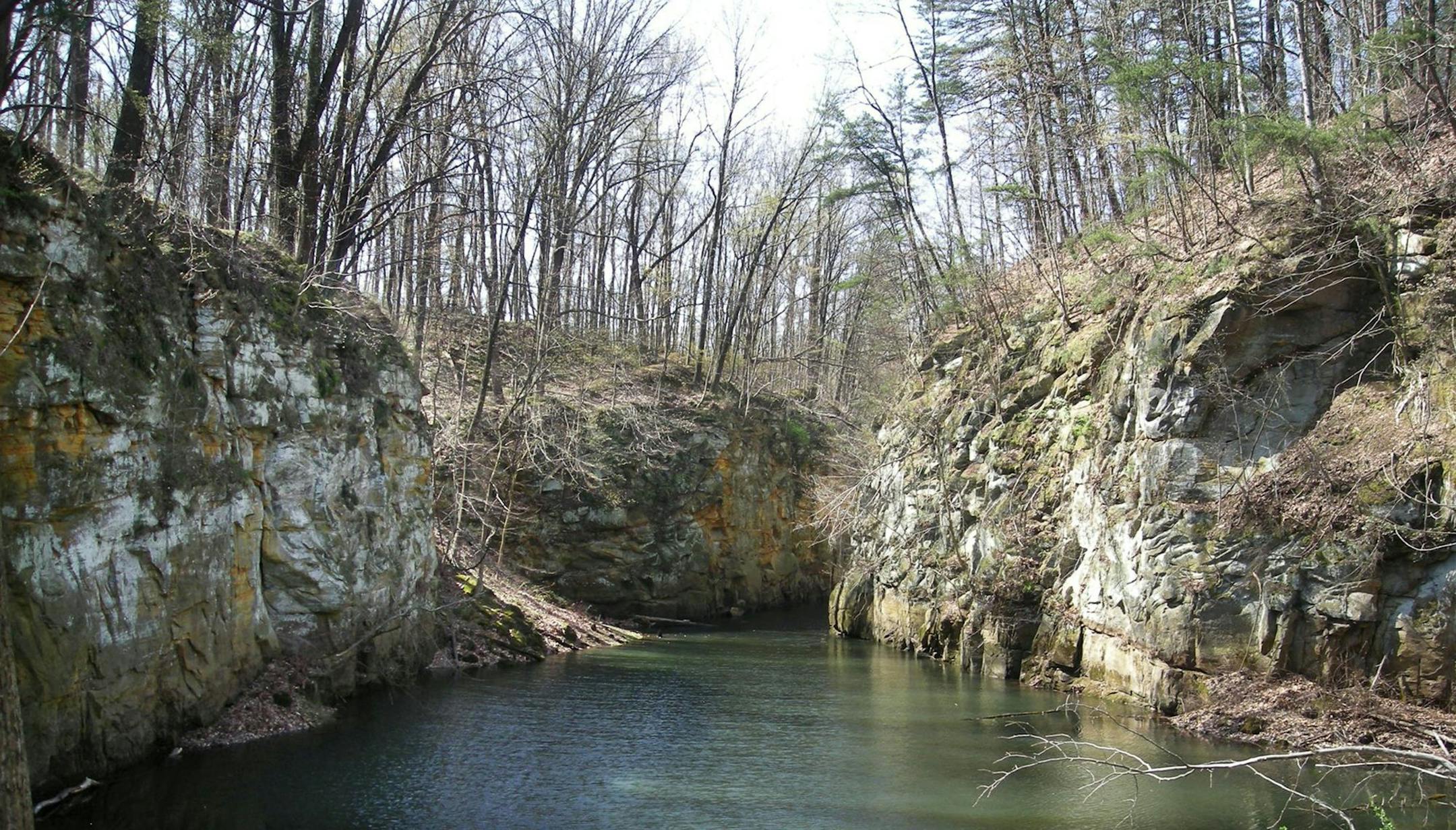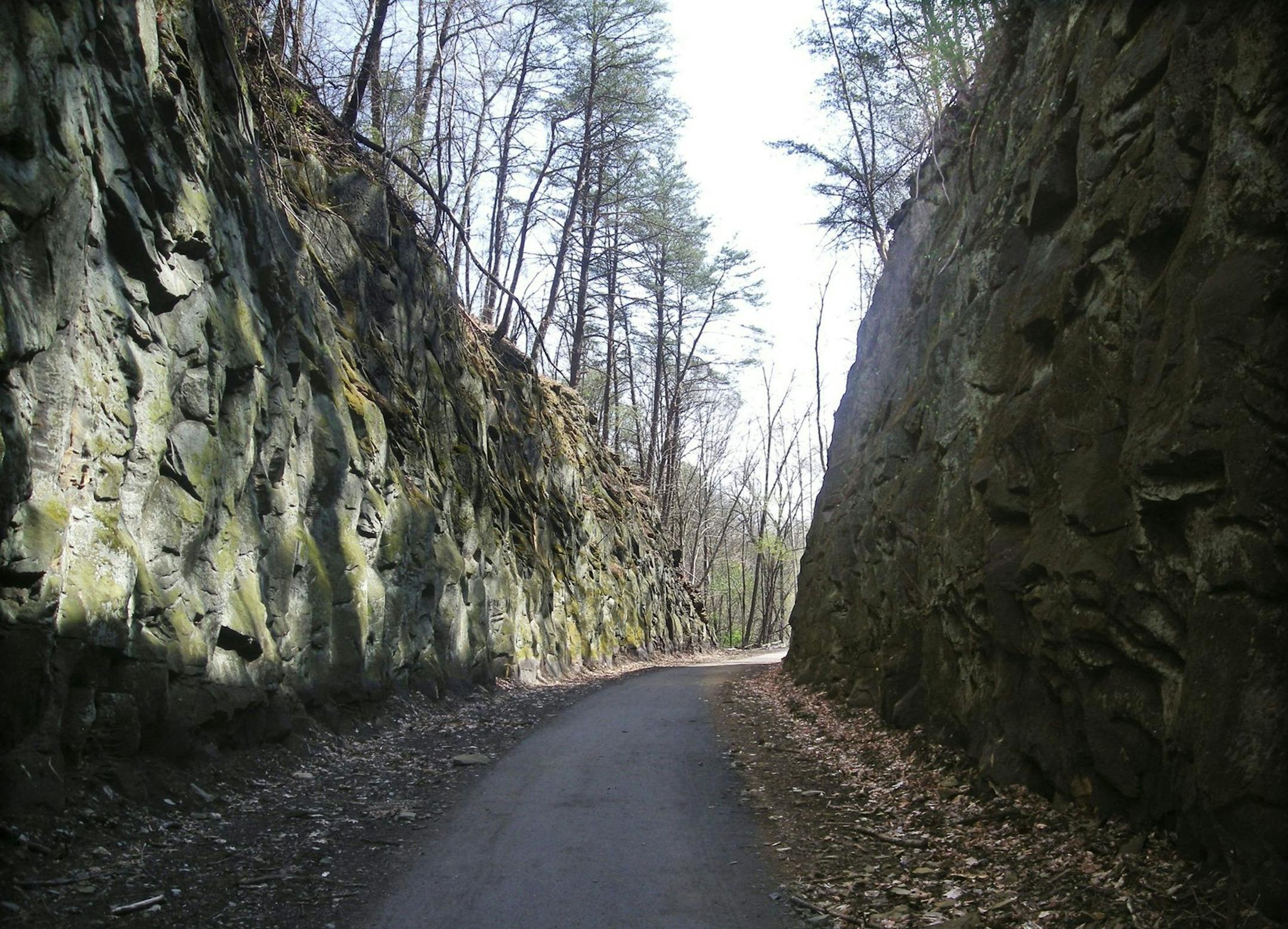
TOBOSO, Ohio – There is a bit of everything at Blackhand Gorge State Nature Preserve. You'll find nature, water, history and trails in a picturesque gorge with cliffs and rock outcroppings carved by the Licking River. But the Licking County preserve's most imposing feature is known as the Deep Cut.
In the winter of 1851, the Central Ohio Railroad used 1,200 kegs of black powder to blast the 700-foot-long cut in the Blackhand sandstone. It is 65 feet high and 30 feet wide. It looks and feels like a railroad tunnel — without the top. It is an impressive feature, and the park's main trail-bikeway runs through it.
The Central Ohio Railroad became part of the Baltimore & Ohio Railroad in 1865.
History in stone
A short side trail from the Deep Cut takes you to the river and the Blackhand Rock, where a dark, hand-shaped Indian petroglyph engraved into a rock was once found.
Some say the hand marked the way to nearby flint deposits at Flint Ridge in Licking and Muskingum counties, which Ohio Indians relied on for tools and weapons. Or the petroglyph might have at least signaled that land near the flint was neutral and they should not fight one another. No one knows.
Early white settlers who saw the petroglyph said it was twice the size of a human hand and very distinctive. It was destroyed in 1828 when builders of the Ohio & Erie Canal used dynamite to blast away the sandstone cliffs on the north bank of the river when the canal was being built. Other petroglyphs survived to about 1890.
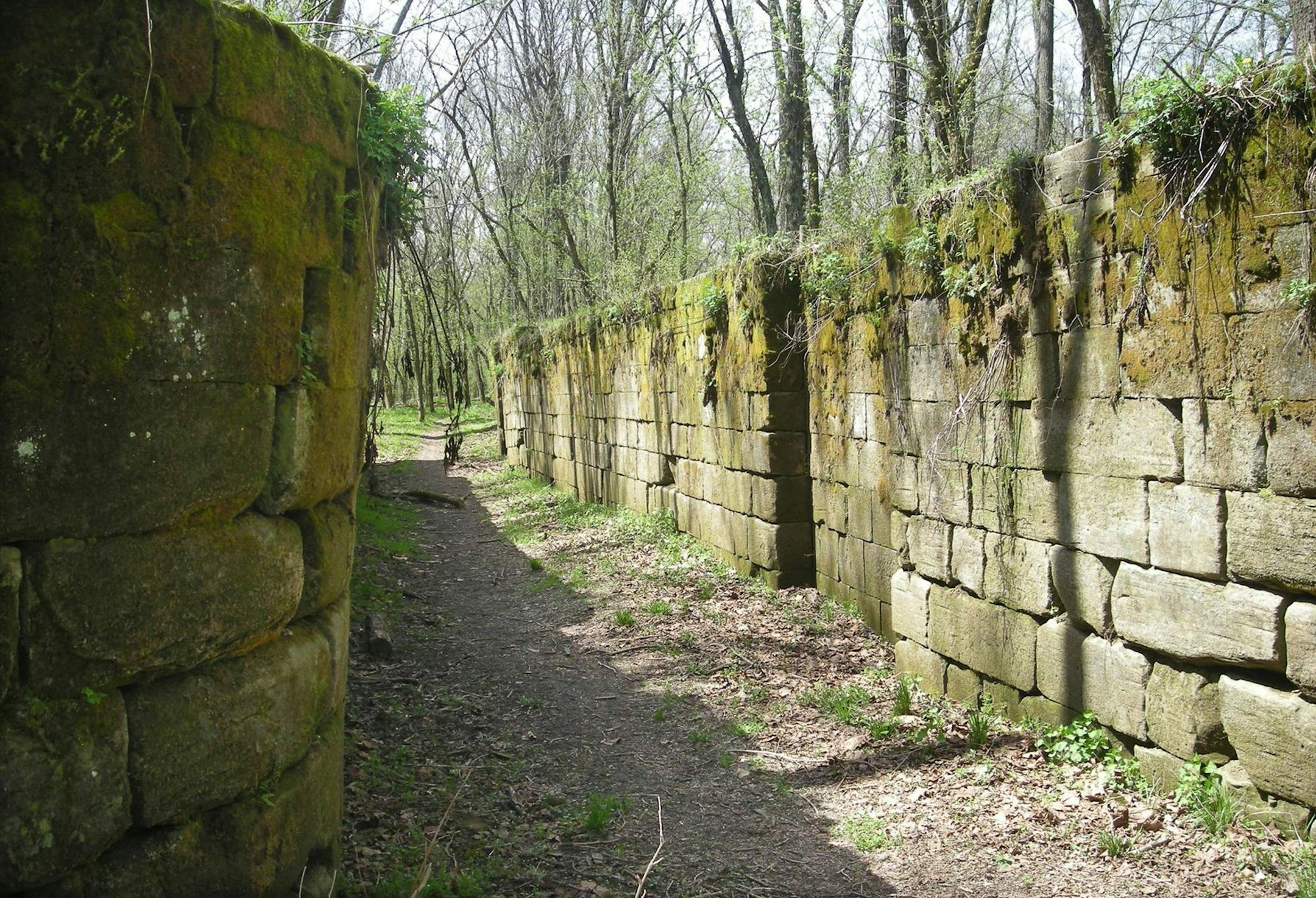
Blackhand Gorge is not your typical state nature preserve. There are canal locks from the Ohio & Erie Canal, plus remnants of the steam-powered Central Ohio Railroad and electric-powered interurban trolley cars.
You can pedal the 4-mile-long Blackhand Trail or paddle a canoe through what was once called the Licking Narrows. Volunteers are refurbishing a small log cabin at the preserve's eastern entrance to become a new visitor center.