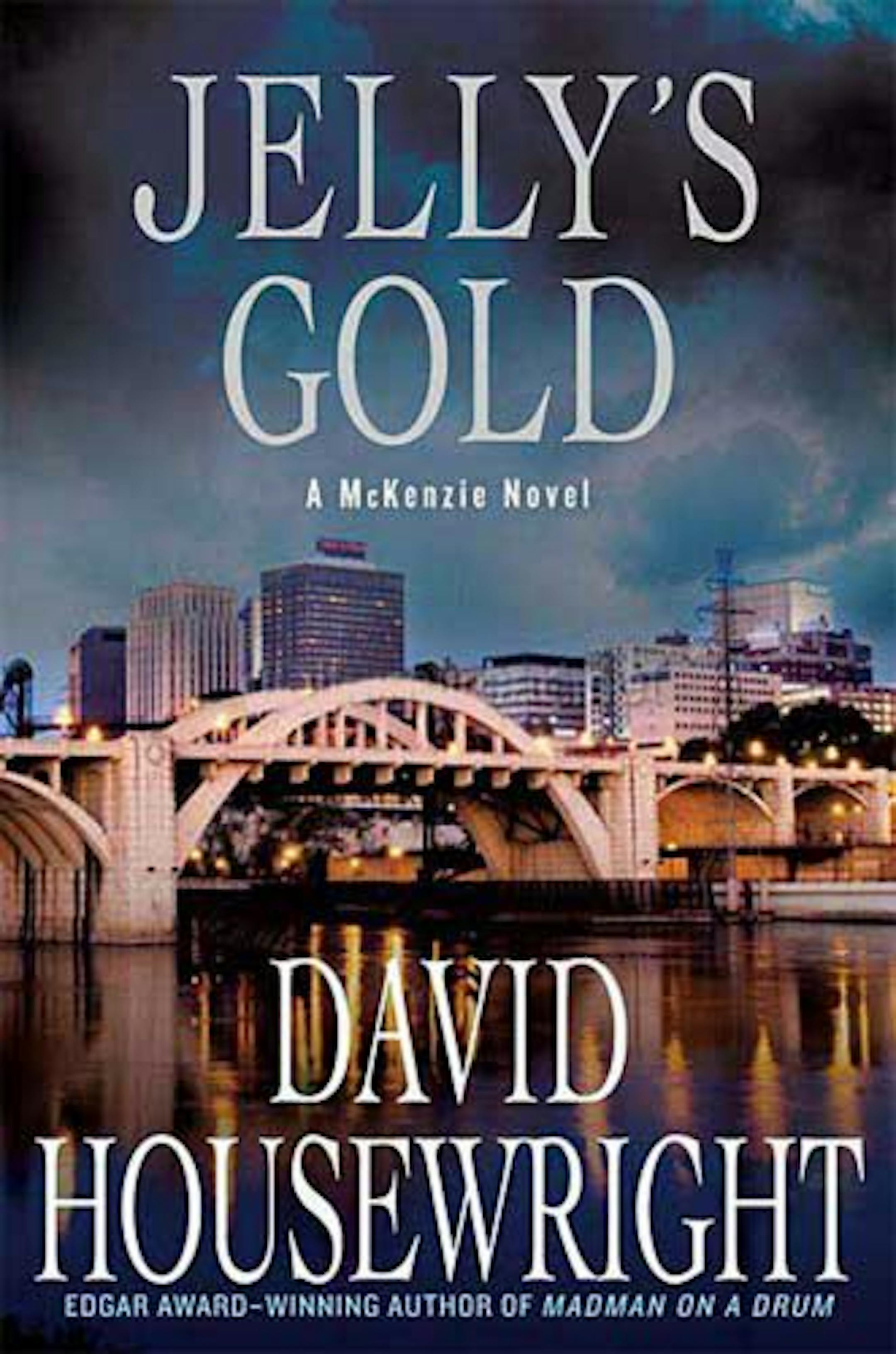
Jelly's gold
David Housewright (Minotaur Books, 288 pages, $24.95)
Housewright's acclaimed series features one of the genre's most likable unofficial detectives, Rushmore McKenzie, an ex-cop millionaire whose entire life can seem to be "one of those days." To help out a friend, McKenzie delves into St. Paul's shady past in search of missing gold that may have belonged to gangsters. In this smart, fast-paced mystery, Housewright shifts seamlessly between St. Paul in the 1930s and today as McKenzie's treasure hunt becomes a murder investigation. Housewright evokes such a rich atmosphere of St. Paul's past that next time I visit my St. Paul relatives I'm tempted to seek out the Hollyhocks Casino on Mississippi River Boulevard and stop in for a Summit beer with McKenzie at Rickie's Club on Selby.
BLIND SIGHT
Terri Persons (Doubleday, 336 pages, $24.95)
Set in northern Minnesota, Persons' debut novel is a fringe science mystery featuring FBI Agent Bernadette Saint Clare who, like Allison Dubois in "Medium," has second sight. Mystery writers who use supernatural elements to solve crimes have to be wary of cheating their readers by presenting clues in a way that doesn't take any investigative skill on the part of the detective -- or the reader. Persons avoids this pitfall. Saint Clare's visions are full of "shadows and vague shapes" so she needs traditional clues to focus and make meaning from them. Persons maintains the icy atmosphere of the opening scenes, where a difficult investigation involving the brutal murder of a Minnesota senator's pregnant daughter becomes "next to impossible in the Northwoods in a blizzard." This strong sense of place keeps this mystery moving and helped me ignore Persons' occasional clunky dialogue and the lack of sexual tension between two main characters who are supposed to be attracted to each other.
THE CASE OF THE MISSING SERVANT
Tarquin Hall (Simon and Schuster, 295 pages, $24)
Don't tell anyone, but despite my years of grueling literary training, I'll sometimes pick a book by its cover. This is one of those times. Hall's mystery featuring Vish Puri, India's Most Private Detective, is as whimsical and colorful as its cover suggests. Set in contemporary Delhi, this most private detective takes his profession and his place very seriously. He believes it's the "duty of the privileged to help the underprivileged," whether they want help or not. Vish Puri is Hercule Poirot channeling the irresistible pompousness of P.G. Wodehouse's Bertie Wooster. This novel could easily have been just a playful pastiche of the traditional British mystery, but through its comic tone and ironic point of view, the novel becomes a take on justice in post-colonial India, "a time of debauchery and moral breakdown."
THE ANGEL'S GAME
Carlos Ruiz Zafon (Doubleday, 544 pages, $26.95)
Mysterious mansions, macabre characters and great books lurk at the diabolical heart of this dazzling tale by Spanish novelist Ruiz Zafon. (Zafon will be in conversation with Charlie Leonard, owner of the Bookcase of Wayzata, at 7 p.m. Thursday at Central Middle School, 305 Vicksburg Lane, Wayzata.) Set in 1920s Barcelona and steeped in the Gothic tradition, this novel is layered with allusions to Poe, Dickens, the Brontés and some C.S. Lewis for theological measure. On the surface, the plot is about a gifted writer, David Martin, who believes that writing will get him out of poverty before "an outbreak of tuberculosis does." He eventually makes a Faustian deal with the devil (a publisher), and agrees to tackle an unusual writing project. Ruiz Zafon's plot is so imaginative and so creepy that to summarize any more will rob you of the sheer pleasure of being seduced into its dark literate world. Martin is a witty, intriguing protagonist and the secondary characters surrounding him are equally engaging. Martin's mentor, Vidal, has regular rants in the "style of the great arias." You'll want to take notes. This is a book lover's book about the sacrifices that must be made in the name of good storytelling.