

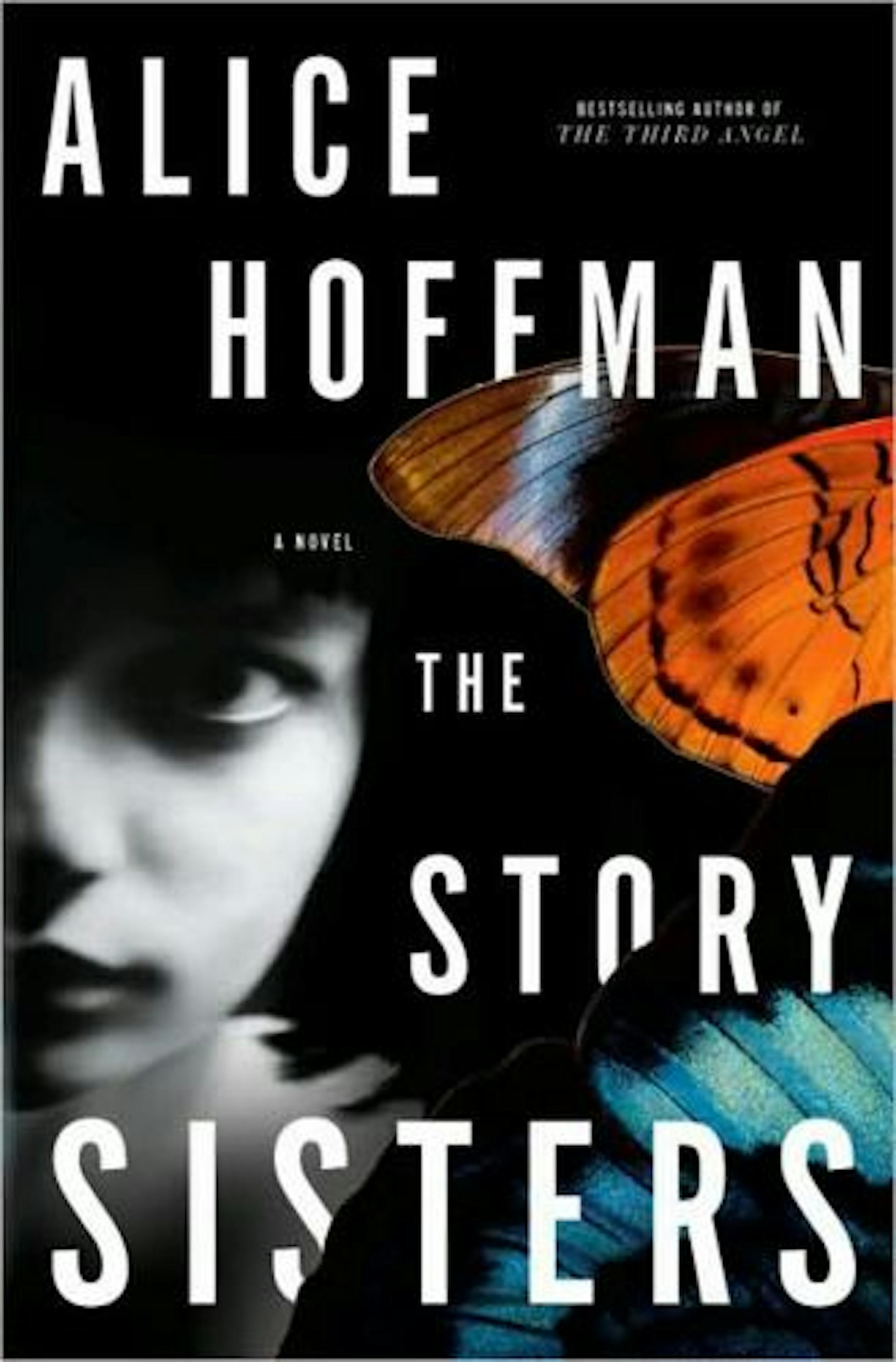
THE STORY SISTERS
Alice Hoffman (Shaye Areheart Books, 325 pages, $25)
The latest of Alice Hoffman's illuminations on the randomness and fragility of life opens on a happy note. On a bright spring morning, three pretty sisters hang out the window of their posh suite at New York City's Plaza Hotel. Elv is 15, Meg is a year younger and Claire is 12. They have traveled with their mother from their home on Long Island to attend the 50th wedding celebration of their grandparents. The Story sisters, who so far have apparently avoided the minefields of adolescence, share a secret, imaginative life and a fairy-tale language. The joyful day turns disastrous when Claire steals a Central Park horse and buggy. Hoffman's depiction of the girl's terror during the perilously speedy, out-of-control traverse across the park and through city traffic is riveting, and Claire is seriously injured in the process. Coming-of-age is most challenging, however, for Elv, who makes life-altering mistakes, particularly in her choice of a partner. Throughout, the girls maintain a close relationship with their French grandparents, and the scenes set in Paris are highlights in this engaging novel.
AFTER YOU'VE GONE
Jeffrey Lent (Atlantic Monthly Press, 246 pages, $24)
Jeffrey Lent's fourth novel opens on a summer evening in 1891 in Elmira, a college town in New York. Simultaneously he introduces his protagonist, Henry Dorn, and the novel's motif, the cello, as young Henry and his new wife, Olivia, are walking home from a concert. Henry had noted the "ample virtuosity" of violins and bass, but "what flowed out to him that evening was the affecting dulcet balance ... of the cello." Through a skillful time/place shift we next find Henry, now 55, in Amsterdam in 1922, lugging a cello in its canvas case across the square on his way to a lesson with the exiled impresario Morozov. Lent's use of time-shifts is brilliant -- between the Nova Scotia fishing village where Henry spent his boyhood; Elmira, the setting for his working life and his idyllic marriage, and Amsterdam, the city in which he at last achieves a measure of self-knowledge. Equally remarkable is the book's plot - a tale that hinges on the deaths of Olivia and their adult son, Robbie, in an auto accident. One year after the tragedy, attempting to assuage his loneliness and depression, he boards a ship for Amsterdam, and to his amazement and our shock, he finds love. Lent writes, "There were beautiful things in the world, and there were beautiful periods or times -- usually not known until they had passed." This splendid book should inspire readers to "carpe diem."
THE LACE MAKERS OF GLENMARA
Heather Barbieri (Harper Collins, 268 pages, $24.99)
To keep sorrow at bay following three harsh blows -- the death of her mother, the failure of her fashion-design business and the breakup of a relationship -- Kate Robinson flees her hometown of Seattle and travels to the hamlet of Glenmara on Ireland's west coast. Author Heather Barbieri examines with searching intelligence Kate's personal resilience and her quest for creative fulfillment. We learn that Ethan ran off with a model, "a girl with black hair and pale skin and aquamarine eyes and a sizable trust fund." Barbieri endows Kate, too, with beauty, describing her wavy chestnut hair and sparkling green eyes, "the sort of eyes that revealed every emotion. ... " Immediately, Kate becomes a welcome member of Glenmara's lacemaking society. The group's devotion to its craft inspires her to create a line of uniquely Irish lingerie exquisitely stitched with Celtic flowers, nymphs and saints. Barbieri's rendering of the details of lacemaking seems impressively authentic. The novel features insights into human entanglements both current and from the past.
IN THE KITCHEN
Monica Ali (Scribner, 436 pages, $26)
In her much-acclaimed earlier novel "Brick Lane," Monica Ali explored London's Bengali community. "In the Kitchen" depicts with equal success the world of London -- restaurant kitchens and the immigrants from countless countries who work in them. The novel's central character, chef Gabriel Lightfoot, wants to own a restaurant. Although he finds financial backers, they insist that he prove himself first by managing a hotel kitchen for a year. He takes a job at the once prominent London Imperial Hotel, where his kitchen staff consists of bickering workers with fragile egos. Lightfoot's career takes a blow when the hotel's Ukrainian night porter is found dead in the basement. When management implies that the suspicious death is somehow Lightfoot's responsibility because it occurred on his "territory," Lightfoot searches for answers. Ali underpins her suspenseful plot with an authentic portrayal of the social changes that have befallen Britain in recent years.


