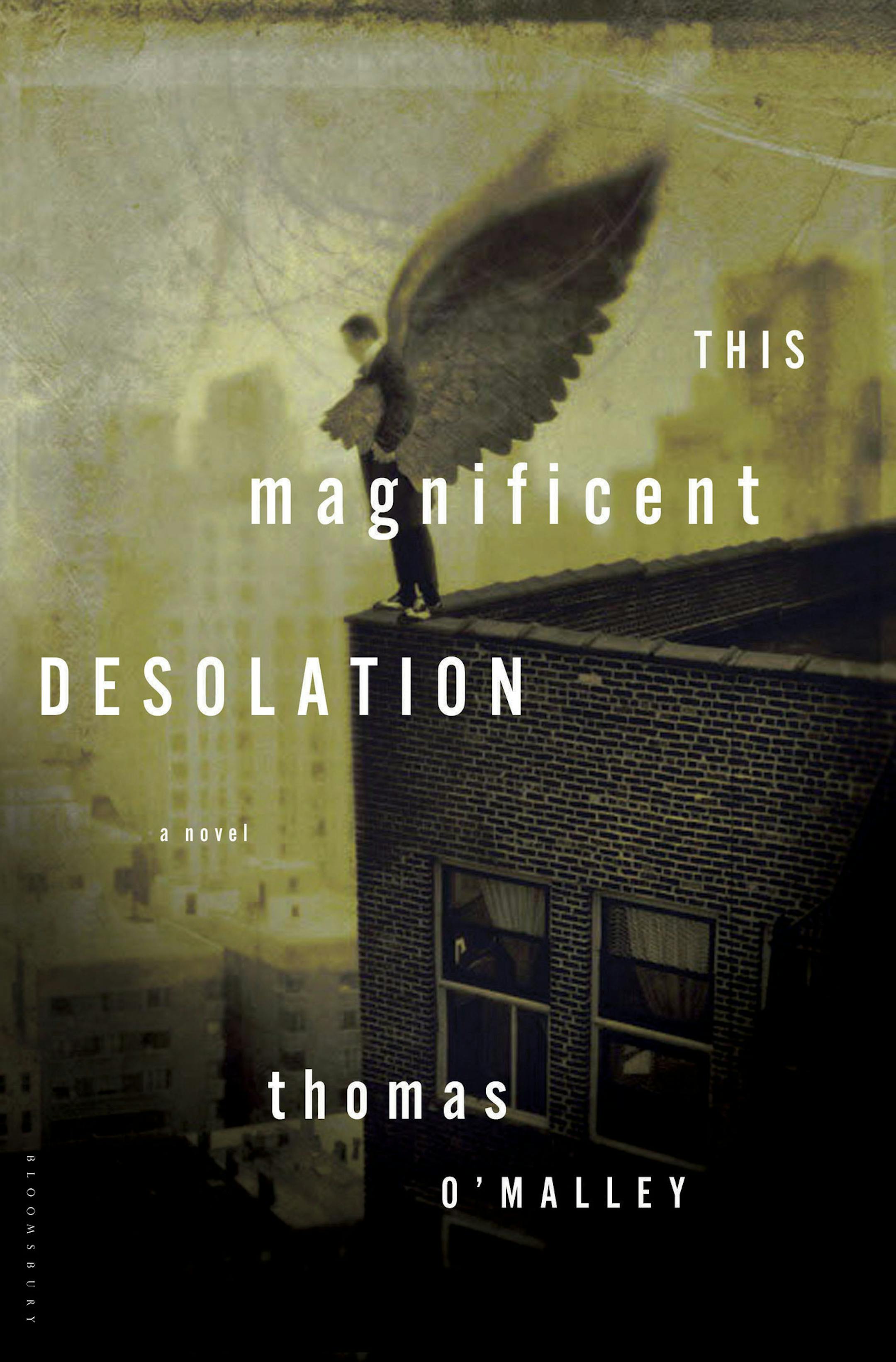
Novelists, if they should do nothing else, ought to transport their reader to the fictional world they've created. The best novelists do more. Thomas O'Malley has done much more with his astonishing second book, "This Magnificent Desolation," a novel so immersive that it blurs the line between its characters' lives and the life of the reader.
Duncan is an angelic 10-year-old orphan living on the Minnesota prairie. He spends his time with the other orphans, his Vulcanite transistor radio, and the priests who watch over him. He has no memories except the moment of his birth, when, he believes, God spoke to him — though what God said, Duncan cannot remember.
If Duncan cannot remember his past, he can surely imagine his future. Each of the children can, and the stories they invent of their rescue give the novel some of its most tender and profound moments. And even if Duncan is quite certain his mother has died, he also dreams of her rescuing him. Which, of course, she does.
Maggie Bright is a beautiful, washed-out opera star with a weakness for whiskey and cigarettes, whose saving grace is her love of her son. Over the course of four years, with the help of Maggie's lover, a troubled Vietnam War veteran named Joshua, she and Duncan patch a life together in San Francisco.
Maggie spends her nights singing in the Windsor Tap, trying to rediscover the voice she lost years before on the stage of the Boston's Symphony Hall. Joshua works by day on a tunneling crew under the bay. Even as he confronts his own enormous demons, Joshua serves as a sort of surrogate father to Duncan. Duncan himself wanders between Maggie and Joshua, trying to keep them all together against steepening odds.
It is a strange intersection of lives, made all the more so by the author's ability to blend the hardscrabble reality of their existence with the wistful world of their memories, hopes and dreams. But because the prose is incantatory, the images arresting and beautiful, the emotional resonance of nearly every moment heartbreaking or jubilant, we go along. As Duncan himself goes along, possessed by a powerful and inquisitive imagination and the uncanny certainty that this life is as much a fantasy as it is a reality. By the end of the novel, this reader was likewise convinced.
If "This Magnificent Desolation" is at times slow moving, it's only because dreams move to a different meter than the rest of our lives. Give yourself over to O'Malley's pace, and the reward will be one of the best novels you're likely to read this year.
Peter Geye is the author of "Safe From the Sea" and "The Lighthouse Road." He lives in Minneapolis.