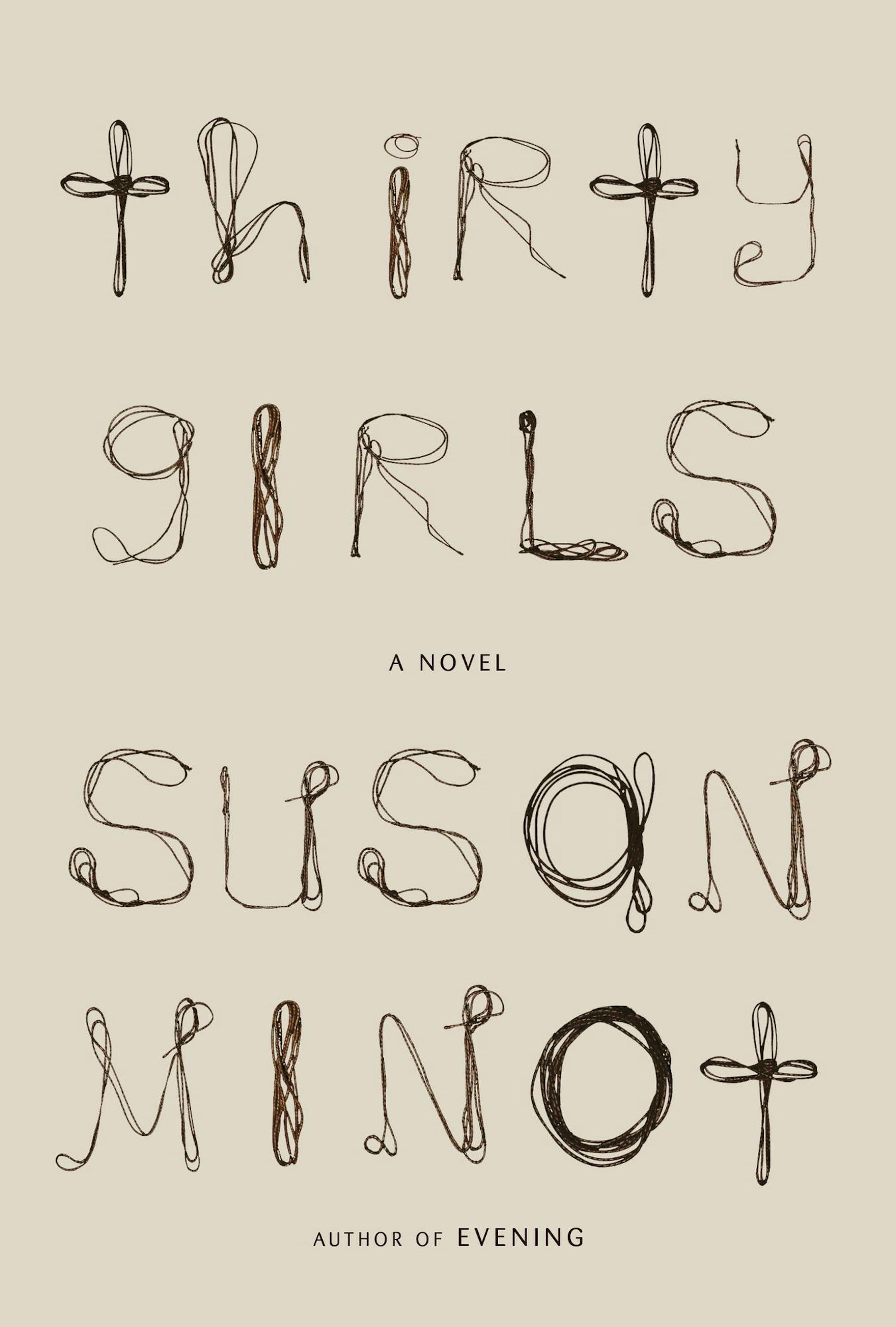
Here is something that Esther, a 14-year-old Ugandan girl, recalls: "I washed blood from a small skirt. When we poured blood from gum boots it sat like red glass on the dust, then sank in, more slowly than water."
In light of that, how can Jane — a 40-year-old American woman looking for meaning and finding love as she travels to Africa to tell the story of Esther and the 20,000 other children like her — seem anything but frivolous? It is a question "Thirty Girls" confronts head-on, as the story Jane is determined to tell and the story she is living vie uneasily for her attention and ours. And so authentic-seeming are both of these narratives that it's almost easy to forget that novelist Susan Minot is responsible for both of them — that while she's fashioned the thought and experience of a writer with some resemblance to herself (Minot did in fact go to Uganda to report on the abducted girls, for a piece published in McSweeney's), she's also given an exquisitely poignant and painfully credible voice to one of these children.
The story that Jane goes to Africa to report on is based on an abduction, by soldiers in Joseph Kony's Lord's Resistance Army, of 139 girls from a boarding school in Uganda in 1996. In the novel, as in real life, a nun from the school follows the girls and pleads their case with one of Kony's lieutenants, who agrees to release 109. Esther is one of the 30 he keeps — girls, some as young as 10, who are marched, starving, for days on end, forced to kill, brutalized and given as "wives" to the rebel commanders.
The details, many unspeakable, are relayed by Esther, who is undergoing rehabilitation, or trying, after she escapes; her story is fleshed out by a third-person narrative voice that approximates, mostly, her point of view. The framework is supplied by a narrator voicing Jane's perspective, as she travels to the camp with a peculiar crew of the sort who tend to appear whenever a white character goes to Africa — the overbearing, self-satisfied businessman (think Tom Buchanan on safari); the charming, somewhat louche artsy types and world travelers, and Harry, the much younger paragliding adventurer Jane takes up with in Kenya, who is a comfortable man of the body to her troubled, searching spirit. Minot's language — as it has in the past, but here perhaps more pointedly — takes on the quiet, declarative quality of Hemingway's prose. "There was a silence in the tall room. Harry's face was relaxed. Jane felt silence was something which must be filled."
It is indicative of Jane's state, and her need, that when the narrative turns to lovemaking, a piercing lyricism often enters the language. There is "the beautiful release and a feeling of wholeness" for a woman who seems to be piecing herself together, fixing what's broken, and finding a new part of herself in Harry's embrace. In this, the oft-asked "what am I doing here?" finds its answer in Esther's consonant, if more egregious, need of mending. Esther's thoughts "have cracks in them." Her heart, if "endless like God," as one of her fellow sufferers proposes, "will be endlessly breaking." As will that of anyone who reads her heart-rending story, with its honest and bleak view of the power of love to heal so much human breakage.
Ellen Akins teaches in the low-residency MFA program at Fairleigh Dickinson University (www.writingfdu.org/wordpress1/).