"Six weeks later there had been no word at all. Nothing. No reassuring telegraph from St. Paul or Minneapolis, or some other city, saying, THINGS ARE WELL, DON'T WORRY. No letter describing the work he'd found and promising money to follow."
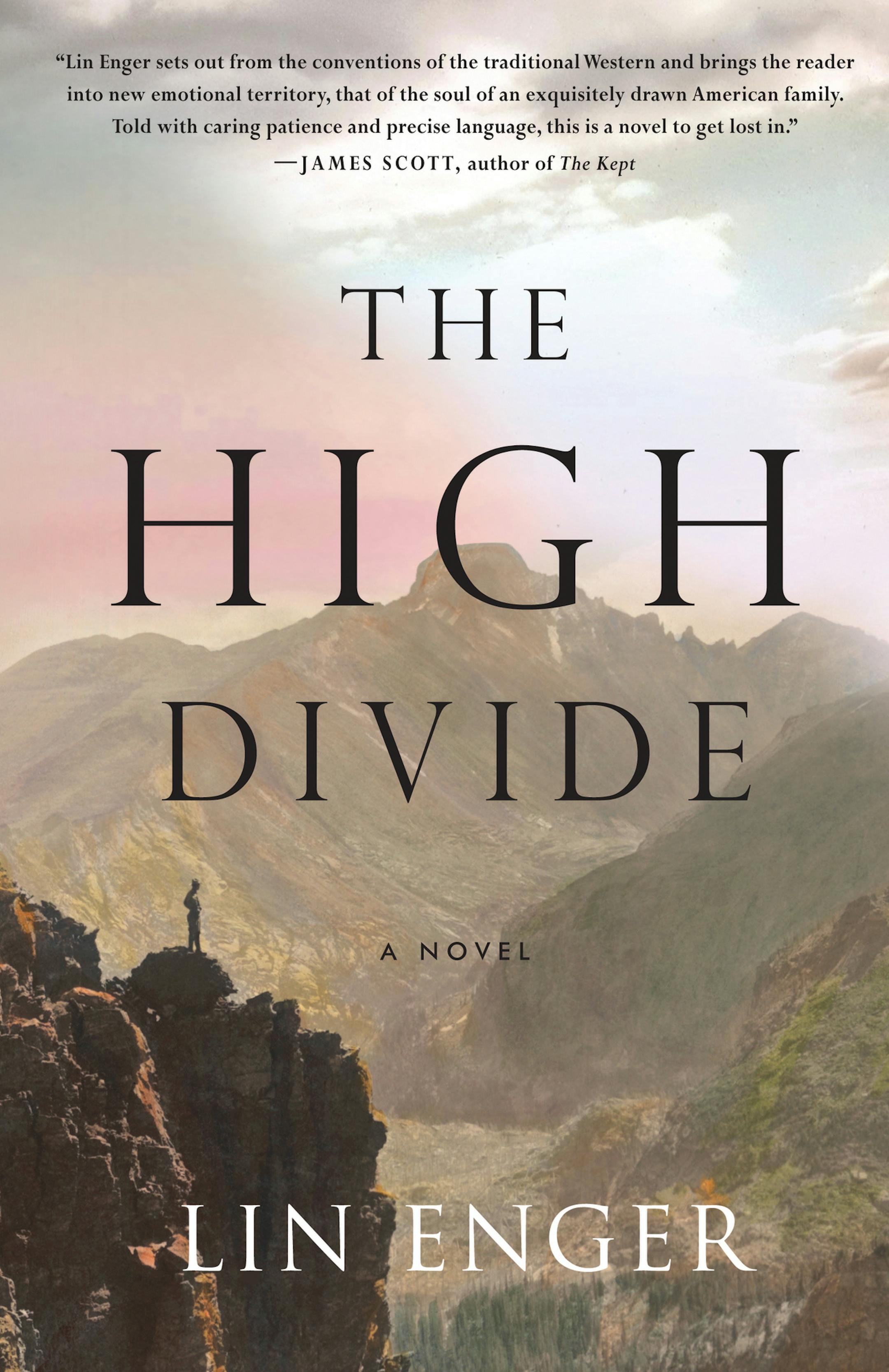
So begins the opening chapter of Lin Enger's "The High Divide," a story of the disappearance in 1886 of Ulysses Pope, husband of Gretta, father of two young boys and veteran of the great war between the states just two decades earlier.
With his second novel, Enger, who teaches at Minnesota State University, Moorhead, has crafted a quiet, captivating tale set on the far edge of Minnesota's western prairie. It is less about a journey than it is about a search and its consequences, one that involves the entire Pope family.
Ulysses' departure was marked only by a note that was "cruelly brief: 'A chance for work, hard cash.' " The mystery deepens when 16-year-old Eli intercepts a letter to his father from an unknown woman. Eli decides that he must discover what happened to his father, who, it would appear, has abandoned his family. Keeping the letter and his intentions secret from his mother and brother, Eli hops a train toward Bismarck, N.D., the woman's home, his only clue, but moments later is surprised as his brother, Danny, runs up and hops aboard, too.
Once Gretta realizes her sons are gone, she travels to St. Paul, hoping Ulysses' older sister might offer clues to his whereabouts. Although Florence cannot, she tells Gretta shocking information about Ulysses' past — including one story involving George Armstrong Custer — causing Gretta to question why her husband had kept such significant secrets from her.
Enger's patiently told and moving narrative alternates between the various Pope family members on their respective quests. His writing style is precise, restrained and enlivened by his protagonists interacting with strong secondary characters, including townsfolk, American Indians of the plains, rough cowboys and one inspired by William T. Hornaday, who conducted one of the last buffalo hunts on behalf of the Smithsonian Institution in Washington, D.C.
Although some would call "The High Divide" a historical novel, it's really a fine literary work that steps back in time a bit. It offers an engaging and affecting story with very real characters set in 19th-century Minnesota, Dakotas and eastern Montana.
Jim Carmin is a book critic in Portland, Ore.