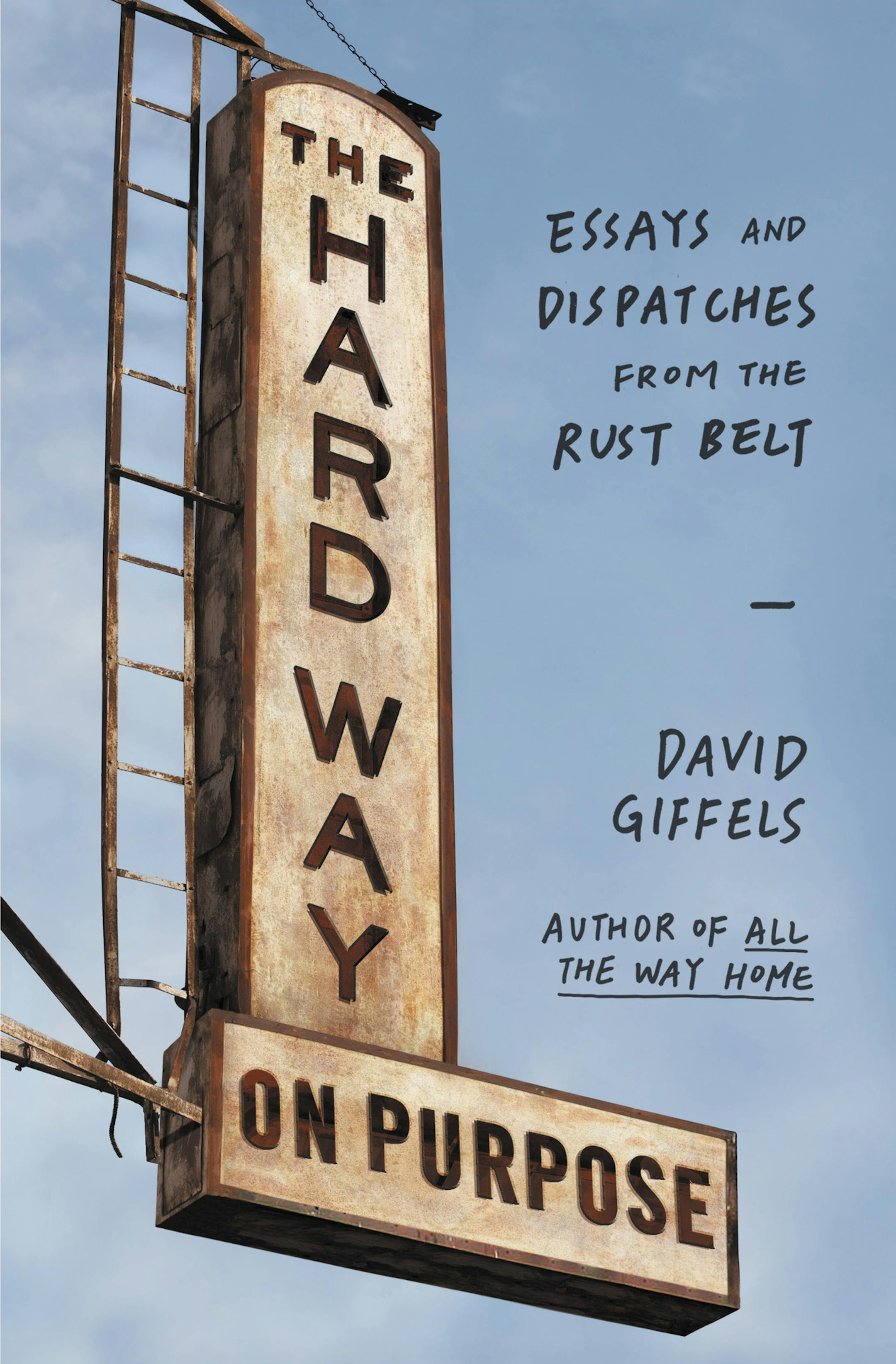
David Giffels grew up in Akron, Ohio, 30 miles south of Cleveland. The economic and social history of the two cities is closely entwined — both have had more than their fair share of financial difficulties, and both are home to fans of the Cleveland Browns, the Indians and the Cavaliers.
"The Hard Way on Purpose," a collection of essays by Giffels, is the assorted musings of an Akronite as he watches his city change from a thriving industrial center to another struggling city cast adrift in the late 20th-century economy. In the past few decades, Giffels' hometown has lost plenty of jobs when industries moved or went out of business.
This region also is ripe in its history of sports disappointments. (Which team once had LeBron James on its roster?)
To see the Akron-Cleveland area through Giffels' eyes, you might imagine him as a parent whose child has just come home from school with torn clothing, a black eye and his lunch money stolen. Only hours earlier, the child was the picture of health and well-being. Now, he stands there — beat up and broke.
Giffels' damaged child is Akron. And neither he nor the city ever saw it coming.
In his essay "Taj Mahal," Giffels tells about a late-night walking tour of downtown Akron with a college friend. The two find themselves at the now-closed and former corporate headquarters of B.F. Goodrich. They find an open door and start exploring the abandoned building.
The two of them are urban archaeologists, looking at the lost empire of a tire company. Desks are cleared. Footsteps echo in empty rooms. On one of the walls, someone has scrawled: ALL GONE. NO WORK.
Giffels knows about the mathematics by subtraction that occurs in a Rust Belt area. Those who remain know the familiar sight of homes going up for sale.