

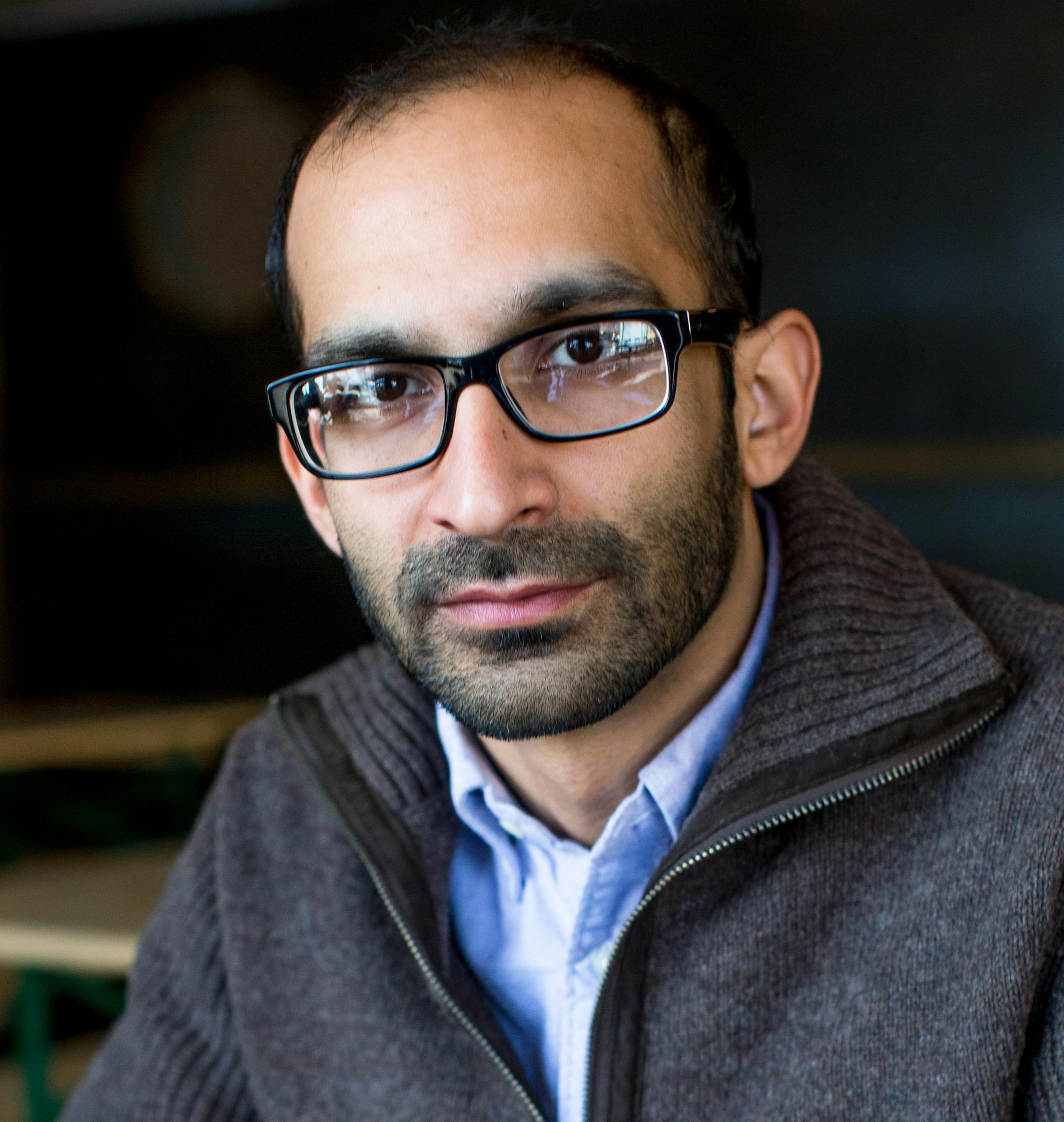
From the first pages of his debut book, "The Faithful Scribe," journalist Shahan Mufti gets personal.
He imagines a dinner party in which you, the reader, ask where he's from, and after hearing him reply, "Pakistan," you ask him why the country is such a mess.
Mufti, who grew up in the United States and Pakistan, attempts to answer that question and many more by probing his own family history to better understand the roots of the world's first Islamic democracy.
He artfully weaves stories of his ancestors — which can be traced 1,400 years back to Islam's early days — into the larger drama of Pakistan's struggles and triumphs, and of the country's long and complicated relationship with the United States.
Pakistan was formed in 1947 on a twin foundation of Islam and democracy — an experiment whose outcome is still playing out and which has become especially relevant in our post-9/11 world.
"From the very beginning," Mufti writes, "people doubted that such a nation could ever work, and it was always going to be a tough challenge for a young state."
Muhammad Ali Jinnah, the founding father of Pakistan, had hoped to unite the myriad languages and cultures living in the new nation under the banner of the one thing they shared — their Islamic faith.
Mufti, whose ancestors were jurists in Muslim sharia courts operating for centuries in South Asia, takes us on a journey both personal and historical.


