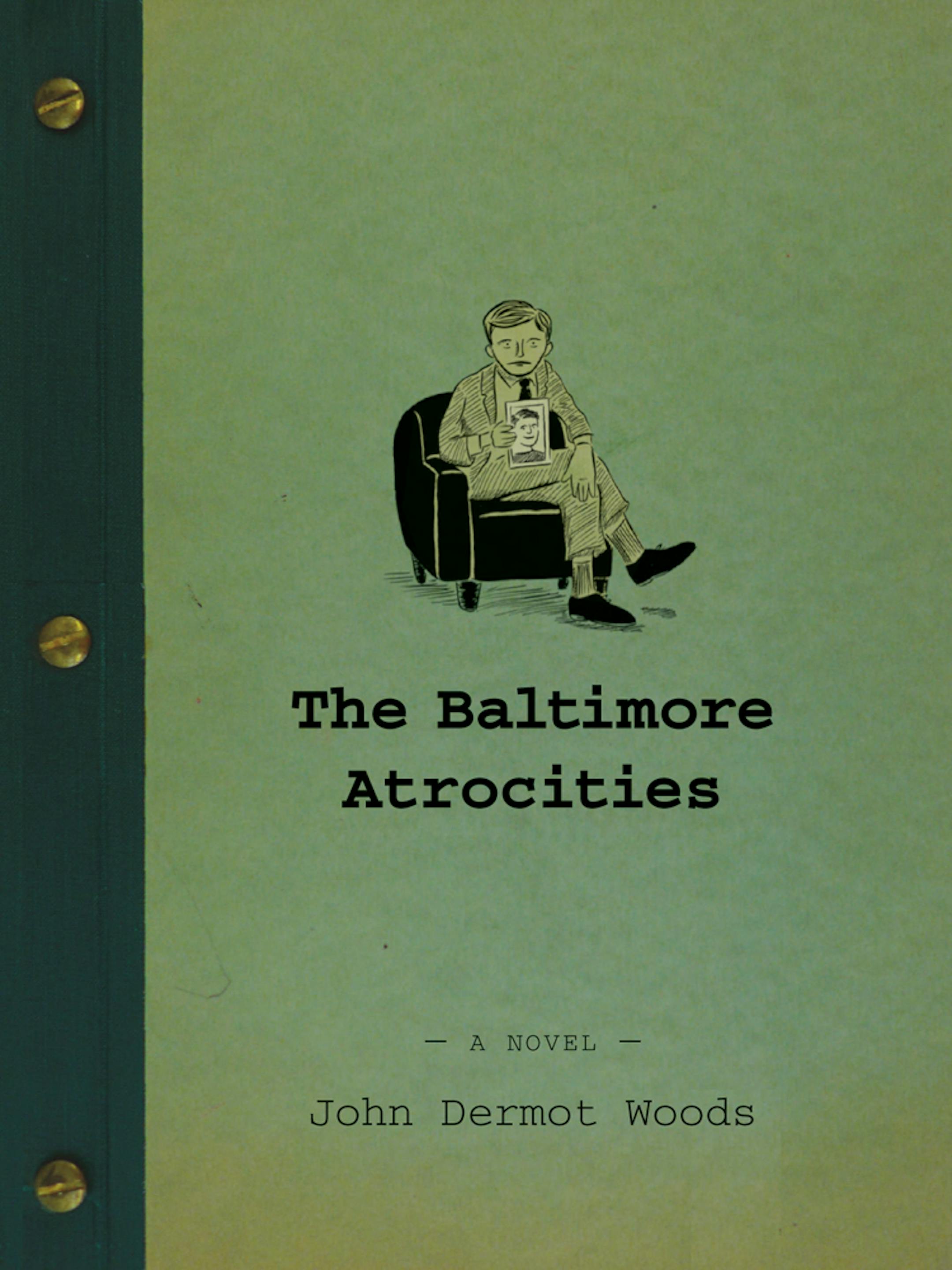
Brooklyn-based writer and cartoonist John Dermot Woods dedicates "The Baltimore Atrocities" to "Thomas Bernhard and the other ghosts who haunt the places they hated to love." The crotchety Austrian novelist routinely depicted beautiful cities such as Vienna and Salzburg as ugly dead-end worlds — in a sense, perfect settings for his casts of troubled, self-loathing misfits. In his latest novel, Woods channels Bernhard by warping Baltimore into a crucible of crime and heartache. But also like Bernhard, all-out doom and gloom is averted by copious character quirks, regular doses of absurdity and an ever-present mordant wit.
With a clear nod to Woods' literary idol, the book's protagonist is named Barney and his friend Thomas. Both characters meet at high school and slowly discover a common bond that is also a freak coincidence: Barney's sister and Thomas' brother were abducted from a park in Baltimore and have never been seen since.
After finishing school, the pair move to Baltimore and begin investigating and searching. People they encounter reveal that they have also lost young ones. The city becomes a Bermuda Triangle that swallows children and refuses to spit them out. A mysterious blind woman attests to this "pattern of tragedy," while at the same time warning that "The more you search for people you've lost — people, I suspect, you know in no way anymore — the more you've been defeated." Giving up seems more practical than carrying on — until one day a surprise lead takes Barney to a warehouse in the woods.
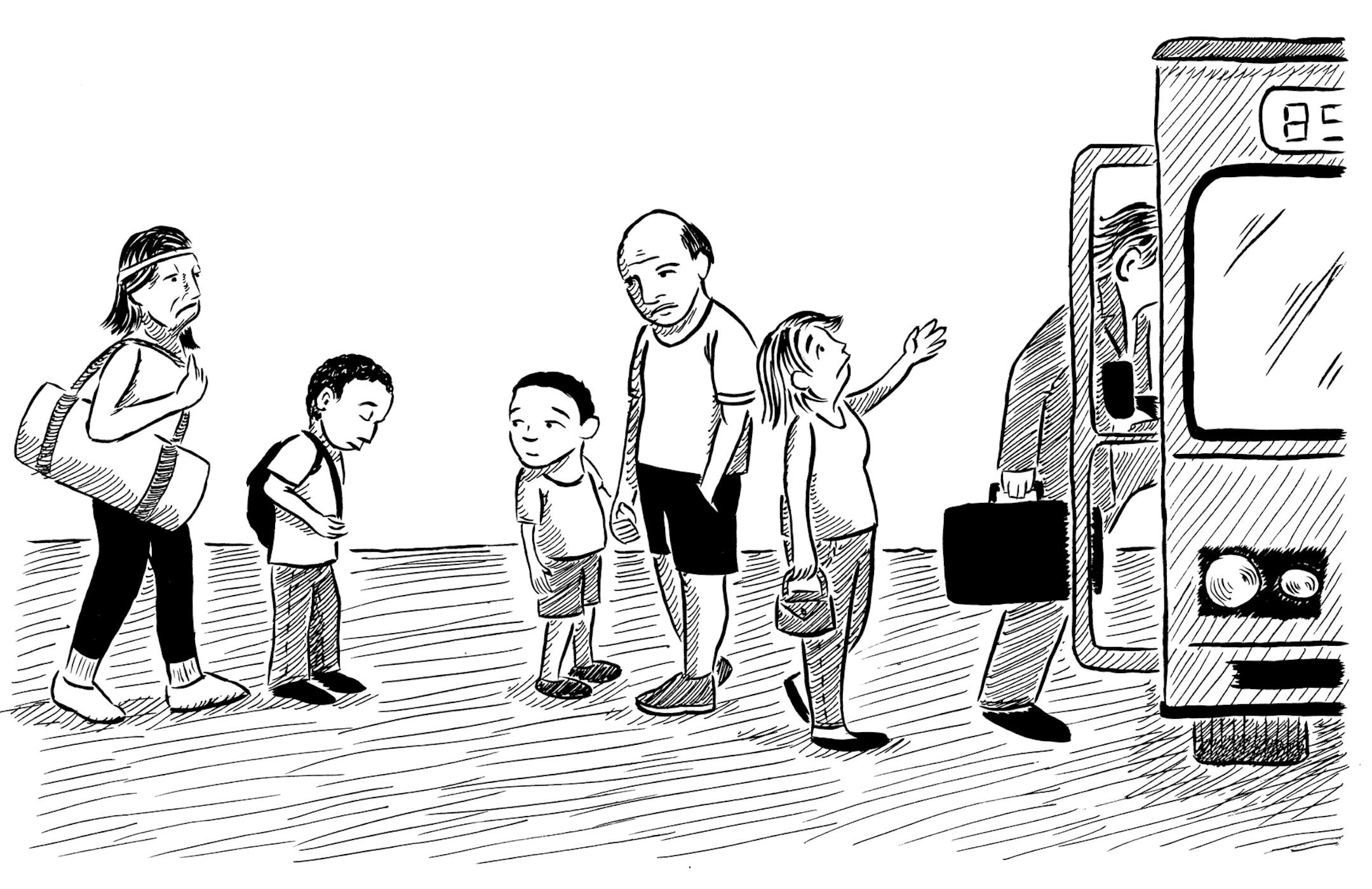
This constitutes the book's main strand, conveyed to us in 25 short chapters. Woods fleshes out the proceedings by complementing each chapter with a cluster of one-paragraph vignettes, each of them illustrated. The vignettes are a compendium of "atrocities": not only accounts of missing children, but tales of sons who kill their parents, wives who kill their husbands, suicides, rapes and mindless attacks. An angry father sends his daughter to school with poisoned cupcakes and duly massacres a third-grade class. A reclusive party hostess fires a stun-gun at guests she considers boring, arrogant or sullen. A chemistry teacher cuts off his students' pinkies with a scalpel, while elsewhere a manicurist's hands are lopped off and taxidermically preserved after she strangles her abusive husband.
Woods' cartoons don't, as one might expect, trivialize or lampoon these atrocities; rather, they visualize the sadness or desperation that each callous act provokes. But although the pictures and vignettes are diverting, even arresting, it is the longer writing comprising each chapter that is more satisfying, partly because it features a recurring character and partly because it coalesces into a fuller picture — albeit one maddeningly short of answers.
We leave "The Baltimore Atrocities" reeling from its medley of antic happenings and feeling more perplexed than when we went in, but also relieved that there are writers like Woods who are boldly picking up where past masters left off.
Malcolm Forbes has written for the Times Literary Supplement, the Economist and the Daily Beast. He lives in Edinburgh.