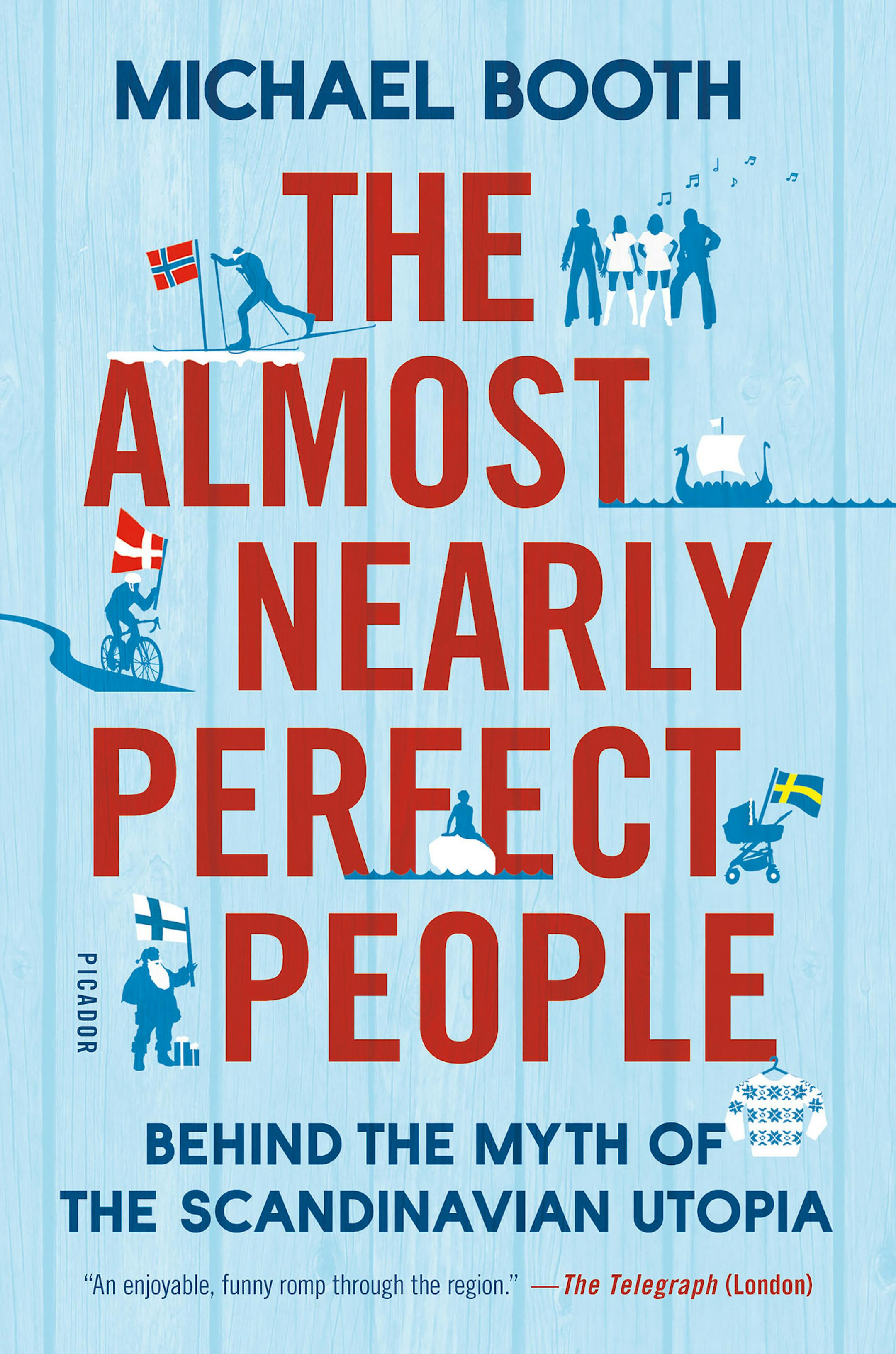
An English expatriate living in Denmark, Michael Booth had grown suspicious of the "almost exclusively adulatory coverage of all things Scandinavian" in the world's media.
According to virtually every report he saw, the Nordic countries are "the promised lands of equality, easy living, quality of life, and home baking" — and the happiest places on Earth.
Believing the reports lacked nuance, Booth visited each of the five lands, the "core" Scandinavian countries of Denmark, Sweden and Norway plus the outliers Finland and Iceland. He talked with historians, political figures, journalists and common folk, and he found much that justifies the good press: "The strong, extensive welfare states; the social cohesion, the interconnectedness and collectivism; the economic equality."
He had fun with some hilarious national quirks — Finland's wife-throwing competition — and he examined historic influences that continue to color national and regional character, such as the literary conceit known as Jante's Law, which admonishes people never to think they are better than anyone else and tells them they are not likely to amount to anything special.
In an entertaining, authoritative and often funny travelogue, Booth considers what oil wealth means for the Norwegians, what the effects of the 2008 economic collapse mean for the Icelanders and how "the core principles of Lutheranism — parsimony, modesty, disapproval of individualism or elitism — still define the manner in which the Danes behave toward one another and view the rest of the world."
He found doubt and division, especially over immigration, which has transformed formerly homogenous populations and contributed to the rise of right-wing movements that seek to restrict the inflow, even before the recent tragic events in Paris. That includes Norway's Progress Party, which received enough votes in the 2013 election to warrant a place in the current coalition government.
Finland has a school system that is the envy of other lands, a competitive economy and a reputation as one of the least corrupt people in the world. They are dependable and courteous, Booth writes, but also aggravatingly taciturn. They have the highest murder rate in western Europe and are famously binge drinkers "as well as enthusiastic suicidalists."
Booth salutes the Swedes' school system, their economic and gender equality and "their harmonious 'middle-way' consensus politics." Its neighbors like to taunt "Big Brother" Sweden as "a stiff, humorless, rule-obsessed, and dull crowd," and Booth wouldn't argue with that.