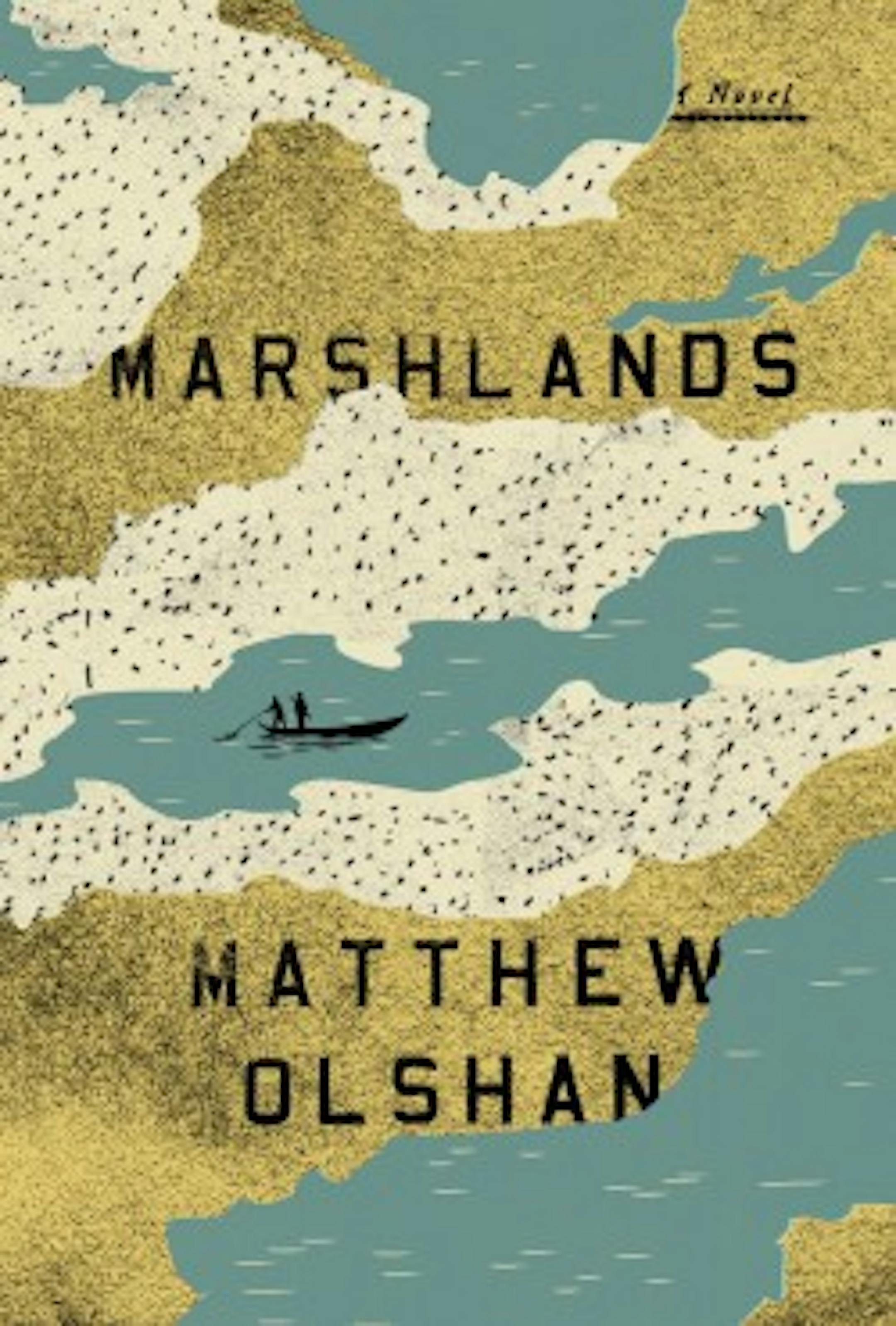
I am haunted by this book, Matthew Olshan's "Marshlands." Which is as it should be, as the story itself is a haunting of sorts, beginning with an old, broken man just sprung from prison, and working its way backward to the crime and the failure and the tragic mistake that cast their shadow across the years. Dropped into a city identified only as "the capital," the man (Gus, we learn well into the book) is a ghost as well, not quite recognized now and then ("But no, it can't be. Wasn't he hanged?"), by turns taunted, ignored, offered crumbs — until, wounded in the cross-volley of a street protest, he is taken in by a kind woman, a museum curator who gives him food and clothes and shelter and, when she realizes who he is, work at a clinic ministering to the marshmen whose disappearing world happens to be the subject of the vast and contested exhibit she is trying to mount.
This, then, is how we first encounter the marshlands, where the nomadic, fiercely independent marshmen live, occupied and liberated time and again, and where Gus, as an officer and a doctor, did long years of what appears to be penance for one sort of betrayal before another sort landed him in prison.
Olshan's prose, so spare and unsentimental, and the book's fraught political atmosphere, so coolly rendered, are remarkably reminiscent of J.M. Coetzee's work, as is the strange, almost fairy-tale quality of a story at once so specific in its details and so general in its detachment from any particular time or place. The marshlands could be anywhere, the marshmen any beleaguered people, different in language, conduct or skin color from some dominant race (or ethnic group).
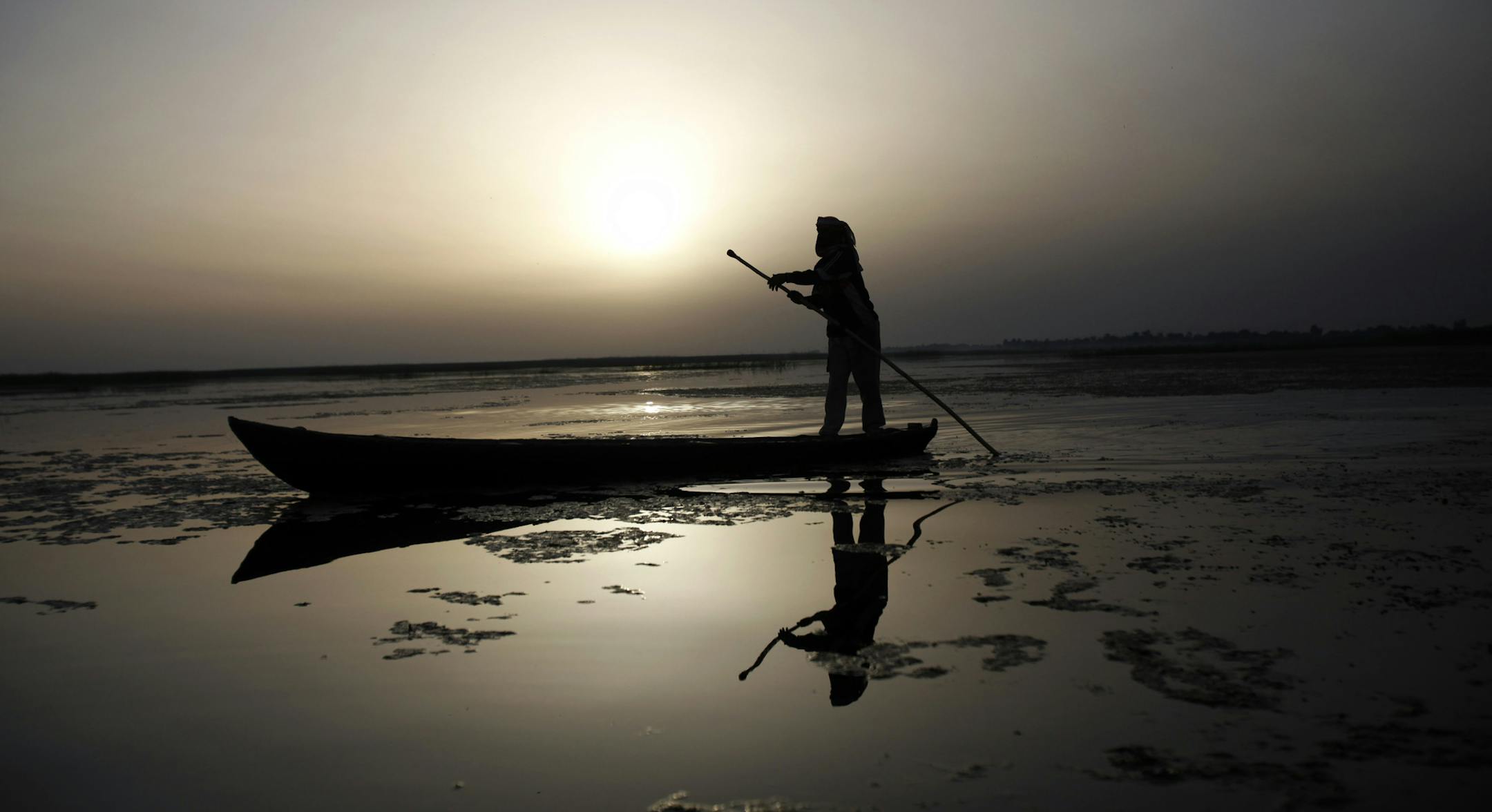
And yet, for all their universality, the marshlands in this novel are in many ways indistinguishable from the marshlands of southern Iraq, a haven for refugees and insurgents, embattled under Saddam Hussein, who ordered the marshes drained after the first Gulf War. The guest houses built of reeds, the fish and other fauna the marshmen eat, their canoes and clothing and rituals, their resistance to absorption into a broader culture whose firepower they are more than willing to appropriate — all closely echo the Ma'dan of Iraq's marshes. And it makes perfect sense that in the book, as in the world, this clash of culture and conscience should occur in what is widely held to be the cradle of civilization.
"For some unhappy souls, the war will never be over," the Magheed, a tribal leader, says to Gus, who a few pages earlier has tried out another marsh idiom: "Where there is kindness … no land is foreign." And where there is no kindness, as in the forces driving this story, every land, even one's own, is strange. That is the brilliance of Olshan, and of this book — to make what is so familiar foreign, and in the strangeness allow us to feel as if from afar what it is to be ourselves.
Ellen Akins teaches in the MFA program at Fairleigh-Dickinson University. She lives in Wisconsin.