Nearly 80 years ago, microbiologist Hans Zinsser published "Rats, Lice and History," one of the first "butterfly's wings" approaches to historical cause and effect. In smart but accessible prose, he showed how pest-driven epidemics helped to destroy ancient empires and played a role in turning Napoleon back from Moscow. The book has been republished frequently and recommended in graduate history courses.
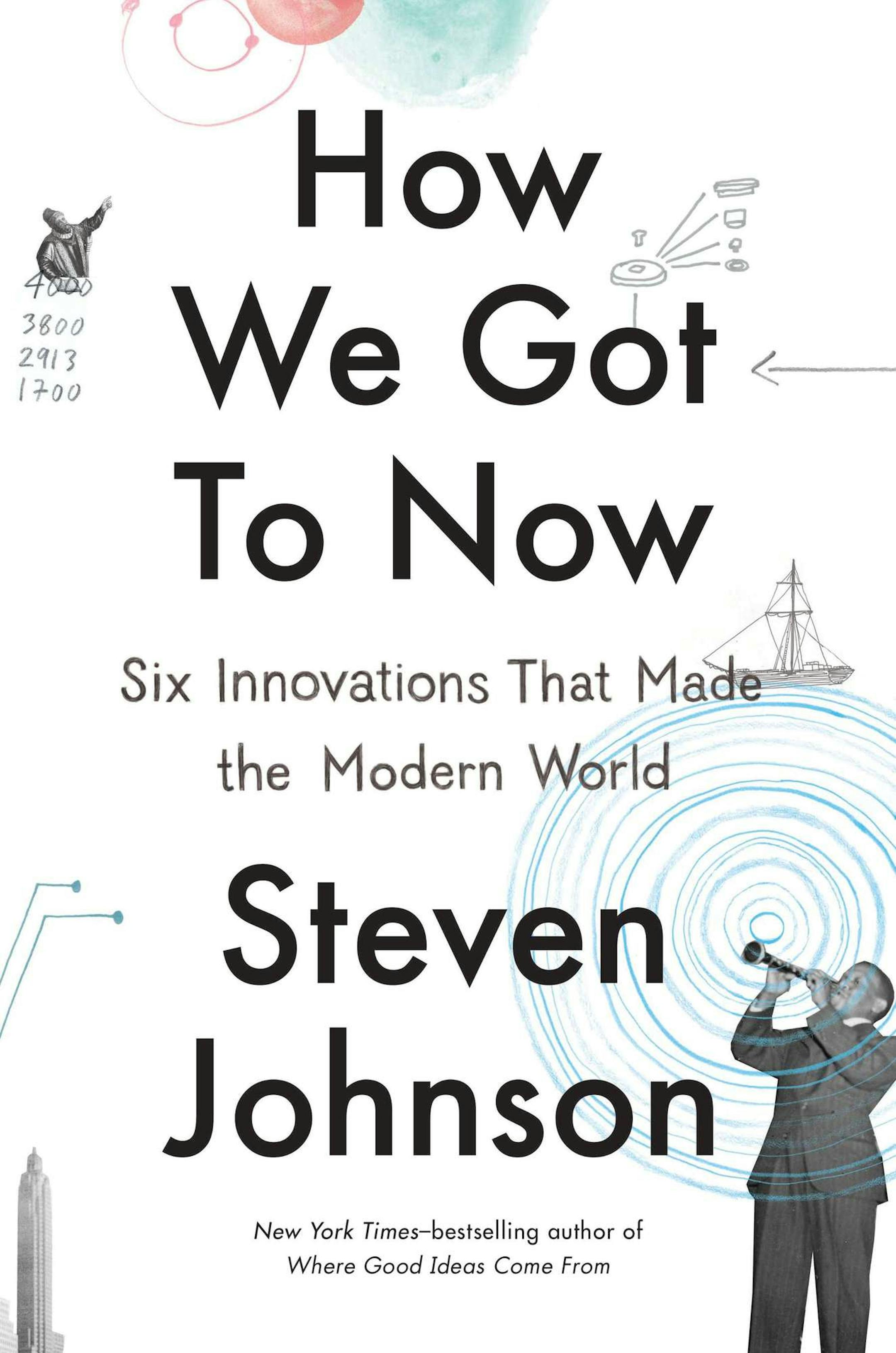
In "How We Got to Now," Steven Johnson carries on that tradition by examining six topics — glass, cold, sound, clean, time and light — and how discoveries, accidents and shared insights led to so many ancillary developments.
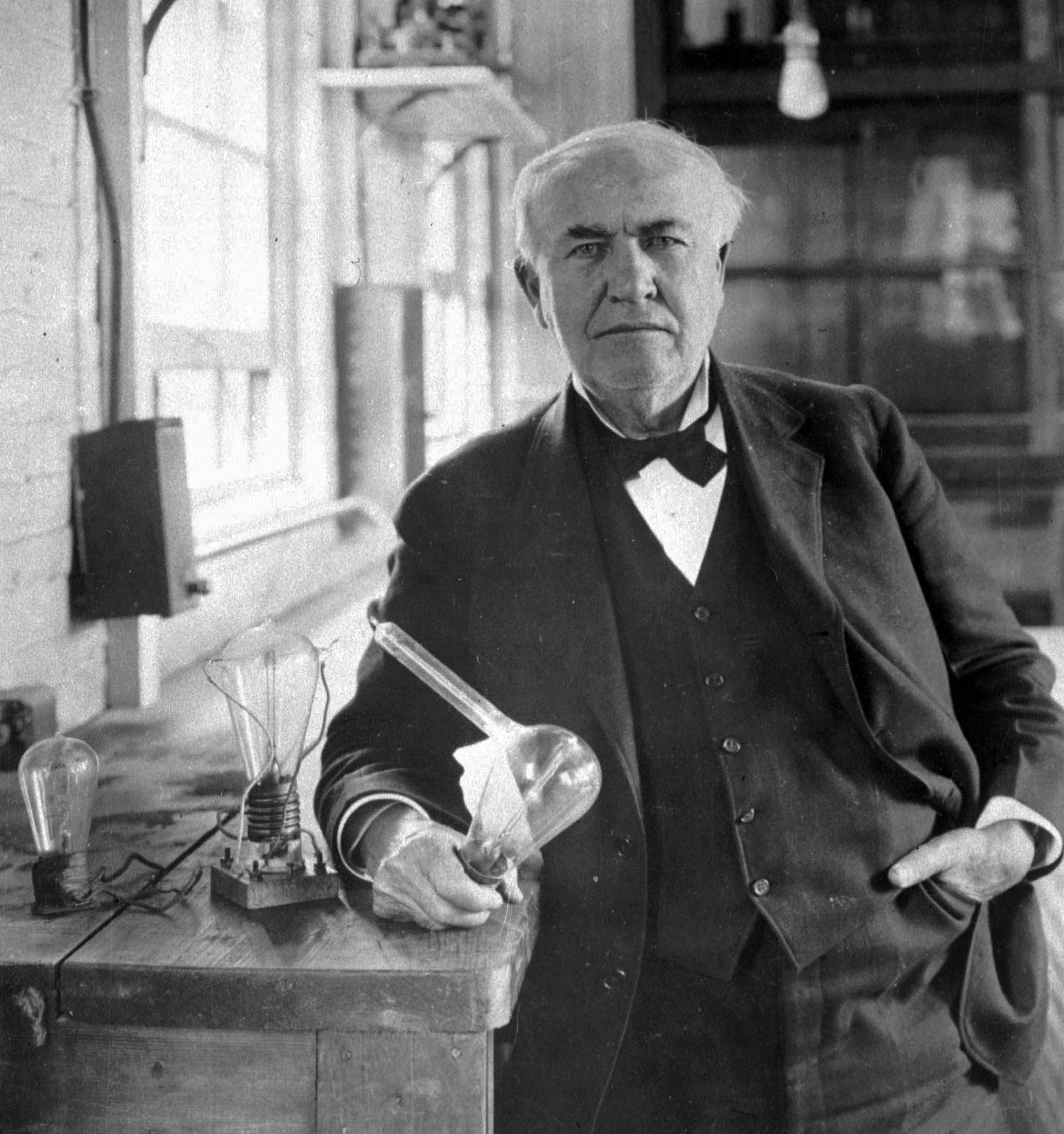
His description of "co-evolution," the way a cluster of innovations in one field may trigger or color simultaneous changes in others, differs from the butterfly effect — the idea that the flapping of a butterfly's wings may spawn a typhoon a continent away. The effects may be lineal, but they also may be parallel, "the adjacent possible." The invention of the printing press creates a demand for spectacles, which supports production and experimentation with lenses, which leads to the microscope, the telescope, photography, television and fiber optics. Turning sand into glass also leads to fiber optics and the Internet. Shipping ice to the Caribbean inspires a man named Birdseye to experiment with preserving peas by freezing them. An engineer's attempt to keep printer's ink from smearing by removing humidity also cools the plant and leads to air conditioning, which makes tropical climates (and movie theaters) more livable. Edison's light bulb was more "crowdsourced" than it was the creation of a single great mind, and the ideas and tinkering of many gave us sonar, without which there would be no ultrasounds. Microscopes allowed a germ theory of disease, which led to the use of chlorine to purify drinking water, which reduced infant mortality in the average American city by about 75 percent.
"Until the twentieth century, one of the givens of being a parent was that you faced a very high likelihood that at least one of your children would die at an early age," Johnson writes. "What may well be the most excruciating experience that we can confront — the loss of a child — was simply a routine fact of existence. Today, in the developed world at least, that routine fact has been turned into a rarity."
Johnson the storyteller makes science intriguing and comprehensible to the reader who struggled through basic biology, chemistry and physics. His previous books include "The Invention of Air" and "Emergence: The Connected Lives of Ants, Brains, Cities and Software." In conjunction with this book, the author hosted a PBS series this fall by the same name.
Chuck Haga is a former Star Tribune reporter who lives in Grand Forks, N.D.