André Aciman's first novel, 2007's "Call Me by Your Name," is an exquisite study of young love and finding one's way in the world. Few authors in recent memory have so capably captured the heady way that lust and adolescence intertwine, and Aciman rendered it in fine sentences to rival modern masters like Nabokov and Updike.
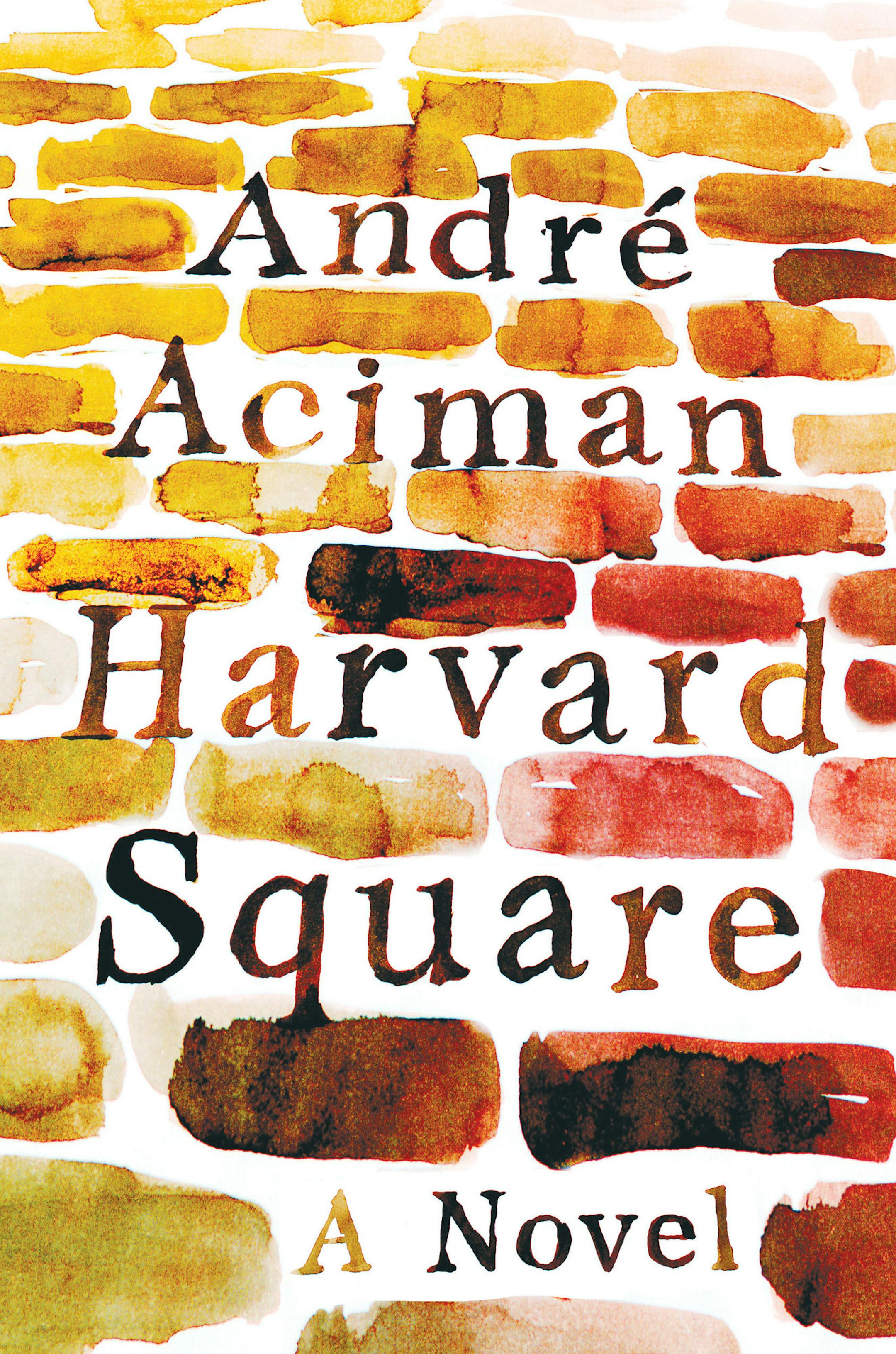
Aciman's third novel, "Harvard Square" (W.W. Norton, 292 pages, $25.95), has a similar shape. Again, the unnamed hero is a young, emotionally rudderless man: It's 1977, and he's a Harvard graduate student gobbling down stacks of 17th-century literature to prepare for his upcoming exams. But he's prone to distraction and curious about the man holding court in a local coffee shop, ranting about America with a machine-gun rhythm: "Rat-tat-tat, like shattered glass in a blender." The student quickly befriends the man, whose chattering lends him the nickname Kalaj (short for Kalashnikov).
The brief relationship the novel chronicles is an unlikely one — Kalaj is a Falstaffian Arab cabdriver, the narrator is a timid Egyptian-born Jewish student. But each learns something from the other, and much of "Harvard Square" turns on the way Kalaj bolsters the narrator's confidence with women. Kalaj's approach to seduction evokes the back-and-forth of a poker hand: "He asked, she answered, he asked again, she answered, then asked. … You had to remain at the game, at the table until everyone showed their cards."
This canny (if somewhat condescending) behavior has its limits for the narrator, who beds a series of women before his exams; his emotional clumsiness, and Kalaj's personal troubles, make him less cocksure. But "Harvard Square" isn't a moral study on the limits of Don Juanism. Cast in a golden-hour, nostalgic light (a prologue and epilogue make clear that the narrator is looking back decades), the novel romanticizes nobody more than Kalaj, who "of all people, understood all about these hidden mainsprings in the twisted gadgetry of the soul." Kalaj's rakishness makes a mess of the narrator's life for a while, but it's framed as one of those look-back-and-laugh kind of stories.
That's a risky move. Aciman's plush prose somewhat blunts the central tensions that drive the book: Arab vs. Jew, man vs. woman, scholarly focus vs. libidinal freedom. In that context, Kalaj's complaints about how America is "ersatz" in all manner of ways seem less like the legitimate complaints of a displaced immigrant than a quirky tic. But "Harvard Square" sings as a portrait of a fleeting friendship, revealing how platonic closeness can have a romantic tinge as well. When the narrator writes that Kalaj "measured everyone on a Richter scale of either passion or authenticity," it's clear he's smitten. What things could matter more in a person?
Mark Athitakis is a reviewer based in Washington, D.C. He blogs at americanfiction.wordpress.com.