

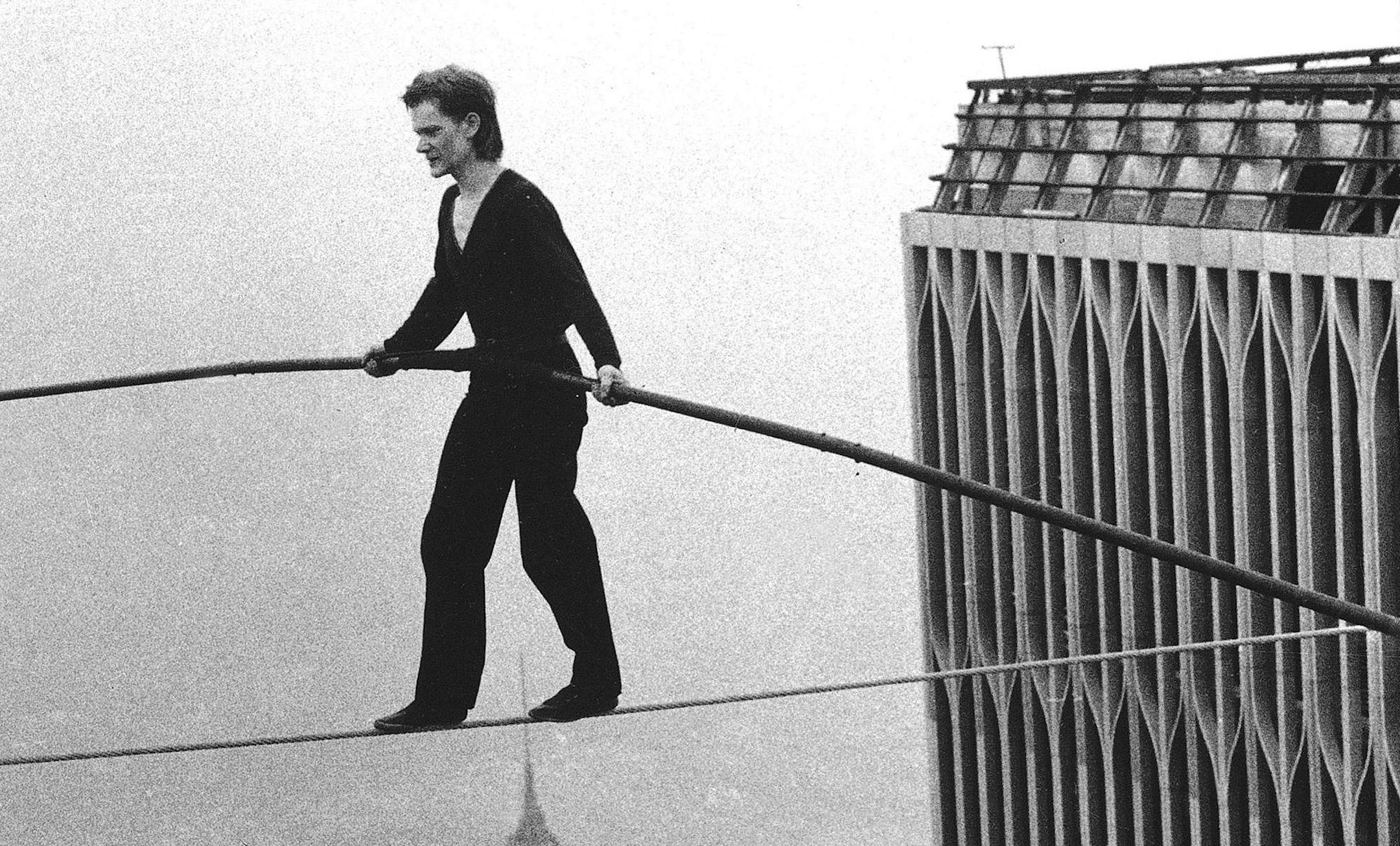
Philippe Petit is an accomplished rule-breaker. He delights in card tricks, lock-picking, bullfighting, arresting the attention of an audience and getting himself arrested for performing audacious and illegal acts of whimsy. He is most famous for a 1974 tightrope walk between the towers of the World Trade Center, chronicled in the Academy Award-winning documentary "Man on Wire." He is a trickster, an artist who makes and breaks things. And now he has made a book called "Creativity."
The book is about Petit's artistic process and aesthetic sensibility. It is also about card tricks, lock-picking, bullfighting, the uses of balance, the dangers of lethargy and all sorts of other things arranged with gleeful and deliberate chaos.
Anyone involved in the performing arts will find "Creativity" useful. Theatrical set designers will enjoy his descriptions of physical space and how to move through them. Actors might compare the same chapters to Peter Brook's "The Empty Space." Poets and novelists will either find insights in Petit's kaleidoscopic manifesto, or else set it aside to re-read Lewis Hyde's "Trickster Makes This World."
Should you read this book? That depends entirely on your tolerance for self-celebration. Petit savors his own mastery, and even in moments of relative modesty and self-deprecation his writing remains bombastic.
I do recommend "Creativity," but first I recommend watching Petit's TED talk. The two share material — both derive from a series of lectures on art and motivation. More important they share the same tone, the same affectionate arrogance and the same combination of wild mischief and careful precision. If you are amused and inspired by the TED talk, then you should go read the book. And once you watch that 18-minute video you will have Petit's voice, comedic timing and precise physical mannerisms in your head to complement and enhance the conversational and chaotic style of his writing.
"Creativity" is as richly insightful as it is vaingloriously irreverent. Read it. Use it to cross whatever tightropes you happen to be perched on. But don't take it too seriously. Never trust a trickster.
William Alexander is the National Book Award-winning author of "Goblin Secrets," "Ghoulish Song" and "Ambassador" (forthcoming in September). He lives in Minneapolis.


