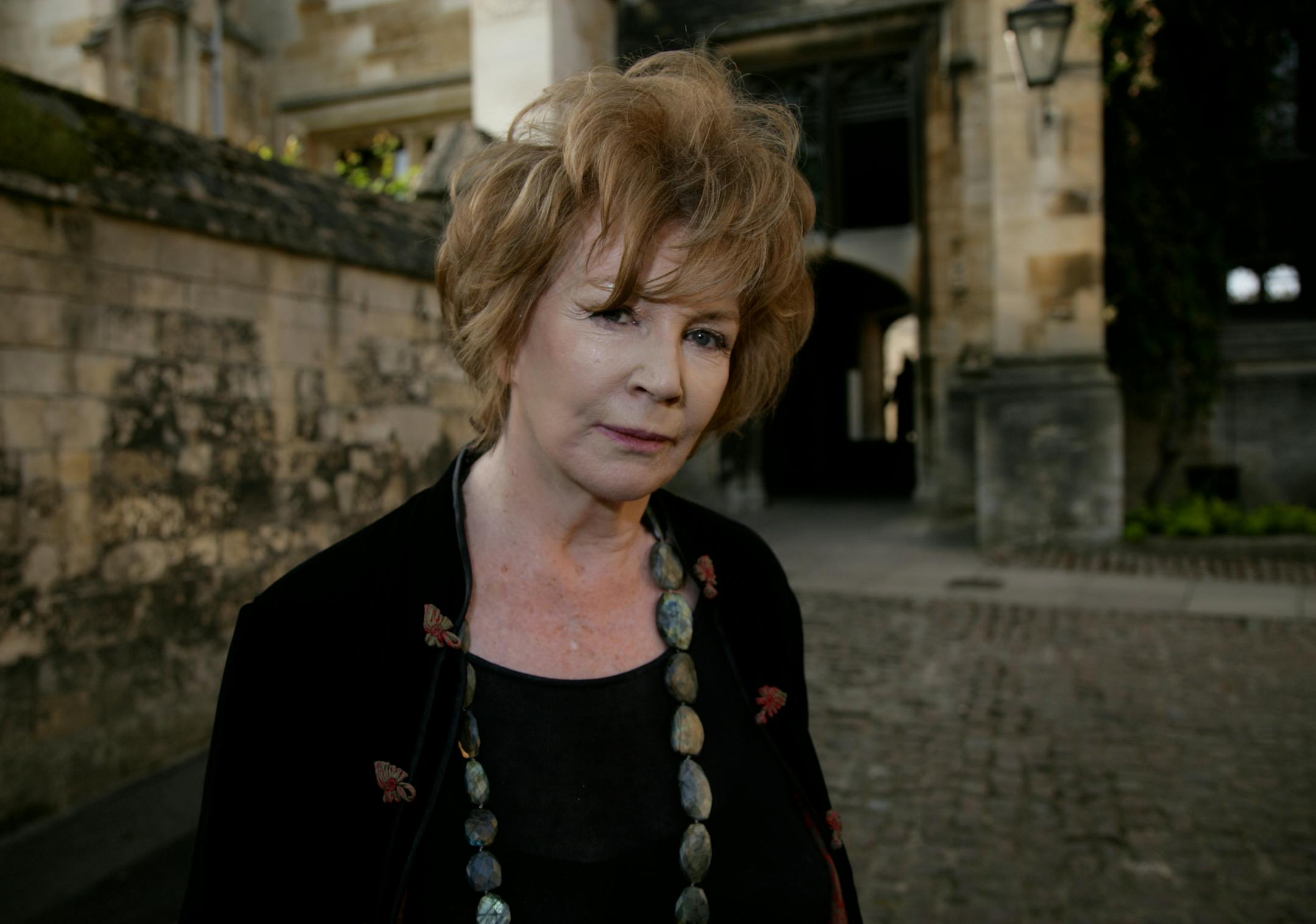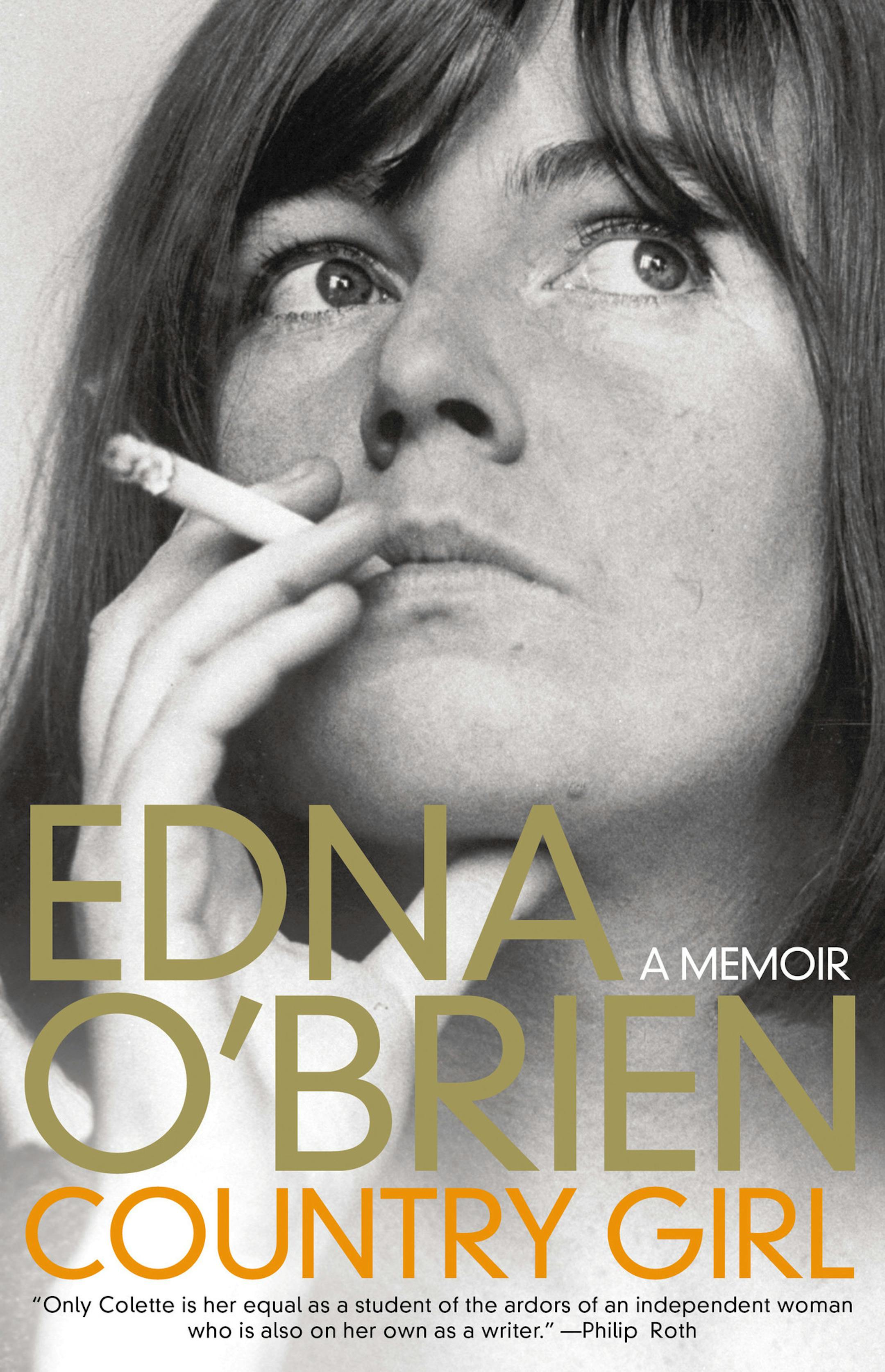
Edna O'Brien's memories flow freely in "Country Girl," the memoir she said she'd never write. She recalls her childhood in Ireland's County Clare with astonishing detail, but at age 82, O'Brien can't be bothered with such monotonous details as specific dates or ages. As she cherry-picks among the overgrown branches of her full life, the reader must guess when certain events took place, or lift clues from the occasional accompanying photo — many of them flattering images of the author.
Defying conservative, Catholic attitudes in mid-20th-century Ireland, O' Brien became a walking scarlet letter when her first novel, "The Country Girls," was published in 1960. It was banned in her homeland for suggesting that women not only had sex — sometimes outside of marriage — but they often enjoyed it.
Taking its name from her first notorious success, "Country Girl" is a curious effort, one that sometimes seems to prompt more questions than it answers. For all of O'Brien's detailed memories of childhood, she reveals next to nothing of her siblings, not even the sister with whom she lived in Dublin as a young woman fresh out of convent school. She fights to get custody of her sons — remembering in one of the few truly poignant passages how the boys discussed an episode of "The Man From U.N.C.L.E." as she took them to their father's house — then sends them off to boarding school the next year.
Laced with O' Brien's characteristic lyricism, the first two parts of the book paint an almost magical picture of a fanciful girl given to creating dramas out of her mundane surroundings, developing a crush on a nun, having her first adventures with men in Dublin as a pharmacist's assistant. But the latter half is both flatter and flightier, as if she is less interested in recalling her days as a renowned thrower of groovy soirees during London's swinging '60s and '70s.
O'Brien has encountered hundreds of boldface names over her long career, and she drops them elegantly. She had a one-night-stand with Robert Mitchum. Paul McCartney composed a spontaneous song about her after squiring her home from a party. Once, she suddenly hailed a cab in order to ditch a drunk, raging Patrick Magee, and she took a harrowing acid trip with Scotland's answer to Timothy Leary, psychologist R.D. Laing.
But for all the accusations she endured of being a wanton, immoral woman, she doesn't kiss and tell, at times to a maddening degree, never revealing the identities of two married lovers she took in middle age, one a prominent politician.
Her dry humor, scattered here and there like currants in scones, nearly makes up for the glancing treatment she affords: "I had turned 40, and I believed that by my mother's willing of it I would not find love again." "Feminists and academics … were tearing into me for my supine, woebegone inclinations." "One morning I wakened to find that I was broke."
There's even a Minnesota moment, a less-than-fond recollection of a trip to Duluth, where she sat in the Radisson's famous revolving restaurant, fearing she'd never leave.