

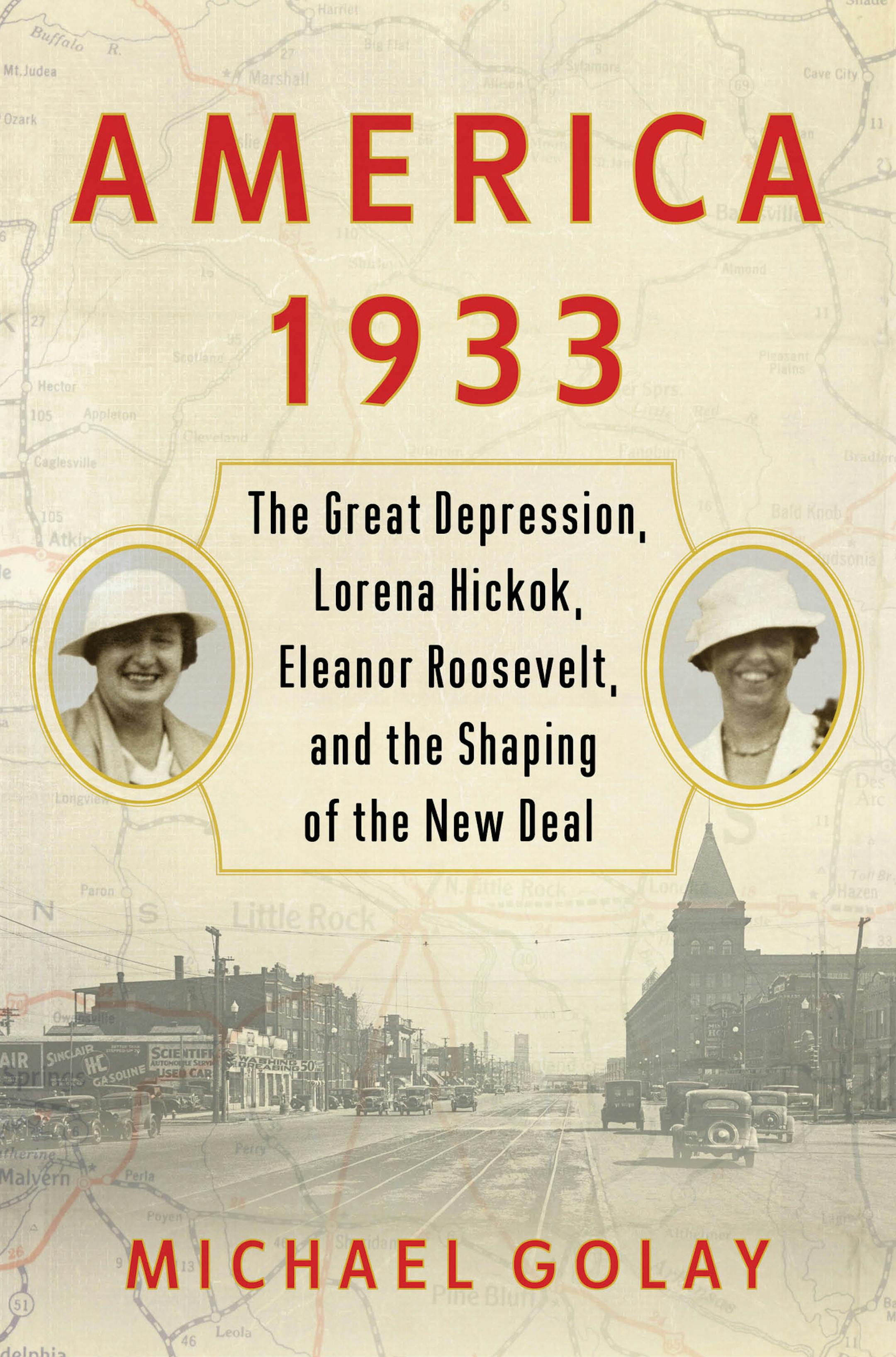
In November 1933, Lorena Hickok, a former editor of the Minneapolis Tribune, returned to Minnesota. She was crisscrossing the United States on an assignment for Harry Hopkins, head of the Federal Emergency Relief Administration (FERA), the New Deal's first welfare program. An enthusiastic supporter of Franklin Roosevelt's policies, Hickok was also "wholly committed" to Eleanor Roosevelt. Anticipating a reunion with the first lady in the White House, Hickok wrote from Hibbing: "I want to put my arms around you and kiss you at the corner of your mouth." One week from tomorrow, Mrs. Roosevelt replied, "I'll be holding you."
In "America 1933" (Free Press, 315 pages, $26.99), Golay, who teaches history at Phillips Exeter Academy in New Hampshire, makes superb use of Hickok's reports for the FERA and her correspondence to provide a memorable and moving account of the impact of the Great Depression and her intimate and secret connection with the first lady. "I've probably gone into too much detail," Hickok wrote Hopkins in her first field report. "Only don't tell me to leave it all out please, because … it's so absorbing."
Indeed, it is. At a shirt factory in Lebanon, Pa., Hickok and Golay reveal, a young woman received $2.73 for a 60-hour workweek in an envelope that included a note encouraging her to recognize that "slaves are as plentiful today as they were before Lincoln delivered his Emancipation Proclamation. Are you hampered in your freedom of action? Just knock the 'l' out of slave." In New York City, libraries were a godsend, offering warmth and security to the homeless. And hungry South Dakotans made a stew out of the dried marrow of thistles, flour and water. If Roosevelt became dictator, Hickok wrote, "he can label this country out here 'Siberia' and send all of his exiles here. A more hopeless place I ever never saw."
Golay doesn't really explain why, in light of these conditions, the majority of Americans actually remained hopeful. Symbolically and substantively, he implies, the New Deal helped a lot. Along the way, however, the relationship between Hickok and Eleanor Roosevelt cooled. A temper tantrum in Yosemite, Golay speculates, may have had something to do with it. Eleanor Roosevelt remained loyal to her friend, however, helping her get jobs with the World's Fair and the Women's Division of the Democratic National Committee. "Hick dearest," she wrote in 1955, with sentiments that might apply as well to victims of the Depression, "of course you will forget the sad times at the end and eventually think only of the pleasant memories. Life is like that, with ends that have to be forgotten."
Glenn C. Altschuler is the Thomas and Dorothy Litwin Professor of American Studies at Cornell University.


