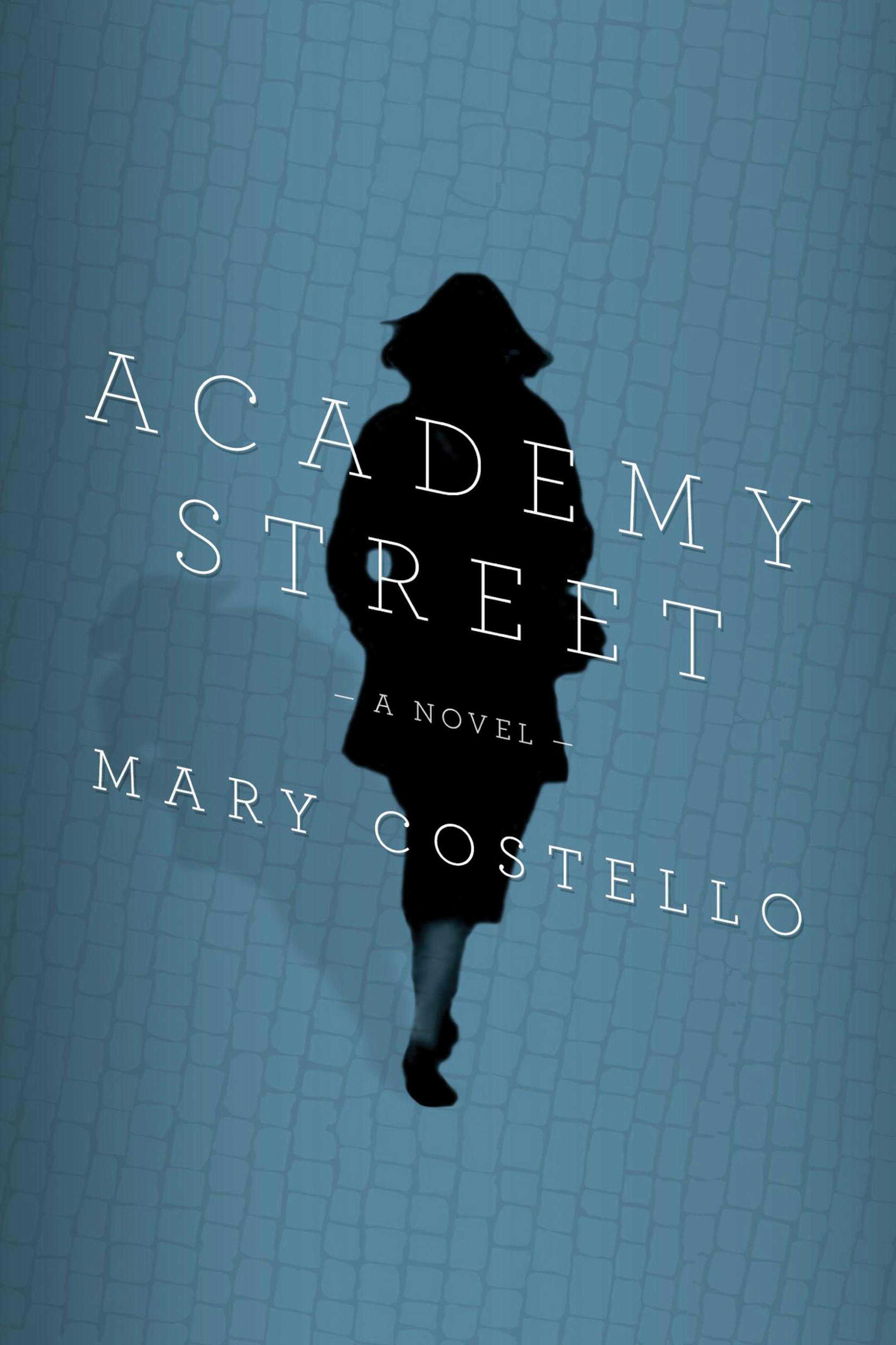
Mary Costello's "Academy Street" is a long-view novel in a succinct package. The story covers 70 years in roughly twice as many pages.
Antsy readers, take note: This is a book that can be finished in a couple of sittings. Remarkably, though, the narrative almost never feels rushed, its youth-to-dotage portrait of an Irishwoman who builds a life in New York as complex as an epic tale.
As the novel opens, it's the mid-1940s, and Tess Lohan, the book's central character, is 7. Her family's small farm west of Dublin is abuzz with activity. In one sharply etched scene, a blackbird zips through an open window and peels away a shred of wallpaper, darting off as quickly as it appeared. A hired hand tends a small orchard, and a "poultry instructress" drops by.
But the seemingly idyllic landscape has been touched by tragedy: Tess' mother is dead, probably from tuberculosis, and she rests in a coffin in the family home. Unfamiliar with loss, Tess fixates on the bewildering notion that the body is about to buried in a new dress. When she returns to school, her classmates are full of questions: "Did ye touch her — was she as cold as marble?" For a time, Tess is so shaken that she loses the ability to speak.
Her teens will bring a different set of challenges, as Tess juggles complicated sibling relationships, battles a protracted illness and learns to cope with her emotionally withdrawn father.
She's in her 20s when she moves to New York City, where she takes a job as a nurse and dates a man whom she'd like to marry. It turns out to be a brief fling, but one that results in a son, leaving Tess to raise the boy on her own. In these chapters, Costello ably captures Tess' wonder at American customs — "They stopped at a turnpike and paid a toll, just to use the road" — and the challenges associated with being a single mother in the 1960s. Tess buys herself a wedding ring to avoid shame.
Her life doesn't get easier in the book's second half. Although she forms a friendship that will be her most important bond, Tess, in her 60s, must also cope with a sudden loss.
This arrives in a chapter in which Costello advances the narrative by fusing it to an enormous real-life news story. Her decision to do so feels a little manipulative, but her handling of Tess' grief is nimble and assured.