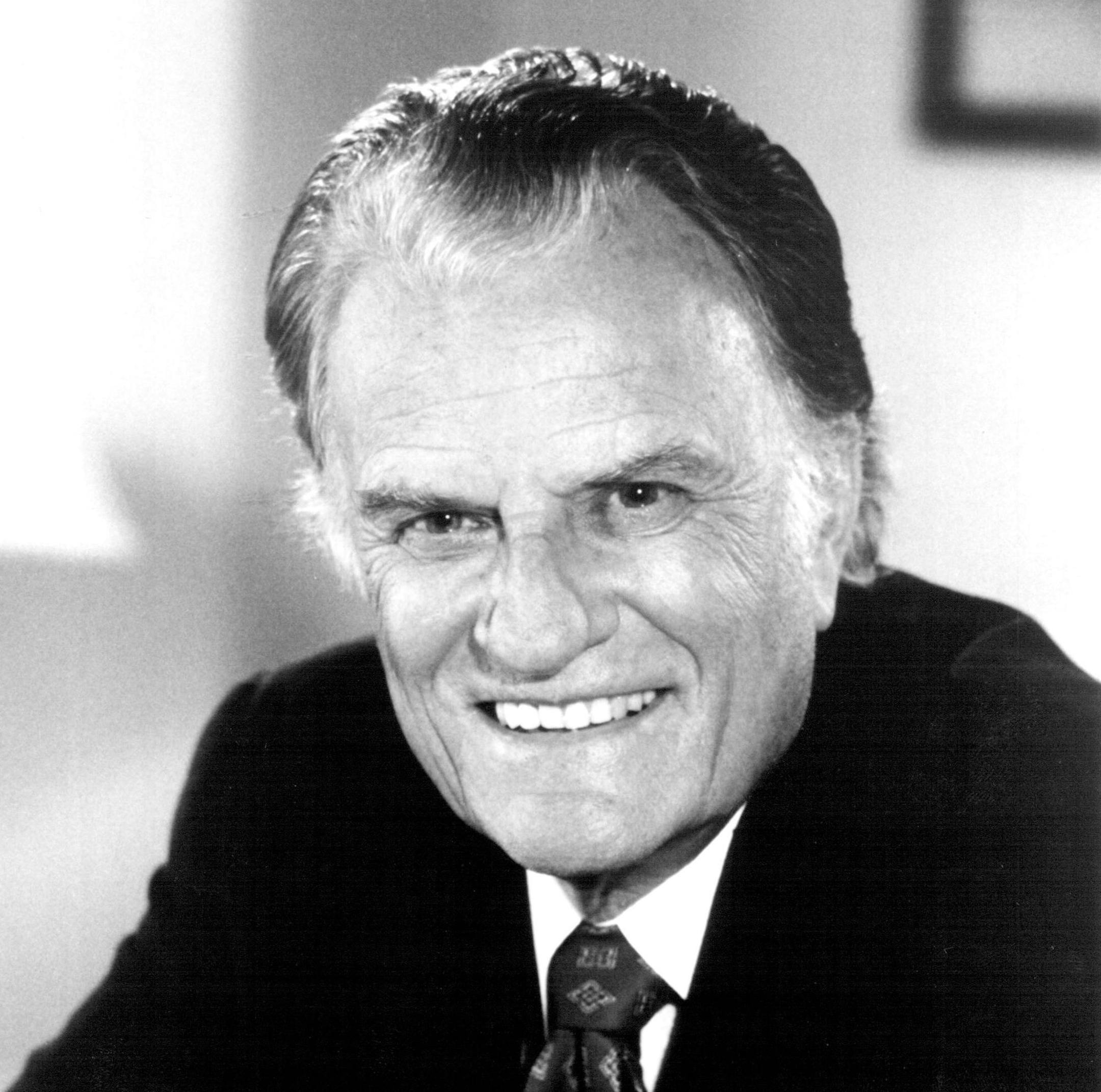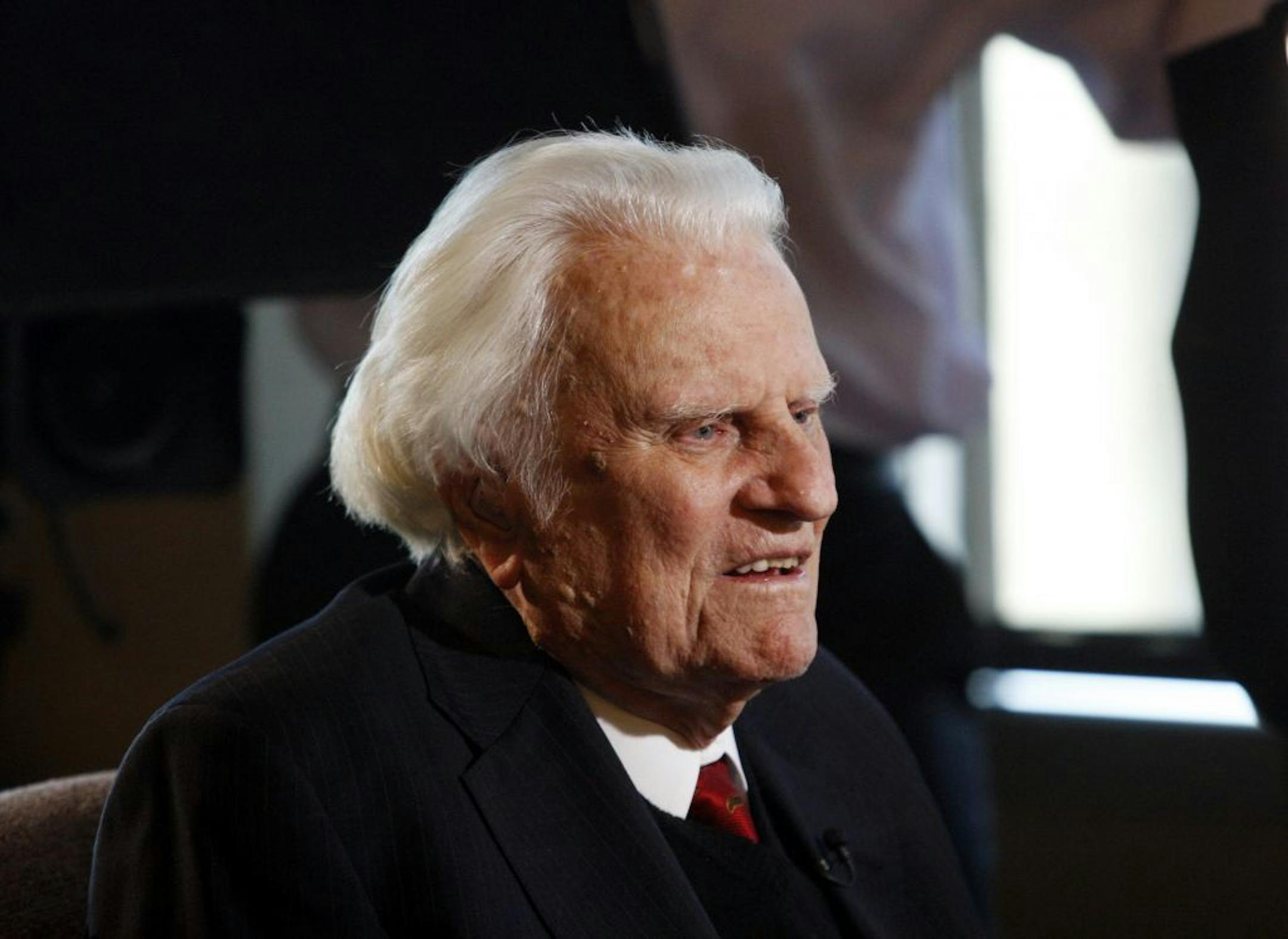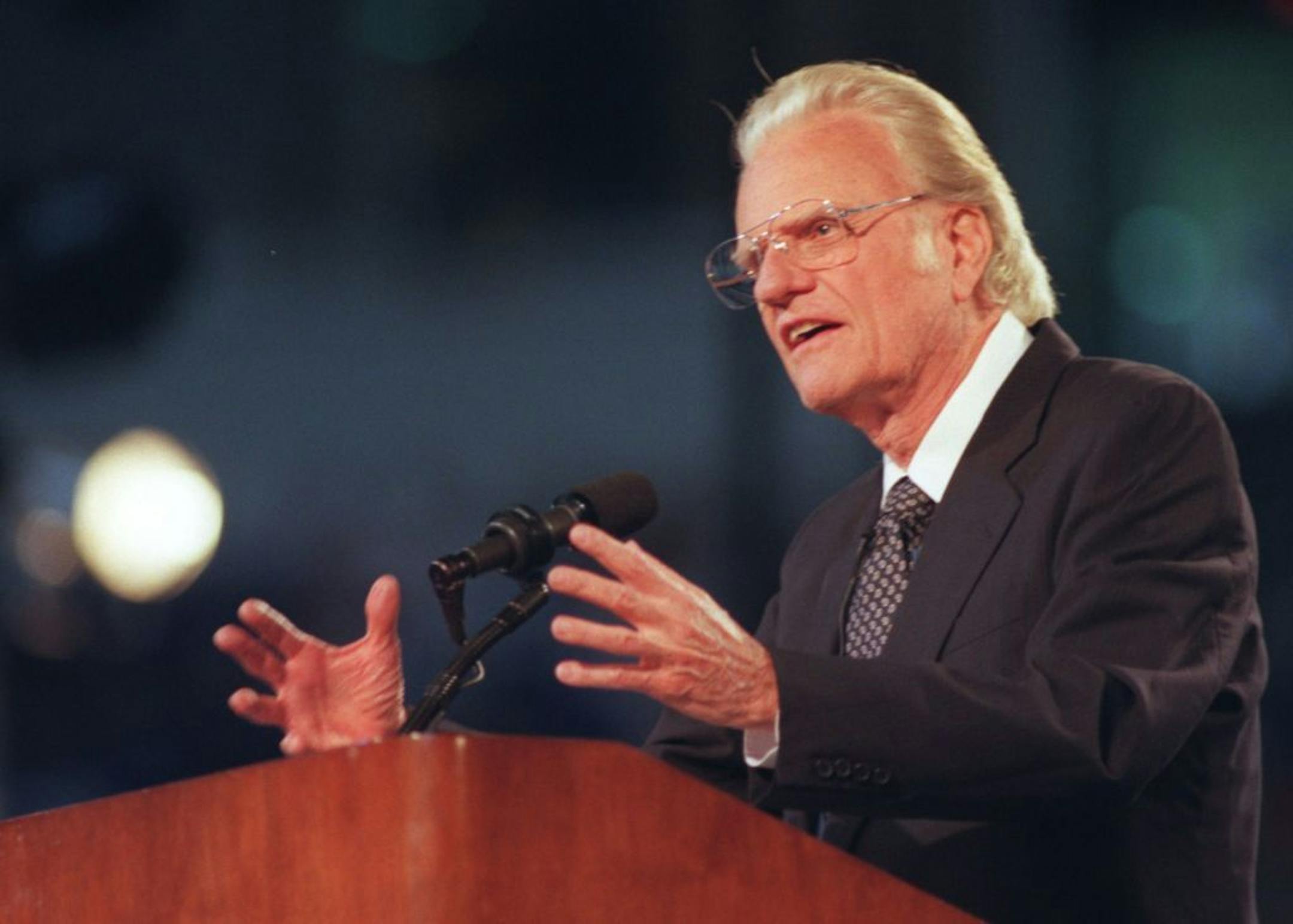
MONTREAT, N.C. — The Rev. Billy Graham, the magnetic, movie-star-handsome preacher who became a singular force in postwar American religious life, a confidant of presidents and the most widely heard Christian evangelist in history, died Wednesday at 99.
"America's Pastor," as he was dubbed, had suffered from cancer, pneumonia and other ailments and died at his home in North Carolina. Graham died at 7:46 a.m., with only an attending nurse inside the home, said Mark DeMoss, spokesman for the Billy Graham Evangelistic Association. Both the nurse and Graham's longtime personal physician, Dr. Lucian Rice, who arrived about 20 minutes later, said it was "a peaceful passing," DeMoss said.
More than anyone else, Graham built evangelicalism into a force that rivaled liberal Protestantism and Roman Catholicism in the U.S. His leadership summits and crusades in more than 185 countries and territories forged powerful global links among conservative Christians and threw a lifeline to believers in the communist bloc.
Tributes to Graham poured in from major leaders, with President Donald Trump tweeting: "The GREAT Billy Graham is dead. There was nobody like him! He will be missed by Christians and all religions. A very special man." Former President Barack Obama said Graham "gave hope and guidance to generations of Americans."
A tall, striking man with thick, swept-back hair, stark blue eyes and a firm jaw, Graham was a commanding presence in the pulpit, with a powerful baritone voice.
"The Bible says," was his catchphrase. His unquestioning belief in Scripture turned the Gospel into a "rapier" in his hands, he said.
Graham reached multitudes around the globe through public appearances and his pioneering use of prime-time telecasts, network radio, daily newspaper columns, evangelistic films and satellite TV hookups.
By his final crusade in 2005 in New York City, he had preached in person to more than 210 million people worldwide. No evangelist is expected to have his level of influence again.