

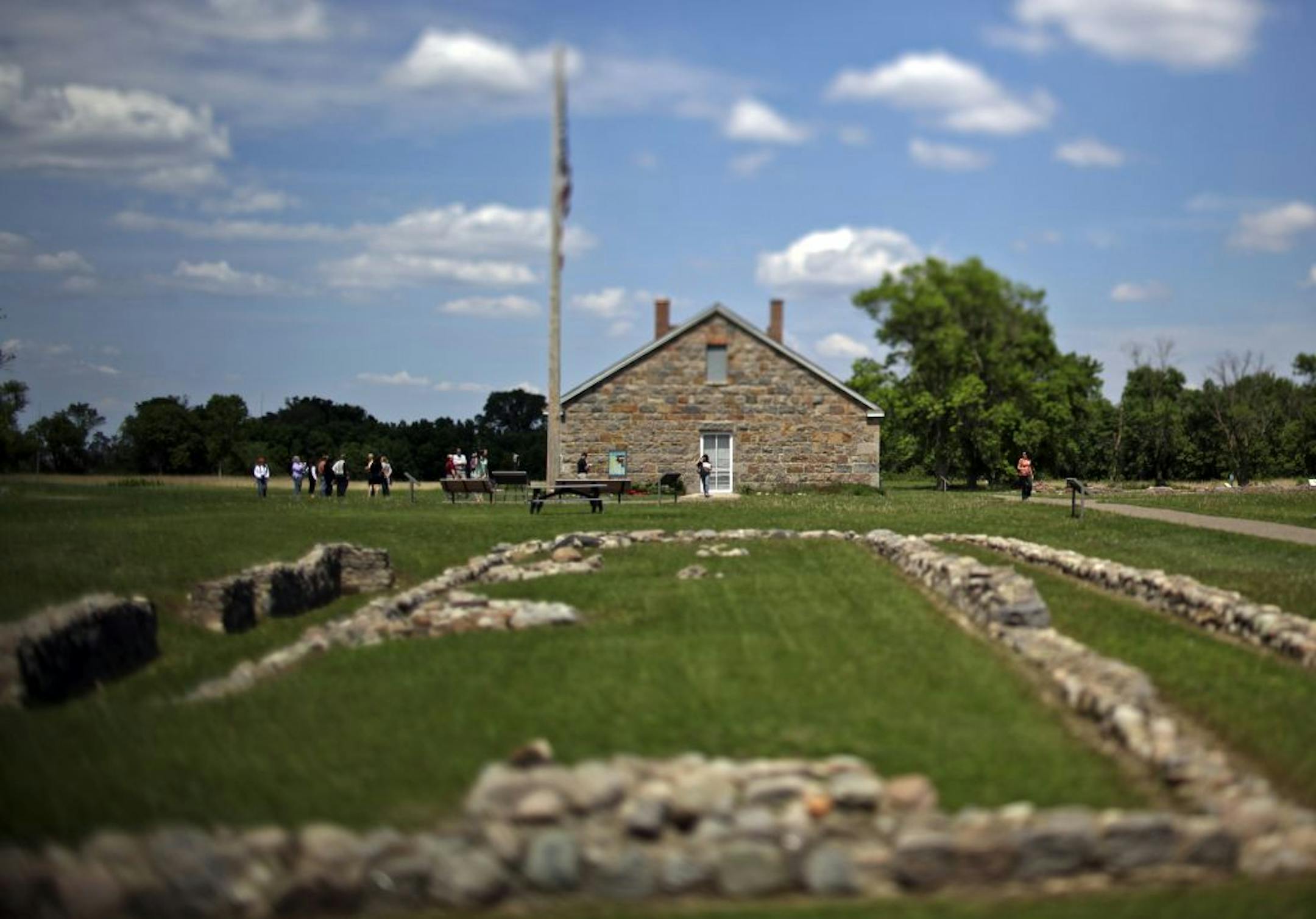
GROVE CITY, MINN.
Amid the patchwork quilted farm fields of corn and soybeans in Meeker County, Donna and Scott Whitcomb have a monument planted in their front yard. It's right next to a galvanized steel grain bin with the ironic brand name "Sioux" emblazoned up top in yellow.
You'll find the squat obelisk monument 4 miles south of Grove City just off Hwy. 4 in Acton Township. Just remounted on a new stone base, it commemorates the deadly dispute that left five settlers fatally shot near a trading post, igniting the bloody six-week U.S.-Dakota War that erupted in southern Minnesota 150 summers ago. It's one of dozens of monuments that punctuate the Minnesota landscape, off-the-beaten-path reminders of the awful history that shaped the state's early years.
"I grew up here, but my husband had to get used to people driving through the yard all the time and stopping to ask questions," says Donna, 50, whose family has lived in the area for six generations.
She has studied the myriad accounts of what happened on Aug. 17, 1862. If you're lucky enough to find her at home, she's happy to serve as a volunteer tour guide. She can even walk you over to the depression in the nearby woods where the trading post's cellar stored roots and whiskey. "I try to get people to understand that there are two sides to this story," she says, "and they have to have an open mind."
Earlier this year, photographer David Joles and I criss-crossed the Minnesota River Valley to retell the war's story through the life of the reluctant Dakota war chief, Little Crow. (Go to www.startribune.com/dakota to see stories, photographs, maps and videos.)
On our trek, we visited several county historical museums. Our favorite is in Litchfield, a little brick castle known as the G.A.R. Building, for Grand Army of the Republic. Built by returning Civil War soldiers, the hall is loaded with artifacts from 1862, including old maps, bullets and pieces of the trading post. Capt. James B. Atkinson's old journal, left from the punitive raids following the war, includes this inscription in pencil: "God knows what next."
Five miles southwest of Litchfield, beside the little white Ness Church, the first five victims share a common grave below a tombstone that reads, simply: FIRST BLOOD.


