

The rehabber: Robert Hengelfelt of Hengelfelt Restorations has been reviving turn-of-the-century houses, especially rebuilding front porches, since the mid-1990s. He studied art at Hamline University and has always had an appreciation for a variety of architectural styles. Moving into St. Paul's historic Ramsey Hill neighborhood "really opened my eyes," he said. "It was a stark contrast to the 1960s tract house I grew up in, in Roseville." His first rehab was a trash house in Crocus Hill, designed by Cass Gilbert, that was slated to be demolished. "I was naive and ambitious — and learned on the job."
The house: An 1885 Queen Anne Victorian in Ramsey Hill, with a classic turret and surrounded by a black wrought-iron fence. Hengelfelt was drawn to its big windows, spacious 3,400-square-foot floor plan and potentially terrific curb appeal, once he'd restored the spindle-railinged porch. "There was enough of the original character to make it worth salvaging, and I could re-create the rest," he said.
Back in time: Hengelfelt, who researches every house he restores, discovered that this one was designed by architect John Coxhead. "You can pick out his homes, because he designed rectangular turrets with rounded corners," he said. An early owner was John F. Stevens, the chief engineer of the Panama Canal and the Great Northern Railway. Hengelfelt unearthed an 1890s photo of the home's exterior from the Minnesota Historical Society, and it became an invaluable blueprint for restoration work.
The starting point: Over the years, the three-story home had been chopped up into separate apartments. Previous owners had torn down walls and tackled some restoration projects. "They were trying to do the right thing," said Hengelfelt. "But they didn't have the knowledge and experience." Most of the woodwork had been stripped off the walls, and the fireplace chimney was crumbling. One bonus: The kitchen had recently been updated with custom cabinets and upscale appliances.
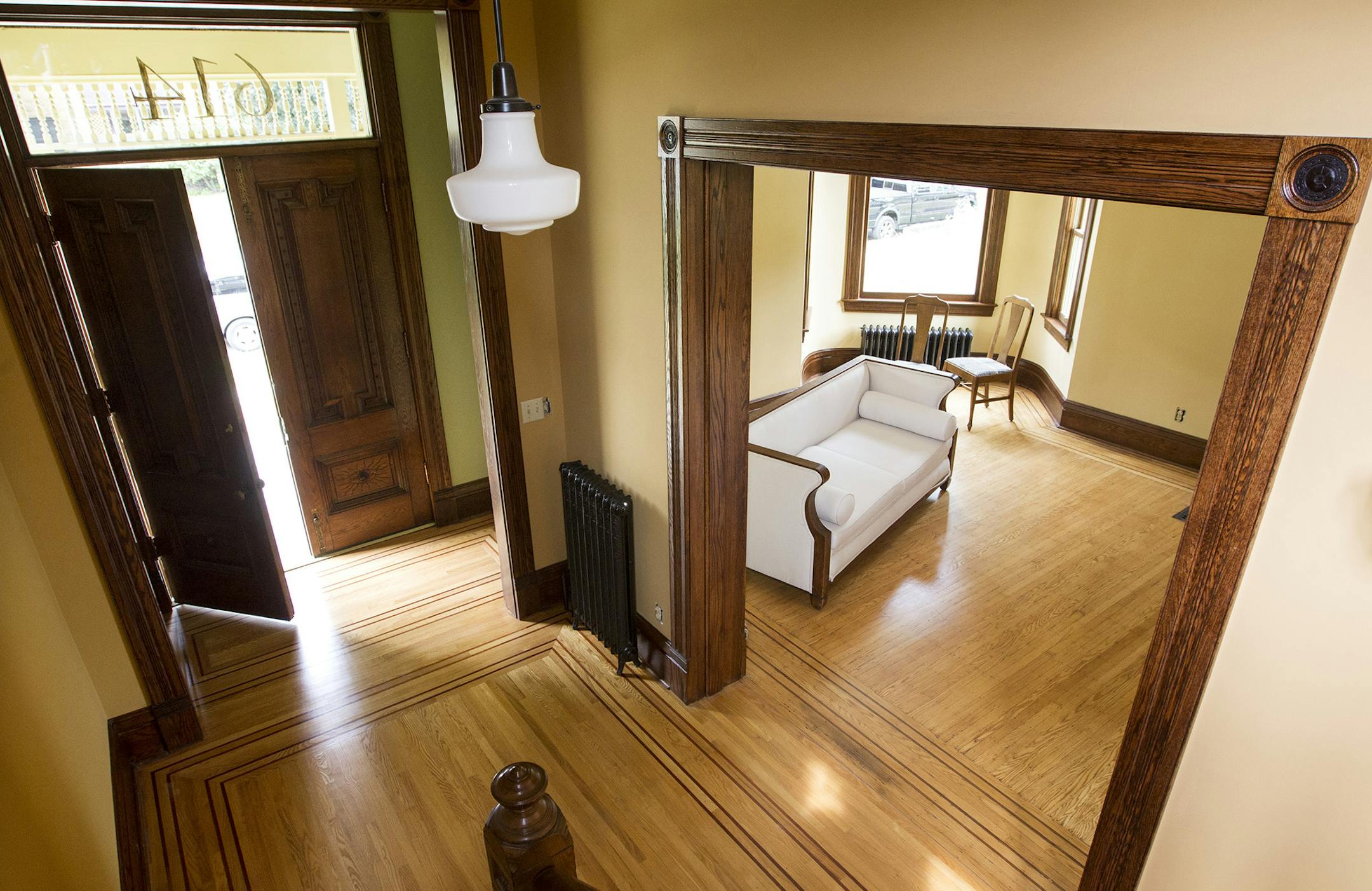
Top-to-bottom refresh: Hengelfelt painted or refinished just about every surface, including the inlaid wood floors. And he built new oak doorway casings, matching the original woodwork and hand-carved rosettes.
Old-house surprises: The second floor's sagging floors required major and costly structural work, from the basement to the attic. Such surprises are why most rehabbers don't want to take on very old, rundown houses. "It's a huge financial risk," Hengelfelt said. "It's hard to know what you will find when you peel back the layers." In a previous house, he pulled off the siding and ended up with rotten wood lath — adding two weeks of work.
A better bathroom: Upstairs, Hengelfelt replaced a 1980s "Menards bathroom" with a bigger one, by knocking down a wall, and installing travertine tile, a pedestal sink, claw-foot tub and white subway tile. "This is a 130-year-old home — I want it to last and be timeless," he said. The final touch is a heated floor.
Design philosophy: "Part of preservation is making it functional for today, but respecting the time it was built," said Hengelfelt. "If you follow the latest trends, you are doing a disservice to the house."


