
Remodeled Minneapolis home is old-school green

A Minneapolis tree trimmer remodeled his house the old-fashioned way -- by doing it himself, relying on local resources and repurposing wood from trees and even utility poles.

The Minnesota Star Tribune
April 21, 2010 at 9:27PM
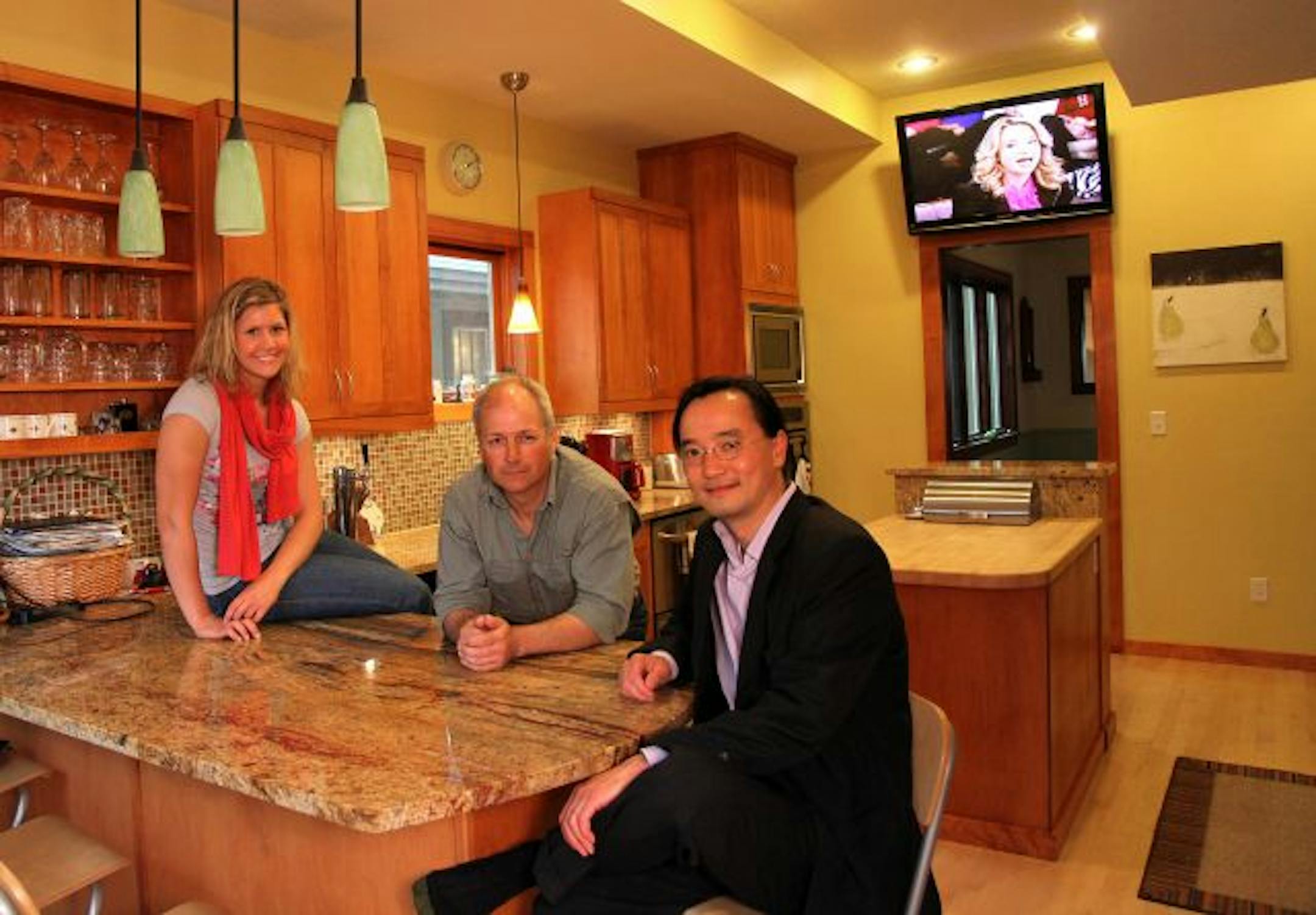
Stan Bratt, center, with his niece Annalise Bratt, a student at Hamline University, who helped with the painting, and architect Tan Nguyen, who lives in the neighborhood.
Stan Bratt, center, with his niece Annalise Bratt, a student at Hamline University, who helped with the painting, and architect Tan Nguyen, who lives in the neighborhood. (Tom Wallace/The Minnesota Star Tribune)

Stan Bratt has deep roots in his Longfellow neighborhood. So do his floors and cabinets.

When the Minneapolis tree-service owner (Bratt Tree Co., www.bratttree.com) remodeled his bungalow, he not only did the work himself, but he used wood from trees he'd cut over the years.

"It's rare to get a log that's good, and I just hated to throw 'em away," he said. So rather than send them to a landfill, he stored them, figuring he'd find a good use for them someday.

That day came a few years ago. Bratt had been living in his tiny bungalow, just down the street from where he grew up, for more than a decade. It was small, about 900 square feet, and plain. "It didn't have charm," he said. And the kitchen was so tiny that he had to put his refrigerator in the back stairwell. "If anything fell out of it, it would fall all the way to the basement."

He'd always wanted to update the house. Marrying his wife, Teri, gave him a catalyst. But the house needed so many expensive upgrades that they soon decided to expand it, as well. Bratt wanted room, eventually, for his parents, who still live in the neighborhood. "My grandparents moved in with my parents. That's what we do in our family. We take care of them; we don't put them in nursing homes." And he wanted room for his three nieces, his brother's daughters, two of whom are now attending college in the Twin Cities.

Bratt planned to do most of the work himself, with the help of his family and friends, and was committed to using local suppliers and materials.

"We always like to hire people nearby," he said. "I like it when people in our neighborhood hire us. It's good for the community, and it's greener if we don't have to drive a fleet of trucks across the city."

He found his architect, Tan Nguyen, right in his neighborhood after Nguyen (Nguyen Architects, www.nguyenarchitects.com) hired him to cut down a diseased elm in his front yard. Working with an architect was important to Bratt because he wanted his house to blend with its established urban setting. "These old neighborhoods have so much character," he said. "My grandfather was a builder in the neighborhood and built a lot of these houses. I wanted it to fit in."
Designing within the tight confines of Bratt's city lot, while increasing the house's square footage 2 1/2 times, was a challenge, Nguyen said. "There's a fine line between adding space and looking like too much was added." In addition to adding a second floor, Nguyen's design bumped out the front, back and one side.

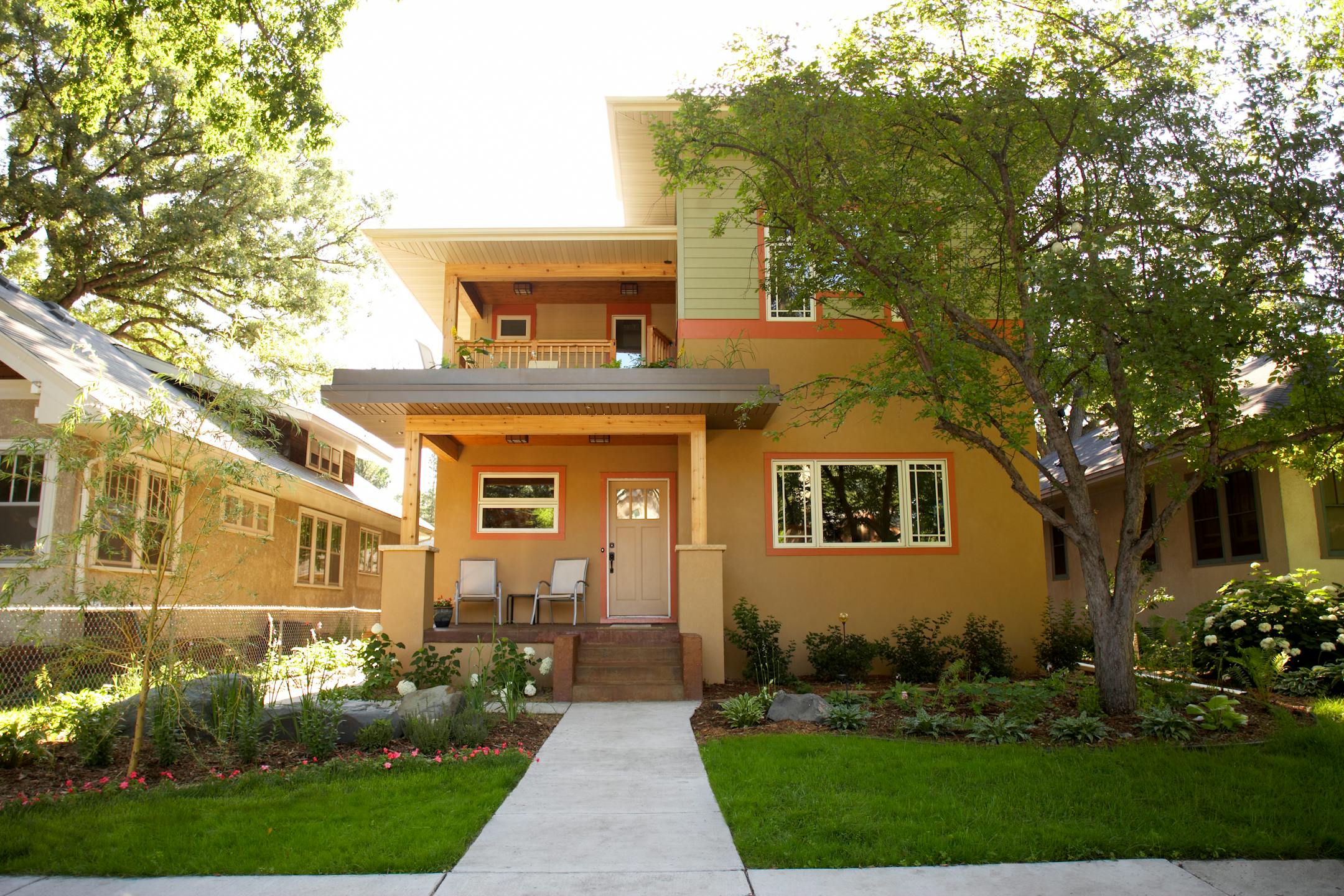
He was able to meet all existing setback requirements without requiring a zoning variance. To keep the house from looking overwhelming from the street, Nguyen broke the design into "compartments," including a taller "tower" section. Both Bratts wanted porches, so Nguyen designed three. Then he had a brainstorm: The roof over the first-floor porch could also be a roof garden adjoining one of the second-floor porches. Bratt liked the idea, which delighted Nguyen.

"I love that Stan was interested to do this," he said, gesturing to the roof garden. "It's sparked a lot of interest and gets people to think about gardens in a different way."

Three-year construction zone

With a plan in place, Bratt got to work. He and a handful of relatives and friends did all the demolition and construction work, building the addition around the original house before they took its walls down. The project was expected to take about eight months. Instead it took three years, with Bratt and his wife living in the house the entire time. If he could have one do-over, they would have moved out, he said. "That would have sped up the process dramatically."

To transform his cache of logs into usable lumber, Bratt turned to another local contact, Rick Siewert. "We grew up together," Bratt said. Siewert has a company, Wood From the Hood (www.woodfromthehood.com), that dries and mills local tree wood, turning it into building material and wood products, such as tabletops.

Bratt made his kitchen cabinets from local maples, and his upstairs floors from local elms. "There are some slight imperfections," he said. "We don't discriminate against imperfect wood." To build his deck and fencing, Bratt used reclaimed utility poles, some dating to the 1930s. "It's old-growth cedar."

Bratt saved about $150,000 in labor by doing the demolition and construction work himself, Nguyen estimated. And the sense of satisfaction is priceless. "It's always nice to know you've had a hand in something and can take pride in how it turned out," Bratt said.

Then there's the satisfaction of living in a spacious, updated house. The new eat-in kitchen is his favorite spot, Bratt said. "I can actually cook now. You really couldn't cook in the old kitchen. And it's great for entertaining. This Christmas, we had a meal for 23 people and I was able to serve them all simultaneously, which was really fun. People weren't having to go to the basement to eat, or to eat in shifts."

The kitchen also contains his favorite new gadget, a "beermeister" -- a tap on the counter leading to a keg beneath. No imported beer for Bratt. "It's Summit, local beer," he said. "I'm a runner, and it's always nice to have a locally brewed tap beer after a long run."

Bratt's commitment to keeping things local appealed to Nguyen, as well. "That's what I like about this project. I call it 'Green by Simple,'" he said. "It's just common sense. People have been doing this all along; they just didn't call it 'green.'"

Kim Palmer • 612-673-4784

Stan Bratt's remodeled house features three porches.
Stan Bratt's remodeled house features three porches. (Paul Owen)
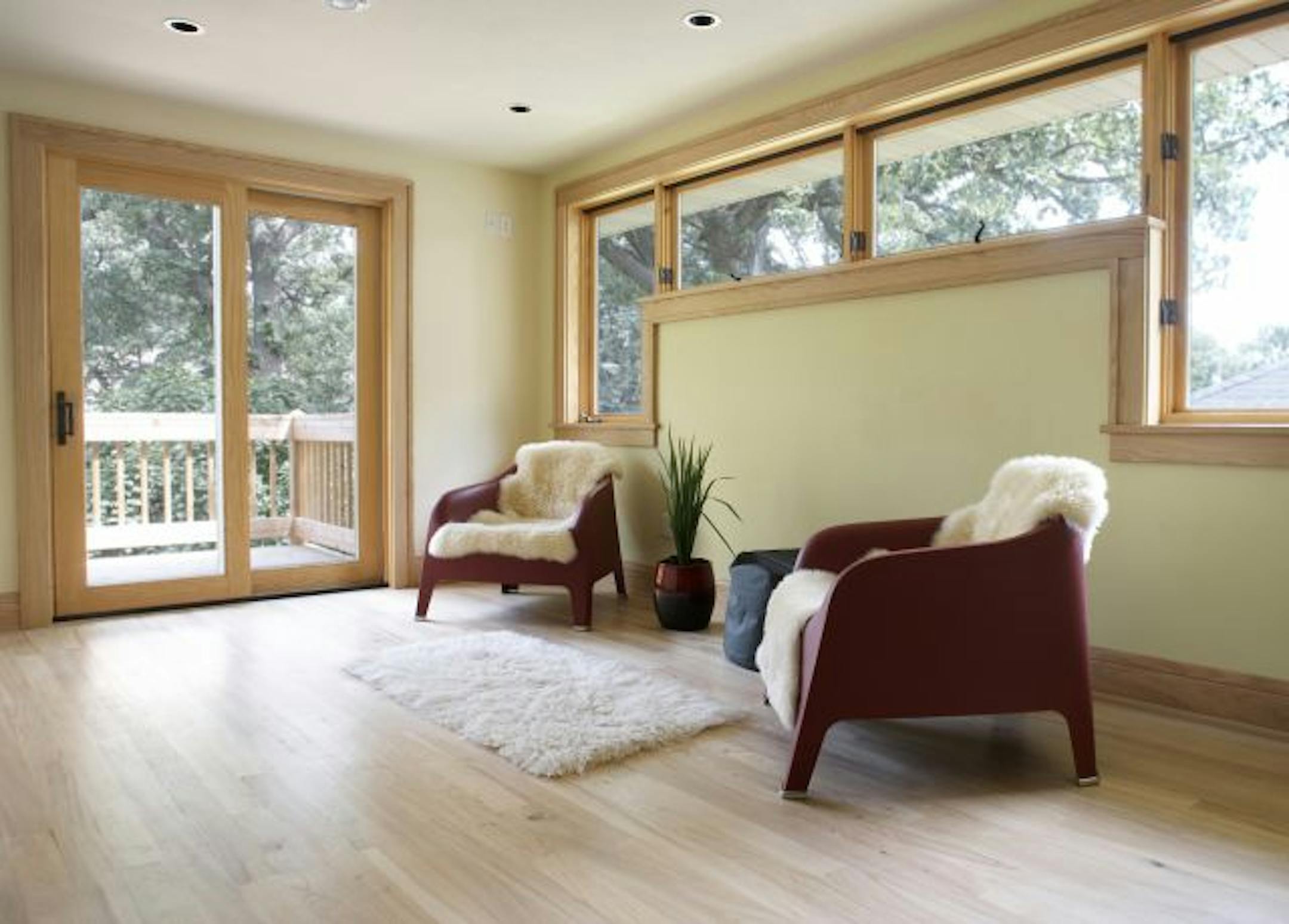
The upstairs of Stan Bratt's remodeled Minneapolis home, looking out onto one of three porches.
The upstairs of Stan Bratt's remodeled Minneapolis home, looking out onto one of three porches. (Star Tribune/The Minnesota Star Tribune)
about the writer

about the writer

Kim Palmer

Reporter, Editor

Kim Palmer is editor/reporter for the Homes section of the Star Tribune. Previous coverage areas include city government, real estate and arts and entertainment 

See Moreicon

More from Minnesota Star Tribune

See More
card image
J. SCOTT APPLEWHITE, ASSOCIATED PRESS/The Minnesota Star Tribune

The "winners" have all been Turkeys, no matter the honor's name.

In this photo taken Monday, March 6, 2017, in San Francisco, released confidential files by The University of California of a sexual misconduct case, like this one against UC Santa Cruz Latin Studies professor Hector Perla is shown. Perla was accused of raping a student during a wine-tasting outing in June 2015. Some of the files are so heavily redacted that on many pages no words are visible. Perla is one of 113 UC employees found to have violated the system's sexual misconduct policies in rece