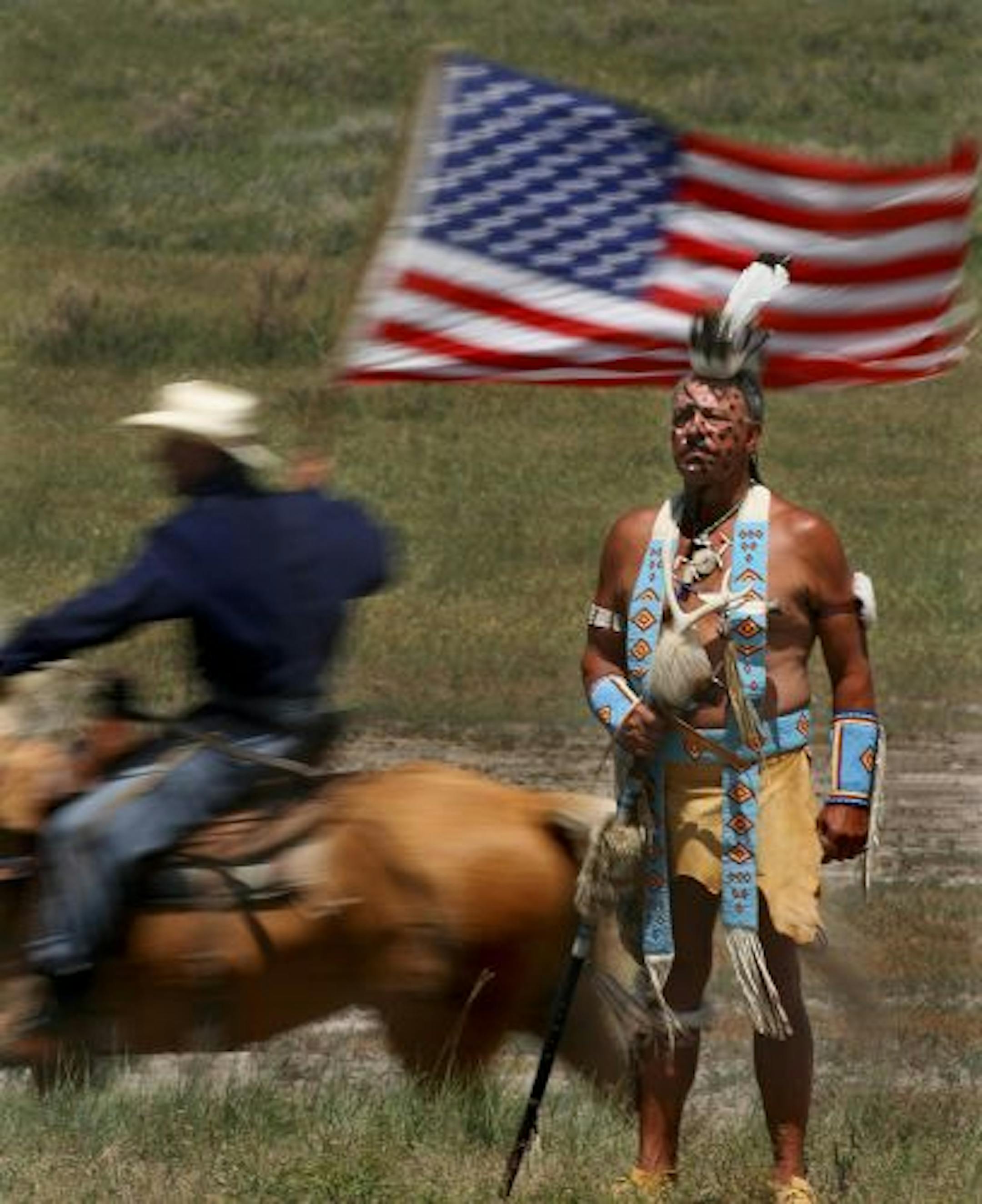
A frayed American flag, found under a dead soldier on the Little Bighorn battlefield, recently brought $1.9 million at an auction at Sotheby's in New York. The swallowtail Culbertson guidon, named after the soldier who found it, had been owned by the Detroit Institute of Arts for more than 100 years.
That sale is just the most recent evidence of our fascination with the Battle of the Little Bighorn, a pivotal moment in U.S. history. Dozens of books have been written about every imaginable aspect and key player of the June 1876 battle.
The story of the battle, also known as Custer's Last Stand, has been retold in movies and song, mostly painting the swaggering Lt. Col. George Armstrong Custer and the 7th Cavalry as heroes. Nearly all -- about 270 men -- were wiped out in the battle. Estimates of Lakota, Cheyenne and Arapaho casualties vary widely, from just 36 to 300. There is no argument that the Indians were victors in the battle, but the clash between two cultures would not end well for them. They ultimately lost the buffalo grazing grounds that sustained their nomadic life.
Today, the plains of southeastern Montana remain strongly associated with history. Hardin, a farming town of 4,000 people, celebrates its Old West heritage with a weekend Bighorn Days festival every June. A parade goes down Central Avenue, past Fort Custer General Store and other small businesses. Afterward, many head to the reenactment site, where Custer's final moments are played out four times over three days. Then they return to town for a crafts fair, Indian tacos and live music. The thought is warming in the midst of wintry spring.
For a more solemn remembrance of Custer's Last Stand, we drive a few miles farther east to the actual battlefield along the Little Bighorn River. The National Park Service operates the Little Bighorn Battlefield National Monument.
Looking out on the vast plains, that famous Montana big sky forming a dome over us, we can't help but be moved. We're on the Crow Indian Reservation, and the weight of what the Indians lost is immense. The grandeur and vibrancy of the land constituted their freedom, and the clash with Custer was the beginning of the final, crushing blow.
Though the government and the Indians lived and traveled the region in a tenuous balance created by joint treaty, the discovery of gold in the Black Hills, in what is now South Dakota, changed the deal. President Ulysses S. Grant's budget was in dire shape and he wanted the gold. Custer -- who had been successful as a commander during his wartime promotion to major general in the Civil War -- and his men marched west.
We walk up to Last Stand Hill, where Custer and his brother, Tom, along with many other soldiers, were killed. Memorials mark the spots where they died, and all of the bodies remain except Custer's, which is buried at West Point Cemetery in New York.