

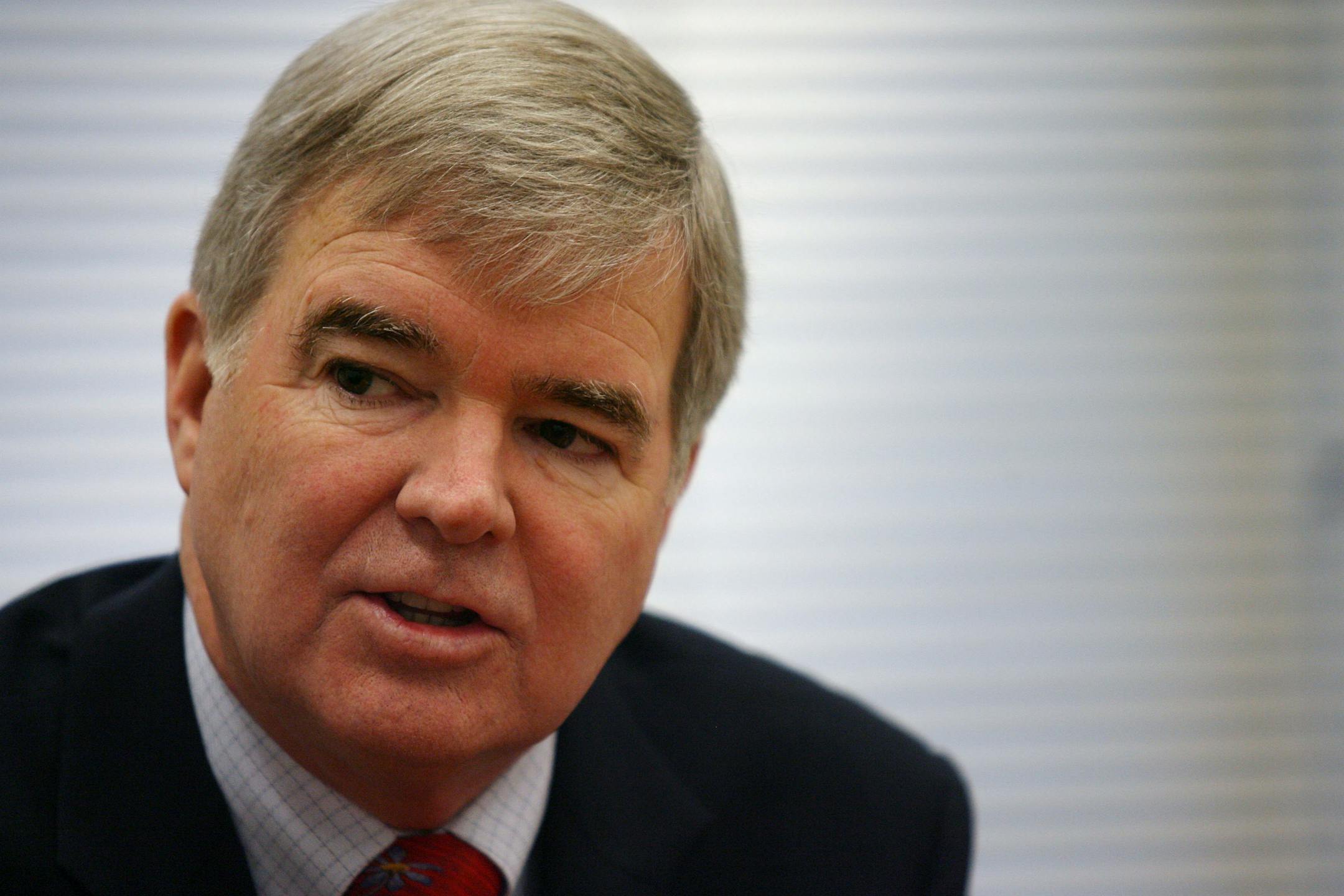
It's too early to tell whether Mark Emmert has the stomach to pursue meaningful reform in college athletics. In his keynote address to the NCAA's annual convention Thursday, the organization's new president plucked some low-hanging fruit, promising swift action in response to two high-profile scandals in college football.
Both came to light during Emmert's first few months of duty. An NCAA investigation found that Cecil Newton shopped his son Cam -- the Auburn quarterback who now owns both a Heisman Trophy and a national championship -- to Mississippi State for $180,000. The other involved five Ohio State players who sold rings, jerseys and other items and got discounts at a tattoo parlor.
Those incidents were obvious violations of the spirit, if not the letter, of NCAA law. So it took no particular courage for Emmert to decry them in his speech. "It's wrong for parents to sell the athletic services of their student athletes to a university, and we need to make sure that we have rules to stop that problem," he said. "And today, we don't. We have to fix that. Student-athletes trading on their standing as star student-athletes for money or benefits is not acceptable, and we need to address it and make sure it doesn't happen."
Aside from one startling statement -- who knew the NCAA didn't prohibit parents from bidding out their offspring's skills? -- Emmert followed a predictable script in his first major address. It's a good sign that he intends to strengthen some rules designed to protect the integrity of college sports. But unless he's willing to set his sights farther up the ladder, on the influences that are really corrupting major-college athletics, it's ultimately meaningless.
The NCAA won no points with the public for its handling of the Newton and Ohio State cases. It was determined that Newton didn't know what his father was doing and should remain eligible. The Ohio State players were suspended for the first five games next season, but they were allowed to play in the Sugar Bowl.
No one, save for perhaps the tooth fairy, believes the NCAA would have done anything that would have taken those players off the field. We have become so accustomed to the modern state of college sports -- now a multibillion-dollar business, run by the wealthiest members of the cartel for their enrichment -- that we expect the interests of the TV networks and the power conferences will always rule.
Emmert is clearly aware of the cynicism that surrounds the NCAA, and he didn't shy from the criticism. "Behaviors that undermine the collegiate model wherever they occur are a threat to those basic values, and we can't tolerate them," he said. "If we believe in those values, we need to be ready to defend them. And if we don't, we have to be ready to suffer the criticism that comes from not doing so."
It's clear, though, that plenty of institutions don't really believe in the values Emmert was talking about. That is a far bigger problem than a few Buckeyes getting cheap tattoos. Cecil Newton wouldn't have tried to sell his kid's skills if there wasn't a market for it, and the chronic academic underachievement at some programs makes the term "student-athlete" an oxymoron on their campuses.


