

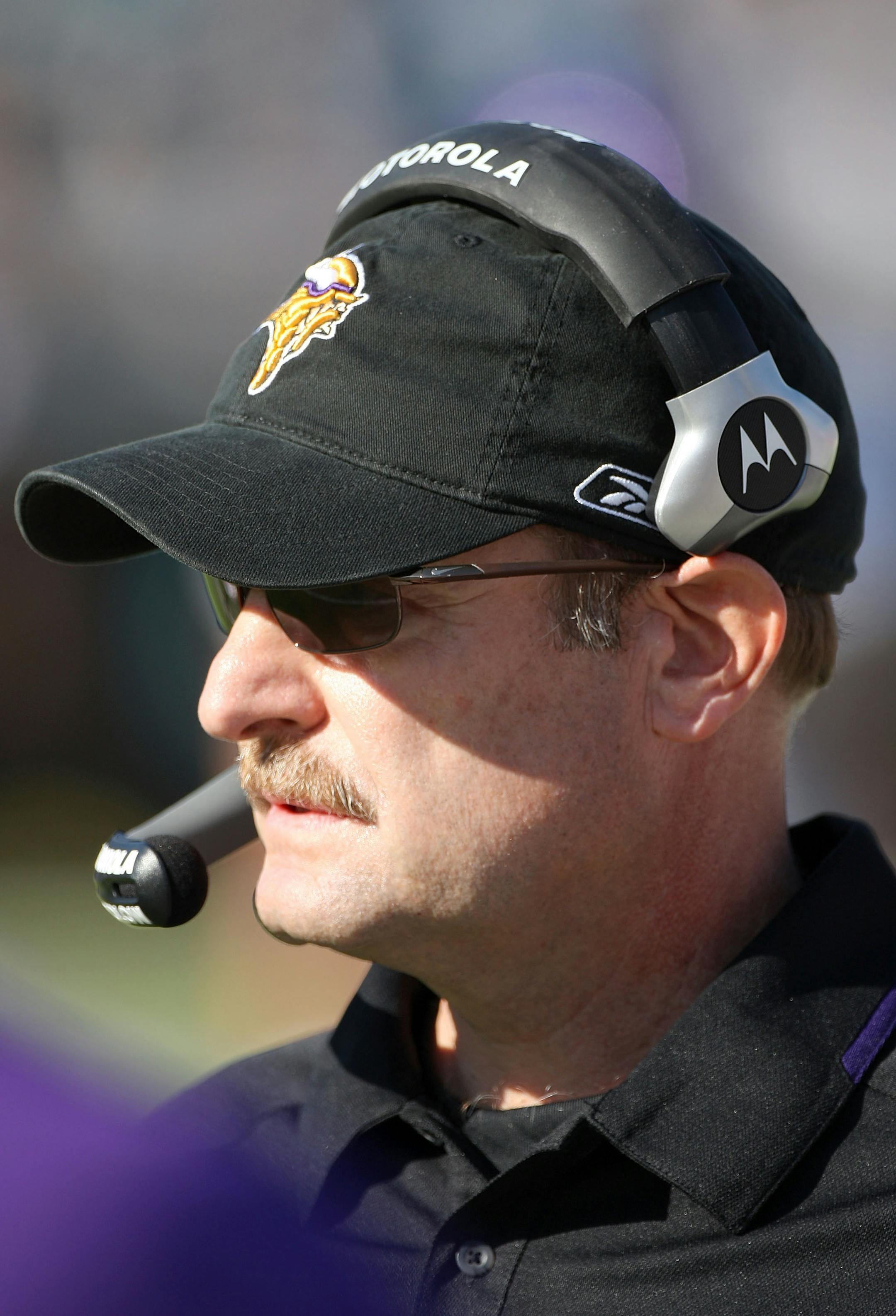
There were plenty of people who speculated that coach Brad Childress was going to be fired at the end of the season after the Vikings got off to a slow start in September. And there were also a lot of critics, including me, who questioned whether Tarvaris Jackson would ever make it in the NFL.
Well, Childress never was going to get fired regardless of how the season developed because Vikings owner Zygi Wilf told many of his cohorts just that. But the coach could certainly be second-guessed for his decision to draft Jackson as the Vikings quarterback of the future in the second round of the 2006 draft.
Jackson played poorly the first two games of the season, both losses, and was benched for veteran Gus Frerotte. In the following weeks, Jackson only saw a little bit of action here and there whenever Frerotte got hurt, but for the most part he stood on the sidelines and watched during Vikings gamedays.
But last week, Jackson got his first extended playing time since getting benched after Frerotte suffered the back injury, and he led the Vikings to a come-from-behind victory at Detroit. And with Frerotte still banged up this week, all Jackson did Sunday at Arizona was lead the team to an impressive 35-14 victory.
Jackson completed 11 of 17 passes for 163 yards, but four of those passes went for touchdowns. He didn't throw an interception and compiled a quarterback rating of 135.5.
It just showed again what Vikings quarterback coach Kevin Rogers told me many times: It takes two or three years for a young NFL quarterback to develop into a top-notch player. Rogers pointed to Peyton and Eli Manning and Donovan McNabb as examples of highly touted quarterbacks who didn't enter the league with much success right away before developing into first-class signal callers.
Jackson isn't Tom Brady or Peyton Manning. But on the basis of his performance Sunday, he isn't too far from being a really good NFL quarterback if he continues to work hard and listens to the instruction of his coaches, including Childress, Rogers and offensive coordinator Darrell Bevell. He also can continue to take some tips from Frerotte. Someday, Frerotte can be a great coach, like his father-in-law.
As for Childress, his coaching theory is that you should finish a much better team than when you start.


