

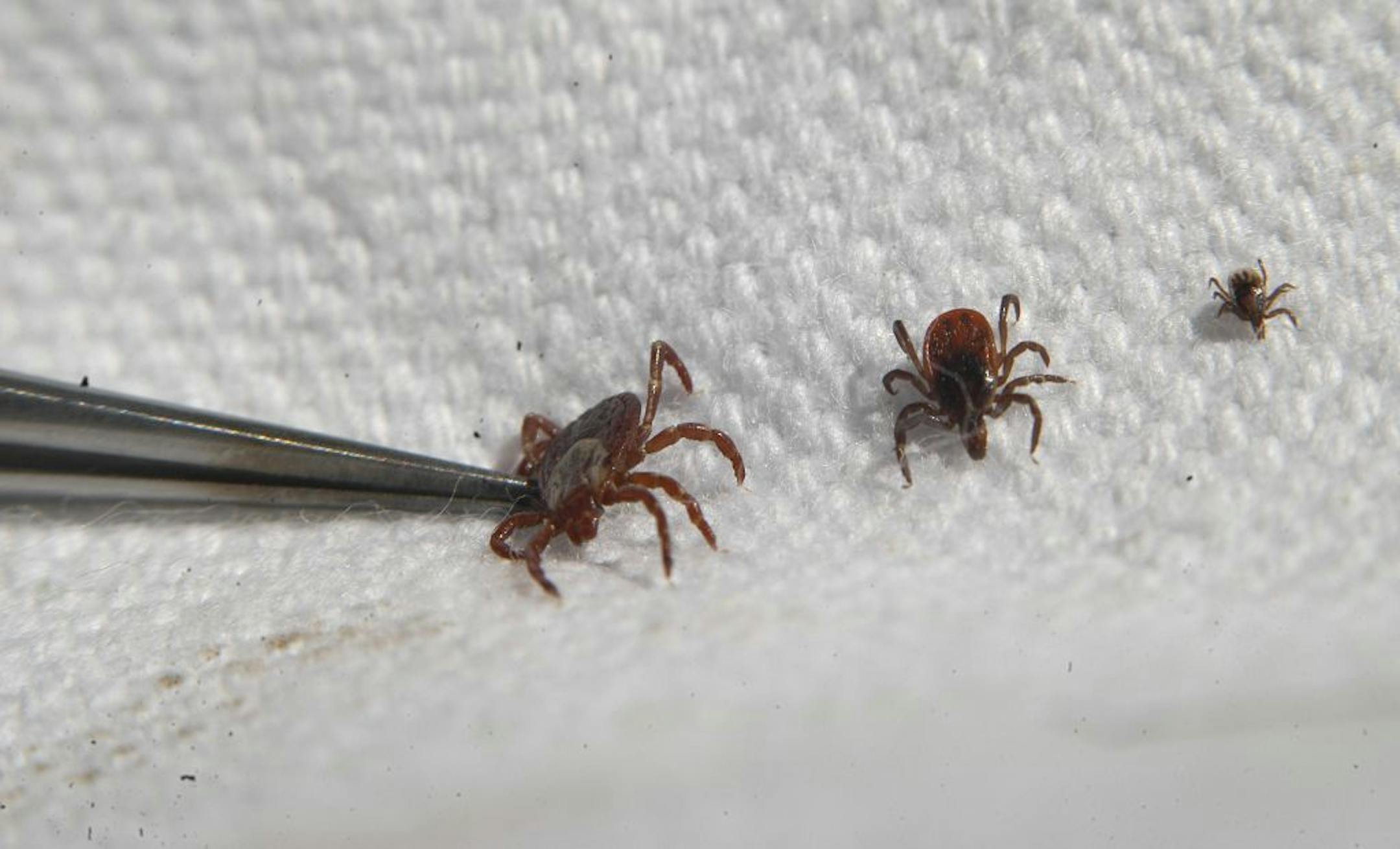
As Minnesotans rush gleefully outdoors for the first sustained week of warm, sunny weather, state health officials are warning that ticks probably have the same idea.
A record number of tick-borne cases of Lyme disease in 2013 suggests that people should take precautions while camping or hiking out in the state's woods and meadows this spring, said Dave Neitzel, a tick-borne disease specialist with the Minnesota Department of Health.
Neitzel said the weather pattern in 2013 that was ideal for ticks — a long, snowy winter followed by a wet spring — has been somewhat repeated this year.
"I was hoping that the late spring [in 2013] would shorten the tick season," Neitzel said. "What it did was, once the weather got nice, all of the ticks came out at once."
The 1,431 Lyme cases in 2013 were substantially more than the 912 cases in 2012, when a hot, dry June stunted the tick population, the health department reported Tuesday. The bacterial Lyme infection can cause a variety of symptoms — ranging from fever to muscle aches to fatigue — and is often characterized by a bull's-eye-shaped rash at the spot of a tick bite.
Tick-borne cases of anaplasmosis and babesiosis were near historic highs last year as well. Neitzel said the tick population has been spreading for several years beyond the woods in central Minnesota and that ticks are now much more commonly found in the northwest part of the state north of Bemidji and along the North Shore. Ticks in the metro area remain more common in the more rural areas of Anoka, Washington and northern Ramsey counties, he added.
"There are plenty of ticks out there," he said, "and we are entering the highest-risk season right now."
Early spring presents a greater risk in part because blacklegged ticks (also called deer ticks) that spread the infection are in the smaller lymph stage of development, making them harder to locate and remove in the one- to two-day window when the infection can be transmitted. Adult ticks can spread the bacteria in the late summer and early fall as well, but they are easier to spot and pick off.


