

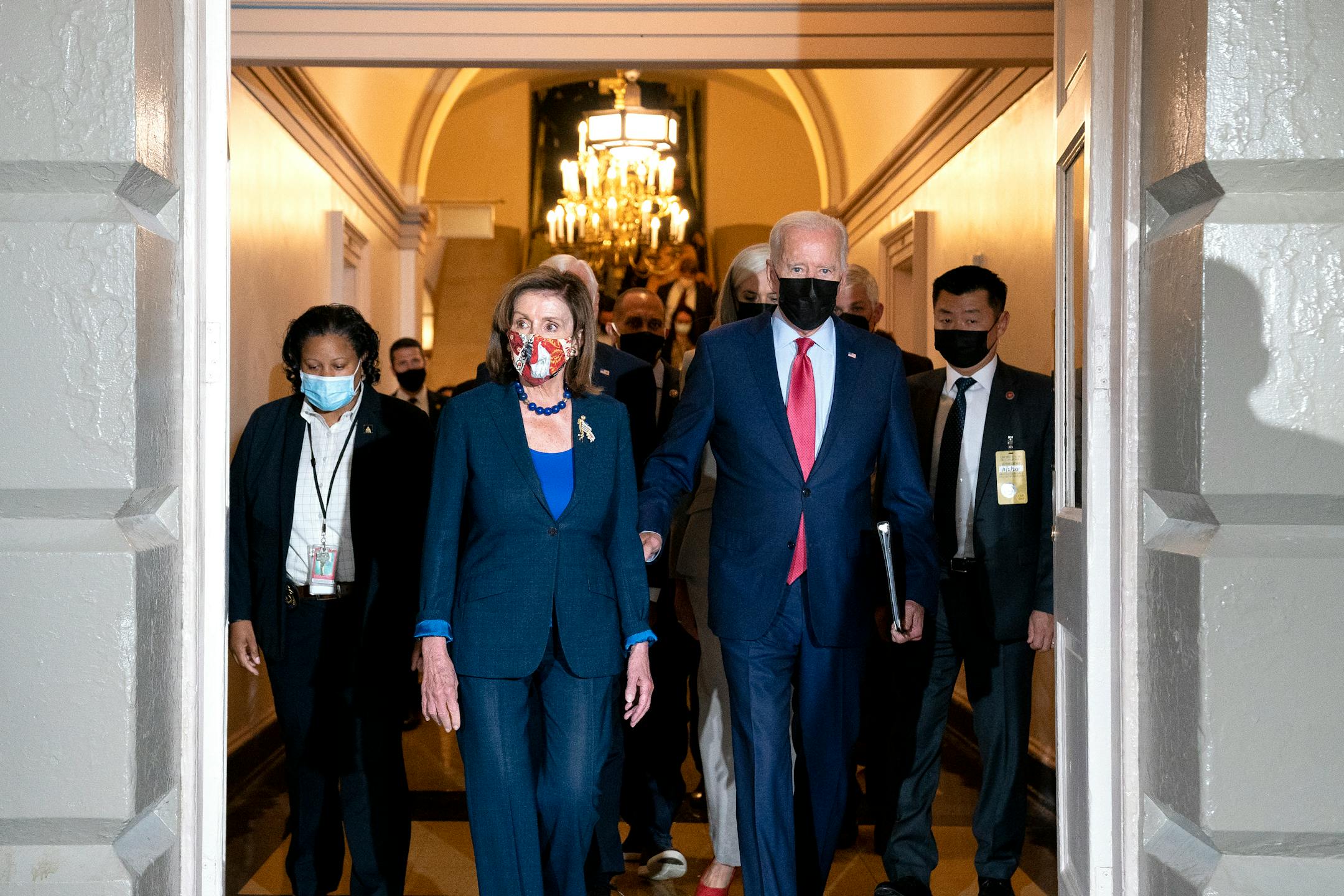
It was the week that President Joe Biden and the Democratic majorities in Congress came face-to-face with reality.
And that reality is that their narrow congressional majorities are insufficient to pass all of Biden's far-reaching domestic proposals, as meritorious as most of them are.
As the daily Washington political dope sheet Punchbowl put it: "It's tough to pass FDR-sized programs without FDR-sized majorities."
Biden himself delivered the message that compromises within their divided ranks are necessary. Speaking to House Democrats after a week of messy maneuvering, he said that, while he still favors his full $3.5 trillion proposal in expanded domestic programs, his talks with two moderate Democratic senators convinced him a smaller total is the only way it can pass.
That will require progressives to acquiesce in trimming, probably substantially, the budget reconciliation package, either scaling back or eliminating some items. Significantly, neither Sen. Bernie Sanders, I-Vt., or Rep. Pramila Jayapal, D-Wash., two top progressive leaders, disputed that in television appearances Sunday.
At the same time, the impasse showed moderates that their effort to force action on the $1.2 trillion bipartisan infrastructure bill is a non-starter without agreement on the larger, more partisan reconciliation measure.
Now, both factions are regrouping to see how much of Biden's program they can realistically pass, knowing the outcome is vital to their party's immediate future and their one chance to make a major impact, perhaps for many years.
"If we fail to pass these two bills, people will not forgive us," House Democratic Whip Jim Clyburn said, reflecting the view of most Democrats that failure would send a signal they can't govern that could only benefit the Republicans - and former President Donald Trump.


