
Readers Write: Trump and RFK Jr., Social Security, Gov. Tim Walz’s campaign, death

Leave science to the scientists, please.

The Minnesota Star Tribune
September 25, 2025 at 12:00AM
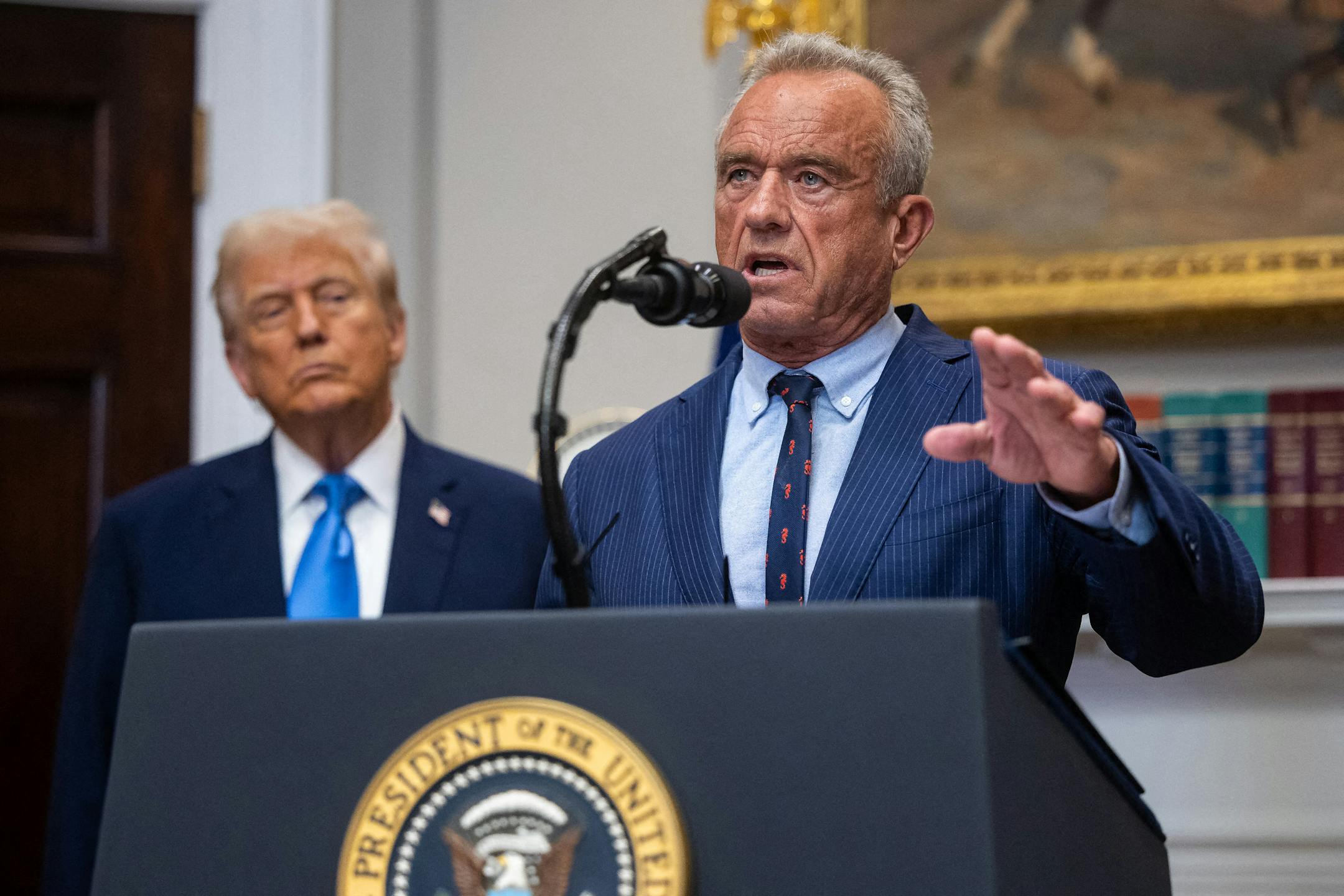
President Donald Trump and Health and Human Services Secretary Robert F. Kennedy Jr. speak about autism on Sept. 22 in the White House. (Francis Chung/Tribune News Service)

Opinion editor’s note: Strib Voices publishes letters from readers online and in print each day. To contribute, click here.

•••

Two old guys, one with possible signs of dementia and neither with any medical training. They have laid off or outright fired the best health care minds and replaced them with toadies. They have killed research that would prove or disprove the science of medicine. And now they go on the big stage to say Tylenol during pregnancy causes autism (“Trump promotes unproven tie between vaccines, autism,” Sept. 23). All I can say is “Quack, quack!”

Paul Schultz, Ham Lake

•••

President Donald Trump and Health and Human Services Secretary Robert F. Kennedy Jr. have claimed that Tylenol use during pregnancy causes autism. This is not supported by scientific consensus and misrepresents the research.

It reminds me of a study that once linked coffee consumption to lung cancer. The initial data seemed alarming, but when researchers controlled for smoking, they found that smokers often drink coffee. Smoking, not coffee, was the actual cause. Coffee was simply associated with the real risk factor.

The same flawed logic is being applied to Tylenol. Some studies show a correlation between acetaminophen use and autism, but Tylenol is commonly used to treat fever and pain during pregnancy. Those underlying conditions, especially maternal fever, may influence fetal development — not the medication itself. Trump and RFK Jr. are making a leap from correlation to causation without evidence.

Autism is a complex condition shaped by genetic and environmental factors. Oversimplifying it to a single medication stigmatizes mothers and distracts from meaningful research.

Public health decisions should be based on science, not speculation. Let us focus on real solutions that support autistic individuals and their families.

Paul Niebeling, Minneapolis

•••

I have been conducting my own independent research on the causes of autism, and I think the conclusions I have come to qualify me to make meaningful contributions to RFK Jr.’s research team. Through extensive research (many people told me) I have discovered that all women who have had autistic children at some time during their pregnancy ate mashed potatoes. It only makes sense that mashed potatoes are causing the autism problem. This finding should qualify me to belong to his team.

Cort Viesselman, Hutchinson, Minn.

SOCIAL SECURITY

AARP is fighting for seniors’ future

A Sept. 21 letter (“The clock is ticking. Who hears it?”) rightly expresses the urgency many Minnesotans feel about the future of Social Security. At AARP Minnesota, we hear these concerns every day, and we’re fighting hard to ensure this vital program remains strong for generations to come.

More than 1.1 million Minnesotans rely on Social Security. For 43% of residents age 65 and over, it provides at least half their income. It’s not a handout — it’s a promise earned through a lifetime of work.

That’s why AARP Minnesota has been active across the state — hosting events, listening sessions and town halls to elevate voices and push for reform. We’ve called on Congress to close the solvency gap and improve customer service.

In August, we celebrated Social Security’s 90th anniversary — but not with complacency. We used it to amplify our message: Protect what we’ve earned. Strengthen it for the future.

To the letter writer and others asking, “Where is AARP?” We’re right here in Minnesota, fighting every day to ensure that Social Security remains strong for our parents, ourselves and our kids. We’re showing up in communities, elevating voices and pushing for solutions. And we won’t stop until Congress acts.

Social Security is not a handout — it’s a promise earned through a lifetime of hard work. Minnesotans deserve to retire with dignity, not anxiety. AARP Minnesota is committed to making sure that promise is kept.

Cathy McLeer, St. Paul

The writer is AARP Minnesota state director.

GOVERNOR’S RACE

Walz didn’t learn the Biden lesson

Once again it appears that the Democrats and their governor candidate, Gov. Tim Walz, have failed to learn the lessons that past elections should have provided for them. Walz, like former President Joe Biden, has done a good job in office. Like Biden, Walz needs to turn over the Democratic nomination to someone who will have a much better chance of winning the election. The tremendous amount of fraud during his terms in office may well provide the information necessary for independents and moderates to vote for the Republican candidate. (Independent and moderate votes decide most elections.) If that is not enough to lead to his defeat, the public’s image of Walz moving to the left will certainly cement his loss. Many independents and moderates voted for him in the past because he was a hunter, teacher and military officer. His current reputation, I believe, is one of a career politician with left-leaning tendencies and maybe even national aspirations. The time Walz spent campaigning nationally after his 2024 defeat for vice president does not help his case.

Please, Democrats, learn the Biden lesson! Having a Minnesota Republican governor during President Donald Trump’s final two years in office would be very difficult to live with.

Stanley Hacker, Minneapolis

DEATH

Learning how to love life, from the kids in pediatric hospice care

Death is something that touches all of us, whether we’re ready for it or not. Maybe you’ve lost someone close to you. Maybe you’ve only brushed against the thought of it in the middle of the night when your brain won’t shut off. Either way, death isn’t just some abstract idea we can push to the sidelines; it’s part of the human experience we all share. But here’s the thing: We almost never talk about it. And because of that, death becomes something we fear instead of something we can learn from. The truth is, death isn’t only an ending. It’s also a reminder that makes the time we do have more vivid and valuable.

Think about college life: late-night conversations, the people you meet, the opportunities you take (or don’t). Death teaches us that none of this is guaranteed. It pushes us to see that our time, our friendships and even the little moments are worth more than we usually realize.

From my own experience, I am constantly reminded of this fact. Volunteering in a pediatric hospice home, I see lots of kids who have to live every day like it’s their last. A pediatric hospice sounds like it would be the most depressing place in the world, but one step inside proves this wrong. The sound of laughter echoes through the halls, rainbows dance through the sun-catchers on the windows, and the sweet smell of cookies is always wafting from the kitchen. The meaning that each individual minute takes on is truly transformative, with every fiber of one’s being dedicated to loving others and making every day the best day ever. A mother of a child receiving hospice services summed it up best: “I never knew a place made for death could be so alive.”

That’s why talking about death matters. Not because it’s depressing, but because it teaches us how to live. Without it, we wouldn’t recognize just how fleeting, precious and extraordinary life is. So instead of avoiding the subject, let’s let it shape the way we live right now. Let it push us to be braver in chasing our goals, kinder to the people around us and more grateful for the time we have. Because it’s only in a world with death that we can fully understand what it means to be alive.

Madeleine Murry, Plymouth

The writer is a nursing student.

about the writer

about the writer