

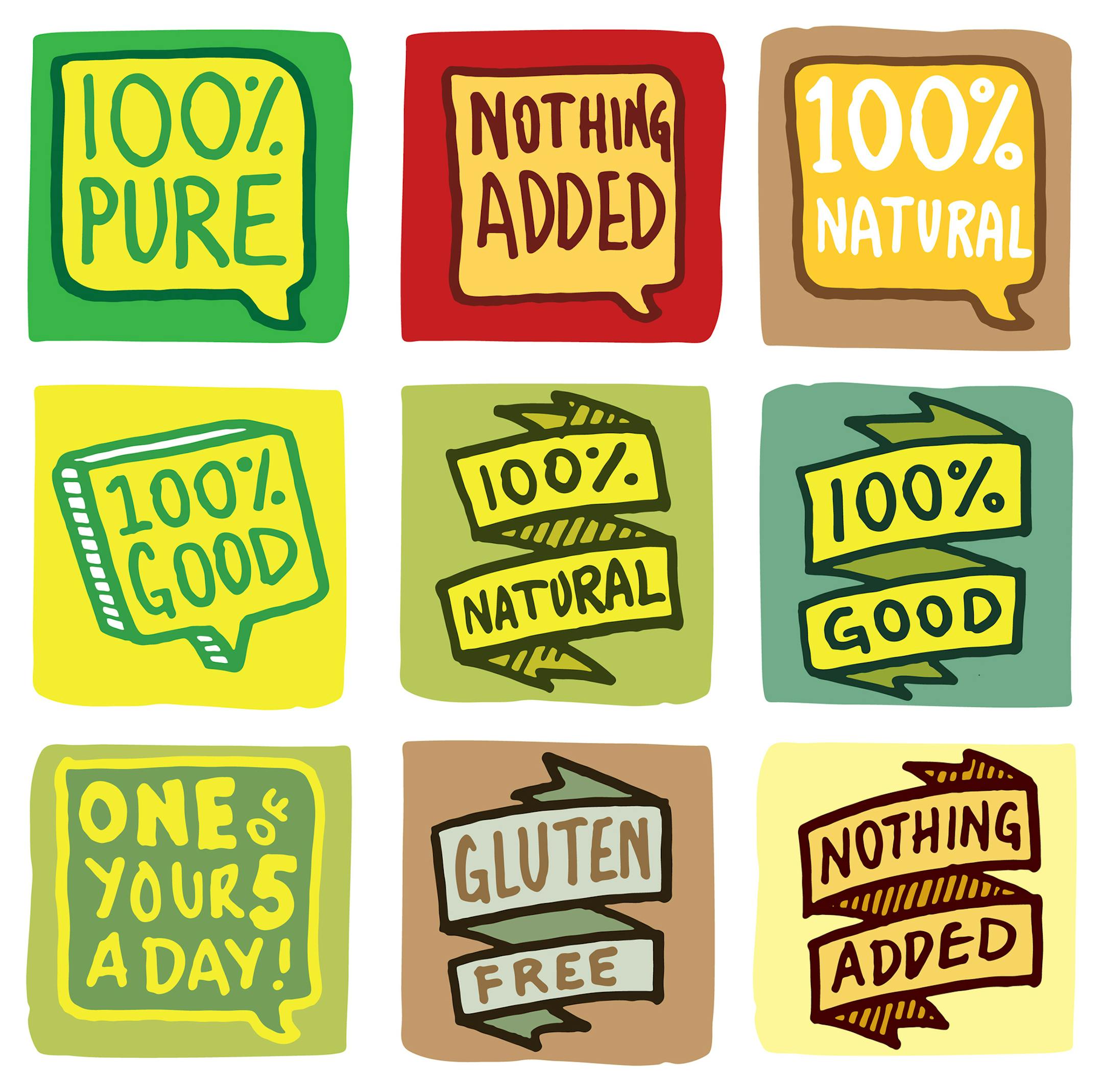
When is "super" not so super-duper and "natural" not the natural choice? It's hard enough deciding which foods to throw in the grocery cart or pick from restaurant menus. Now health experts warn that common nutrition definitions can be exaggerated, misleading or false.
Called "leanwashing" by Texas-based EnviroMedia Social Marketing with input from public health and food professionals, their list of words to watch out for include "made with" and "natural."
"When it comes to 'natural,' don't forget 'all-natural sugar' and cane sugar are added sugars that add empty calories to whatever you, or your kids, are eating," said Dr. Stephen Pont of the Texas Center for the Prevention and Treatment of Childhood Obesity, an adviser for the Leanwashing Index.
The group doesn't like "made with" because it doesn't tell the consumer if there's enough of a healthy ingredient in a product to contribute a significant concentration of nutrients.
Term limits
"Super food" may be a super popular marketing term, but there is no legal definition. It usually refers to foods that contain an impressive concentration of a nutrient such as omega-3 fatty acids in salmon or a food that's one-stop shopping for a number of nutrients such as kale's combination of vitamins and minerals. But be super careful about succumbing to "super food" claims.
Nutrition experts are all for portion control, but the Leanwashing Index warns against grabbing 100-calorie packs of snack foods without considering, for instance, a 100-calorie pack of baby carrots serves up more nutrition than a 100-calorie pack of cookies.
Whole truth
The phrase "whole grain" continues to be wholly misunderstood.
Should you hold out for foods made with 100 percent whole grain?


