When Dr. Jennifer Kemp's husband got advanced rectal cancer, she got an unexpected patient's-eye view of her profession.
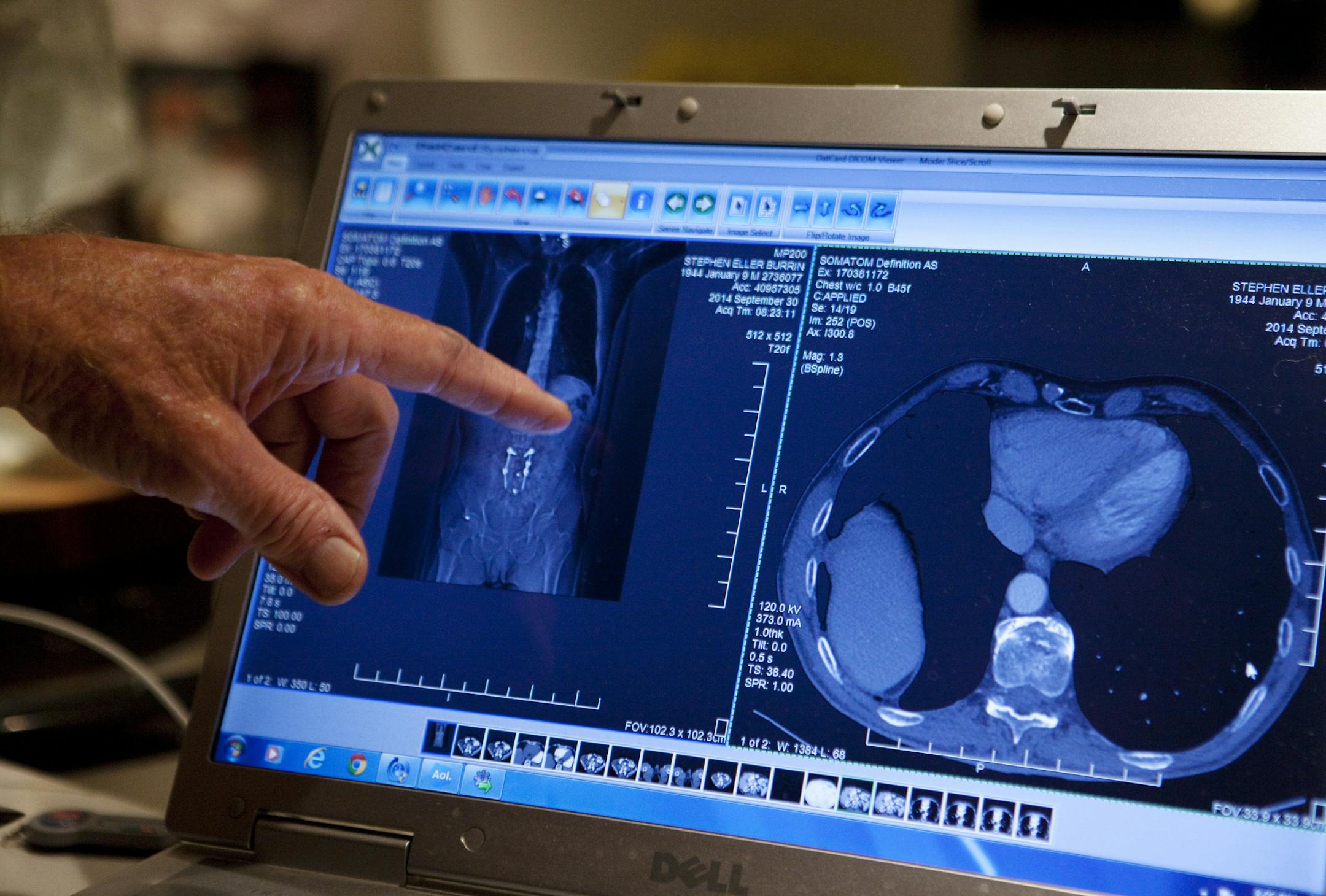
Her husband was having scans every three months, terrified each time that they might reveal bad news. Kemp, a Denver radiologist, would sit down with her husband's radiologist afterward. Even so, it could be an hour before a scan was ready to be viewed.
"I couldn't believe how anxiety-provoking it was to wait even an hour," she said. "Sometimes he would get a scan I didn't feel comfortable interpreting and he had to spend 24 hours waiting — and I had connections. That was absolute torture." What must other patients go through, she wondered. Is there any reason that results are a private communication between a radiologist and referring physician? Is there any reason that patients end up waiting days, sometimes weeks, for their doctors to reveal what scans showed? Could radiologists actually talk to patients and give them results immediately?
It seemed to be a problem that could be solved, Kemp said.
She now heads a committee of the Radiological Society of North America that strives to make radiologists more accessible to patients, including by giving test results right away if asked, by either meeting with patients or talking to them on the phone. Kemp does that and gives all her patients and their doctors her direct telephone number.
The American College of Radiology has a similar initiative. The groups say the time is right — patients are more and more insistent on knowing how and why doctors make decisions about their care. And more and more medical centers and doctors' offices are allowing patients to log on and see their medical records, which can include reports on scans.
Neither group is advocating laws requiring radiologists to tell patients their results. Instead they hope to make their case by demonstrating how some radiologists have successfully managed to communicate with patients and by letting radiologists know this is something patients want.
But many people never consider asking to speak to a radiologist and many doctors seem to have no relationships with radiologists. And some radiologists say talking directly to patients is anathema. A radiologist, despite an M.D. degree, can't answer questions about drugs or surgery and without knowing the clinical history may not know if abnormalities are important. And would doctors even refer patients to a radiologist who blurts out a scan's results?