

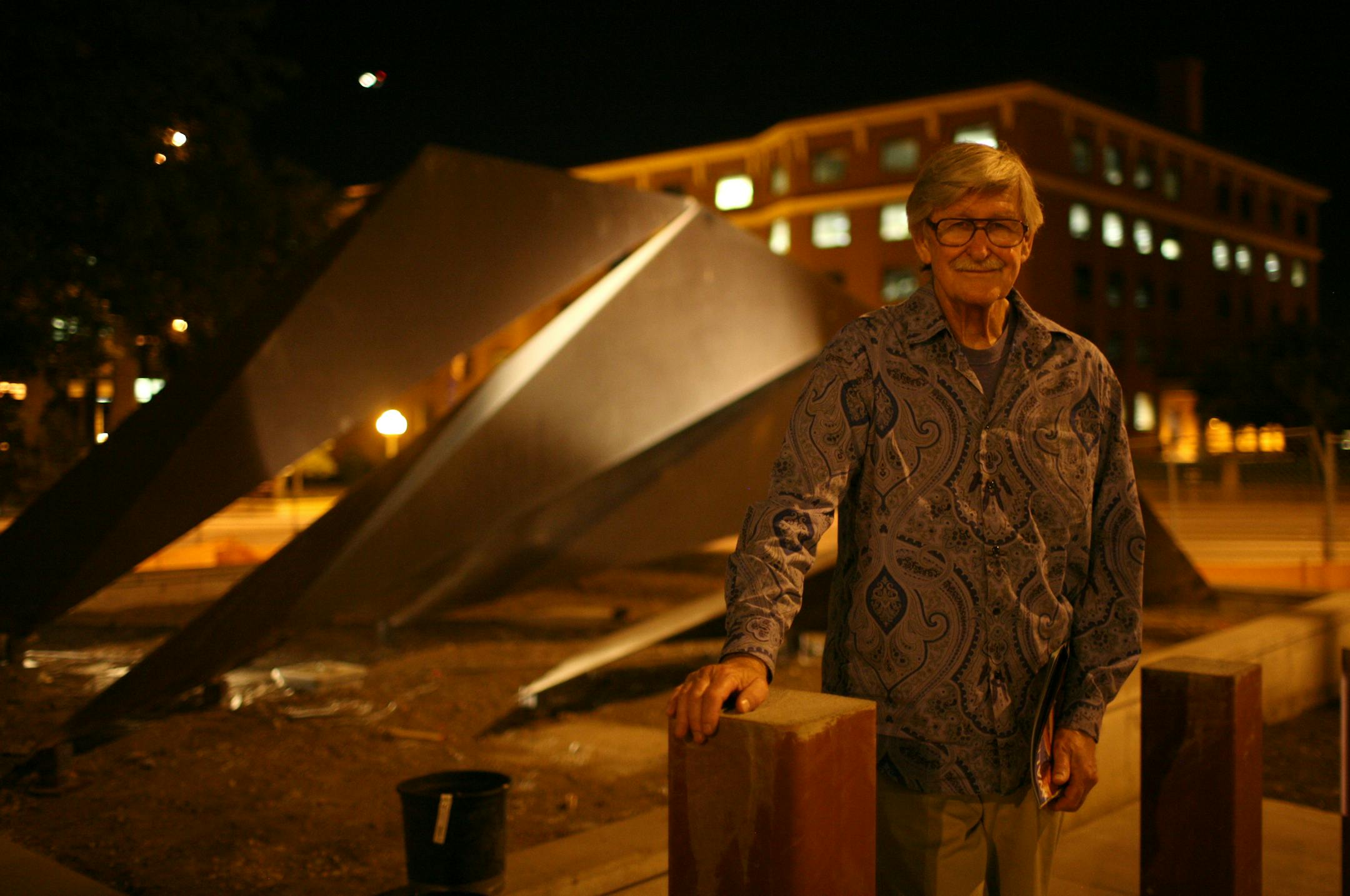
When bad things happen to good sculptures, they can end up like those abandoned rowboats that wash up on northern Minnesota lawns -- filled with petunias and surrounded by white-painted rocks.
Until recently that was pretty much the fate of "Protagoras," an often controversial 4-ton sculpture of folded steel that sat for 30 years in front of the federal courthouse in downtown St. Paul. Wayward styrofoam cups and litter blew into its crevices, and a well-meaning but misguided gardener tried to domesticate the thing by ringing it with colorful annuals and creeping vines that shimmied up its rusty sides.
Now the trash and posies are gone, and "Protagoras" has been restored as part of a three-year, $70 million modernization of the building. The sculpture by Vermont artist Charles Ginnever was reinstalled this month after being cut apart for storage in late 2006.
St. Paul was always ambivalent, to put it politely, about "Protagoras." Real estate developer John Mannillo recalls that shortly after the sculpture was installed in 1976, someone spray-painted its price -- $42,500 -- onto the piece. Some judges working in the building didn't like it, either.
Mannillo said the judges wanted to exchange the sculpture for the "New York eagle," an 8-foot-tall bronze bird with a 12-foot wingspan designed in the late 1800s by Augustus Saint-Gaudens to grace the top of a now-demolished life insurance building in downtown St. Paul. The bird now sits in a park on Summit Avenue, overlooking the city.
"Everybody has their opinion," he said. "It's art, and there's no reason why we should expect everybody to like it."
The renovation project was handled by the General Services Administration (GSA), the federal government's real estate manager.
"This is very good news," said Christine Podas-Larson, president of Public Art St. Paul, a nonprofit group that promotes and safeguards civic monuments. "For the federal government to come back after 30 years and finish the project is commendable, especially because the presence of significant work by 20th-century modern artists is at risk in St. Paul."


