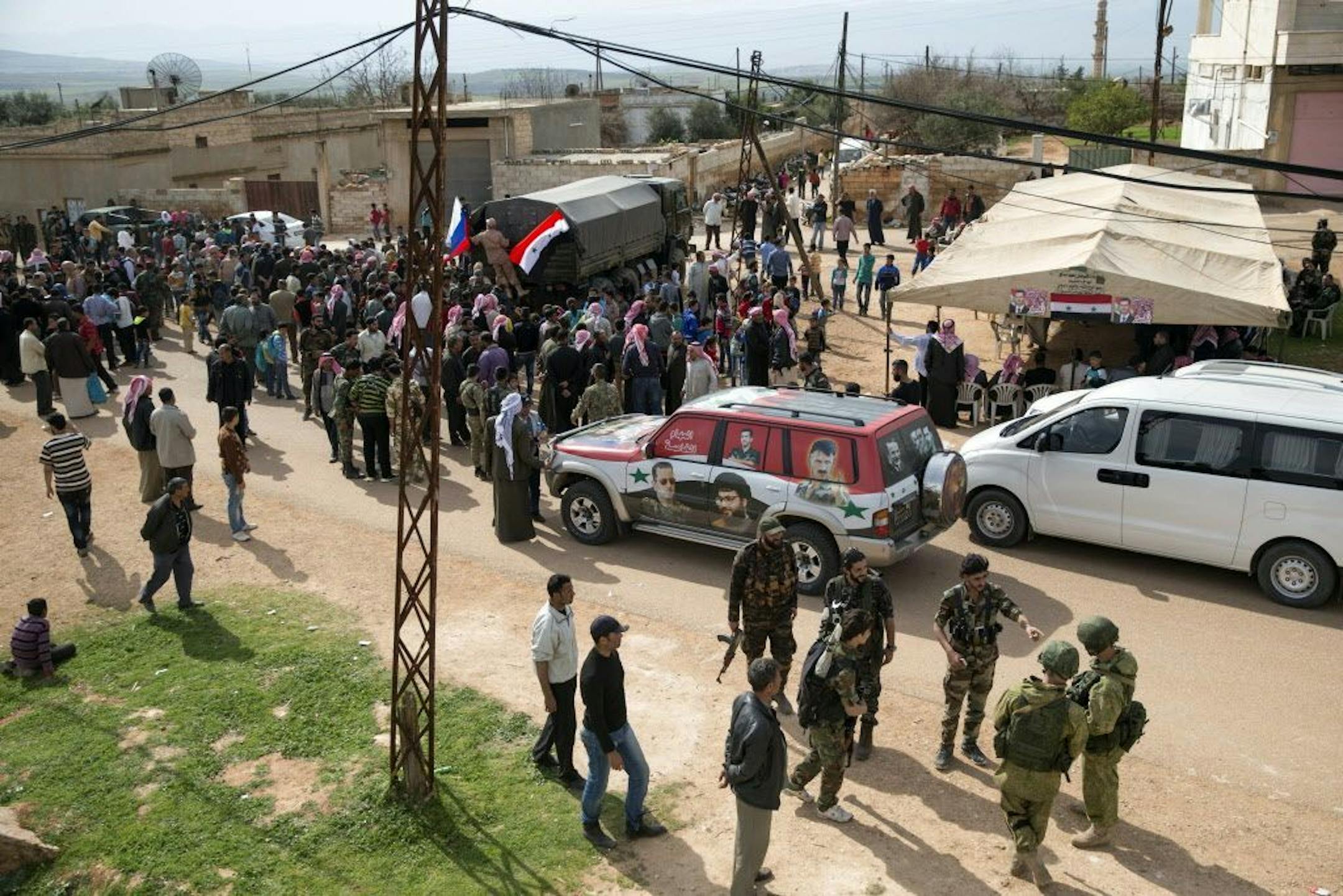
MOSCOW — President Vladimir Putin ordered the Russian military to withdraw most of its forces from Syria, timing his move to coincide with the launch of Syria peace talks Monday — an end game that allows the Russian leader to cash in on his gains and reduce his risks in the conflict.
The start of the negotiations in Geneva offers Putin an opportune moment to declare an official end to the 5½-month Russian air campaign that has allowed Syrian President Bashar Assad's army to win back some key ground and strengthen his positions ahead of the talks. With Russia's main goals in Syria achieved, the pullback will allow Putin to pose as a peacemaker and help ease tensions with NATO member Turkey and the Gulf monarchies vexed by Moscow's military action.
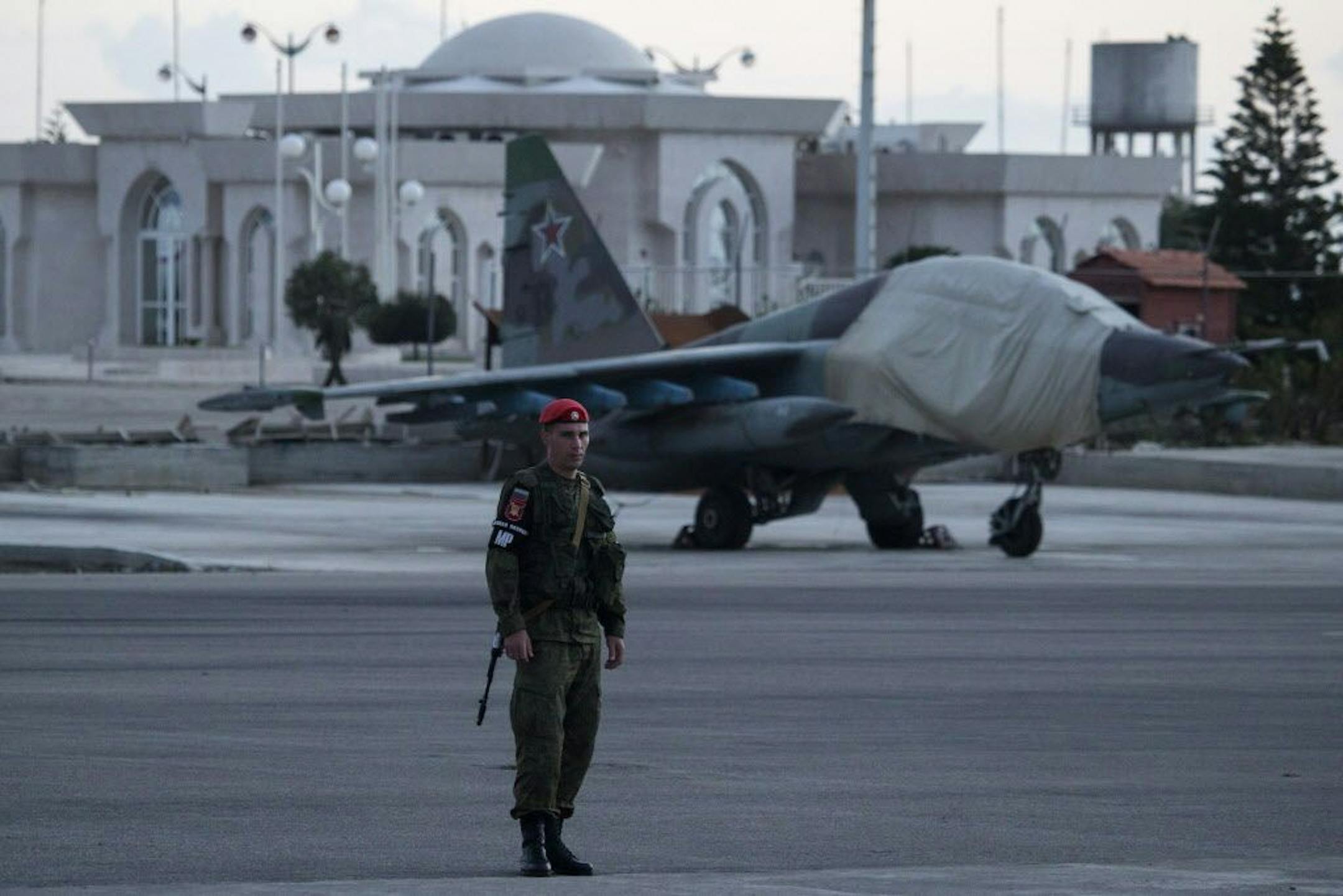
At the same time, Putin made it clear that Russia will maintain its air base and a naval facility in Syria and keep some troops there. Syria's state news agency also quoted Assad as saying that the Russian military will draw down its air force contingent but won't leave the country altogether.
The Syrian presidency said Assad and Putin spoke on the phone Monday and jointly agreed that Russia would scale back its forces in Syria. It rejected speculation that the decision reflected a rift between the allies and said the decision reflected the "successes" the two armies have achieved in fighting terrorism in Syria and restoring peace to key areas of the country.
The Syrian army said it would continue its operations against the Islamic State group, the Nusra Front and other terrorist organizations "with the same tempo."
Announcing his decision in a televised meeting with Russia's foreign and defense ministries, Putin said the Russian air campaign has allowed Assad's military to "radically" turn the tide of war and helped create conditions for peace talks.
"With the tasks set before the Defense Ministry and the military largely fulfilled, I'm ordering the Defense Minister to start the pullout of the main part of our group of forces from Syria, beginning tomorrow," Putin said.
He also informed President Barack Obama of his move in a phone call, emphasizing the importance of U.S.-Russian coordination "for preserving the cease-fire, ensuring humanitarian aid deliveries to the blockaded settlements and conducting an efficient struggle against terrorist groups," according to the Kremlin, which added that the conversation was "business-like and frank."