

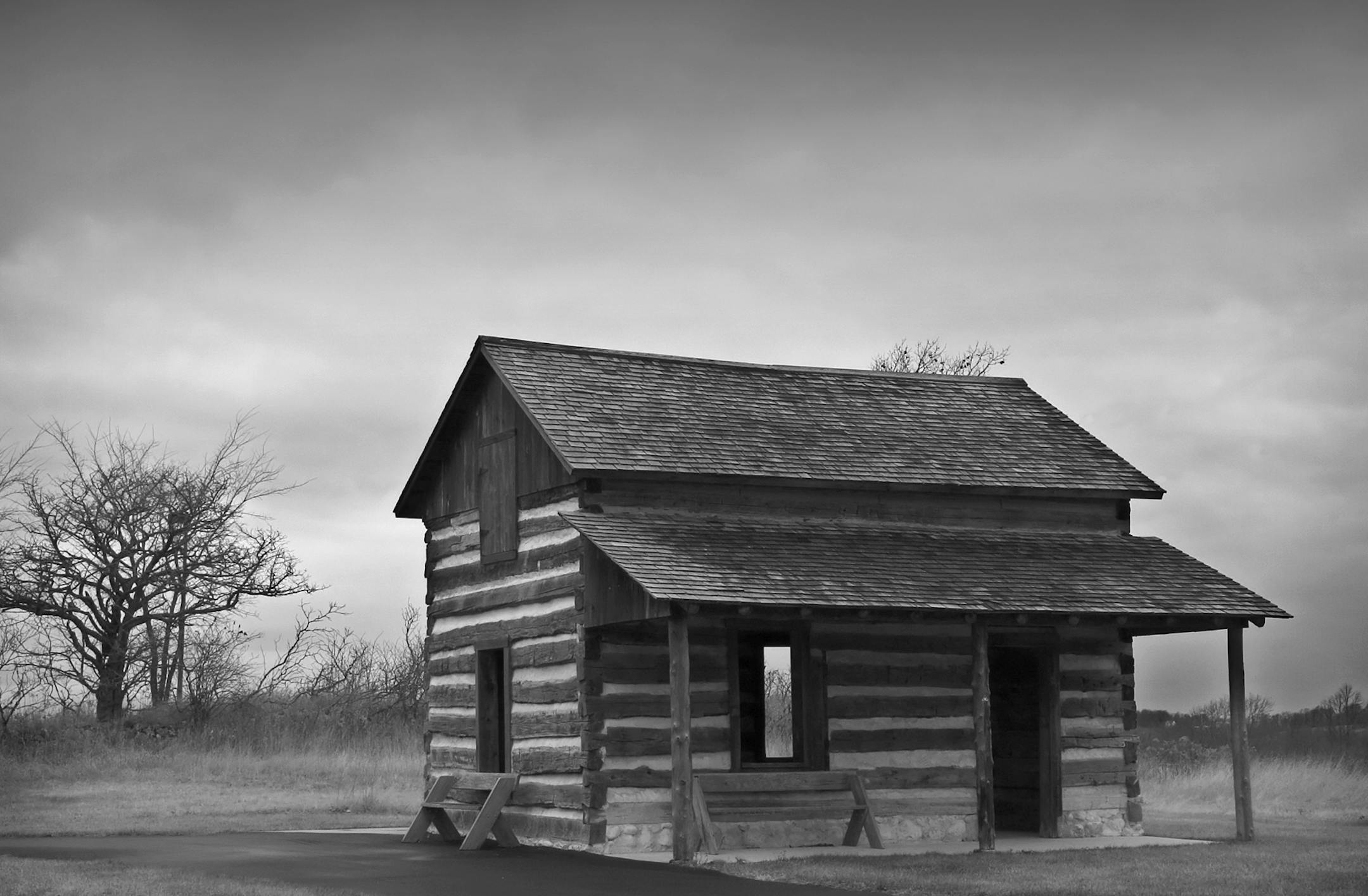
Last month, in her State of the Union response, Iowa Republican Sen. Joni Ernst mentioned going to school with bread bags on her feet to protect her shoes. These sorts of remembrances of poor but honest childhoods used to be a staple among politicians — that's why you've heard so much about Abe Lincoln's beginnings in a log cabin. But the bread bags triggered a lot of hilarity on Twitter, which in turn triggered a powerful meditation from Peggy Noonan on how rich we have become — so rich that we have forgotten things that are well within living memory.
I am a few years younger than Noonan, but I grew up in a very different world — one where a number of my grammar school classmates were living in public housing or on food stamps, but everyone had more than one pair of shoes. In rural areas, like the one where Ernst grew up, life with one pair lingered longer. But all along, Americans got richer and things got cheaper — especially when global markets opened up. Payless will sell you a pair of child's shoes for $15, which is two hours of work at minimum wage.
Perhaps that sounds like a lot to you — two whole hours! But I've been researching historical American living standards for a project I'm working on, and if you're familiar with what Americans used to spend on things, this sounds like a very good deal.
Consider the "Little House on the Prairie" books, which I'd bet almost every woman in my readership, and many of the men, recalls from childhood. I loved those books when I was a kid. They seemed to describe an enchanted world: horses! sleighs! a fire merrily crackling in the fireplace! children frolicking in the snow all winter, then running barefoot across the prairies! Then I reread them as an adult, as a prelude to my research, and what really strikes you is how incredibly poor these people were.
The Ingalls family was in many ways bourgeoisie: educated by the standards of the day, active in community leadership, landowners. And they had nothing.
There's a scene in one of the books where Laura is excited to get her own tin cup for Christmas, because she previously had to share with her sister. Think about that. No, go into your kitchen and look at your dishes. Then imagine if you had three kids, four plates and three cups, because buying another cup was simply beyond your household budget — because a single cup for your kid to drink out of represented not a few hours of work, but a substantial fraction of your annual earnings, the kind of money you really had to think hard before spending. Then imagine how your 5-year-old would feel if they got an orange and a Corelle place setting for Christmas.
There's a reason old-fashioned kitchens didn't have cabinets: They didn't need them. There wasn't anything to put there.
Imagine if your kids had to spend six months out of the year barefoot because you couldn't afford for them to wear their shoes year-round. Now, I love being barefoot, and I longed to spend more time that way as a child. But it's a little different when it's an option. I walked a mile barefoot on a cold fall day — once. It's fine for the first few minutes, and then it hurts like hell. Sure, your feet toughen up. But when it's cold and wet, your feet crack and bleed. As they do if the icy rain soaks through your shoes, and your feet have to stay that way all day because you don't own anything else to change into.


