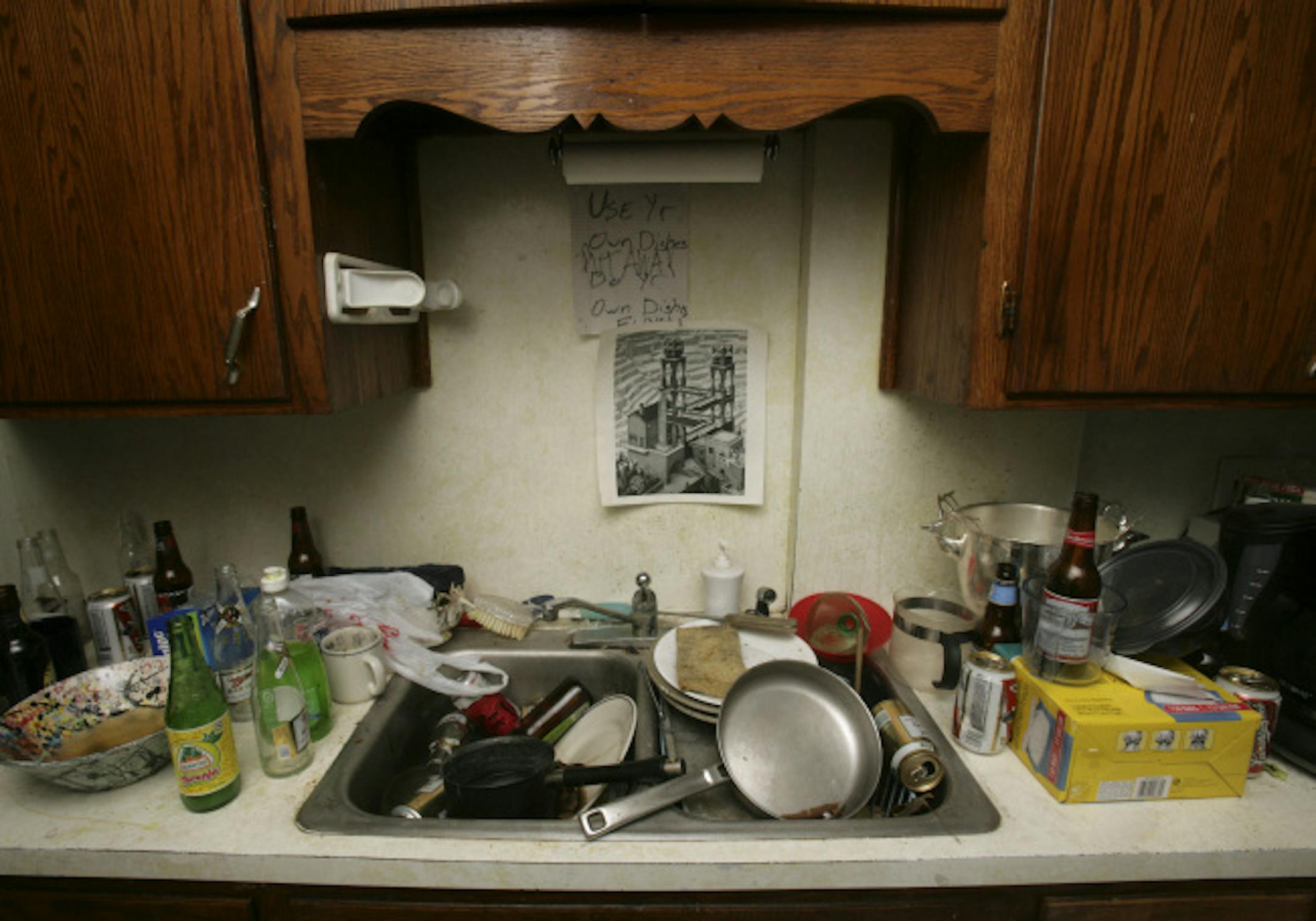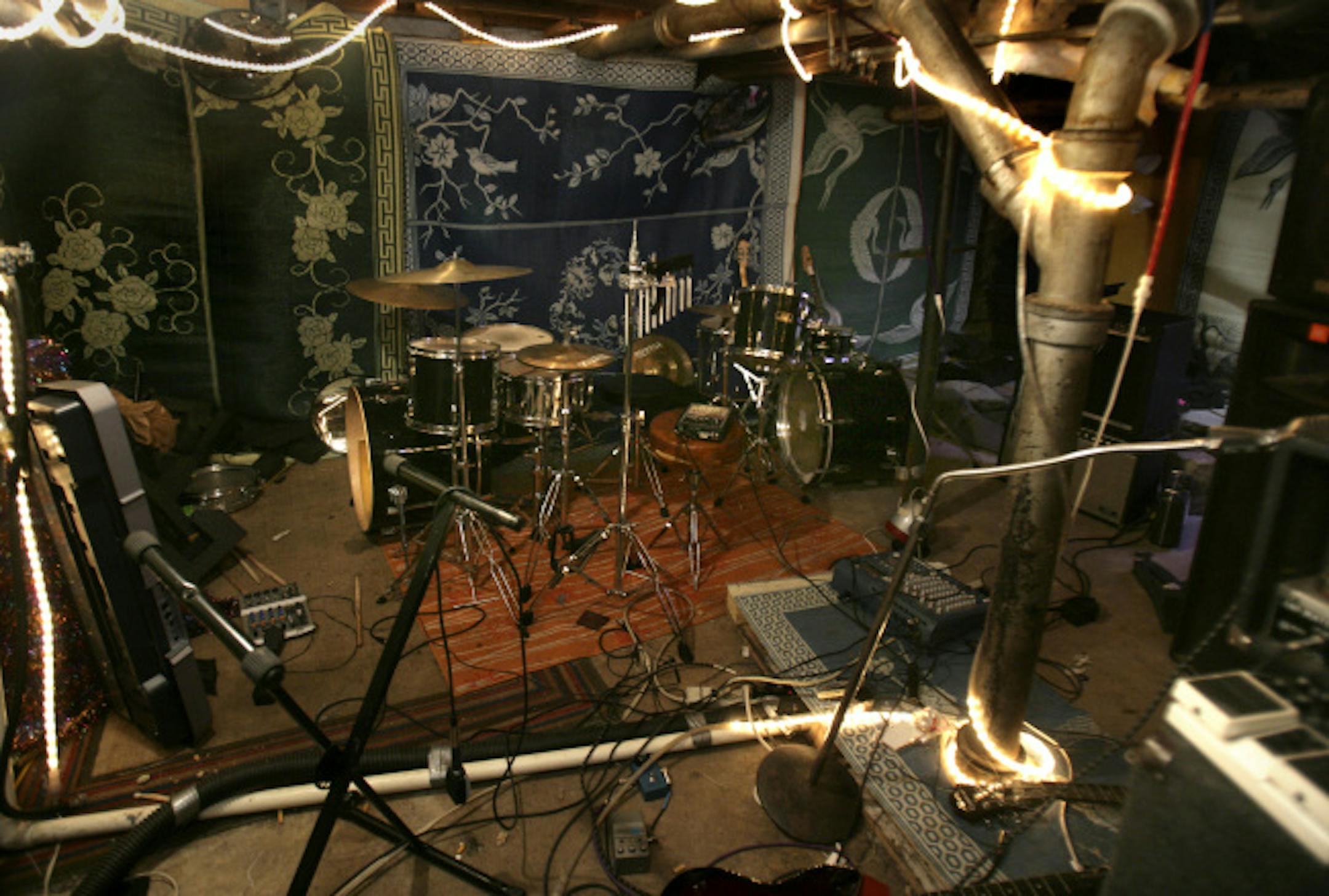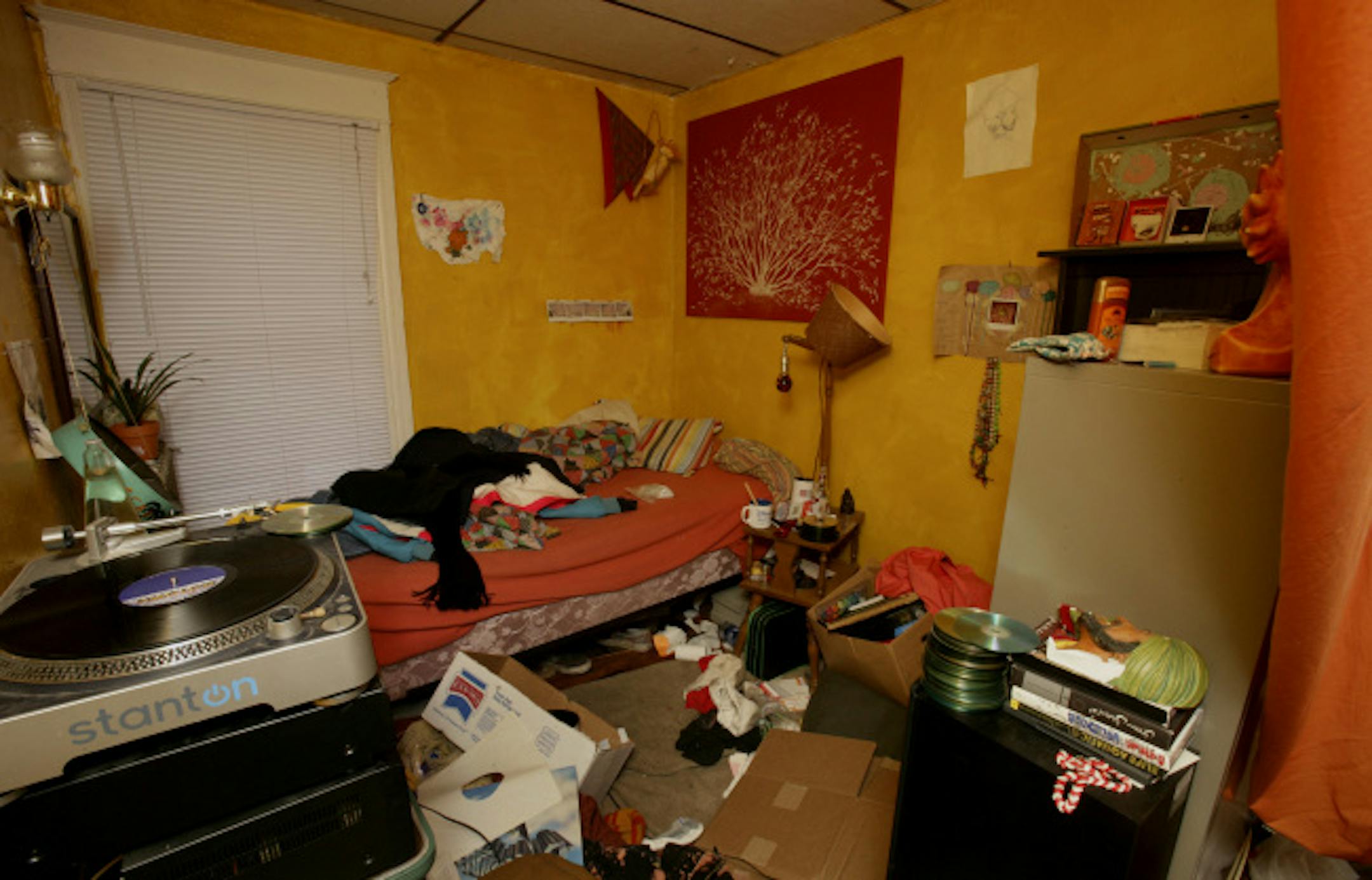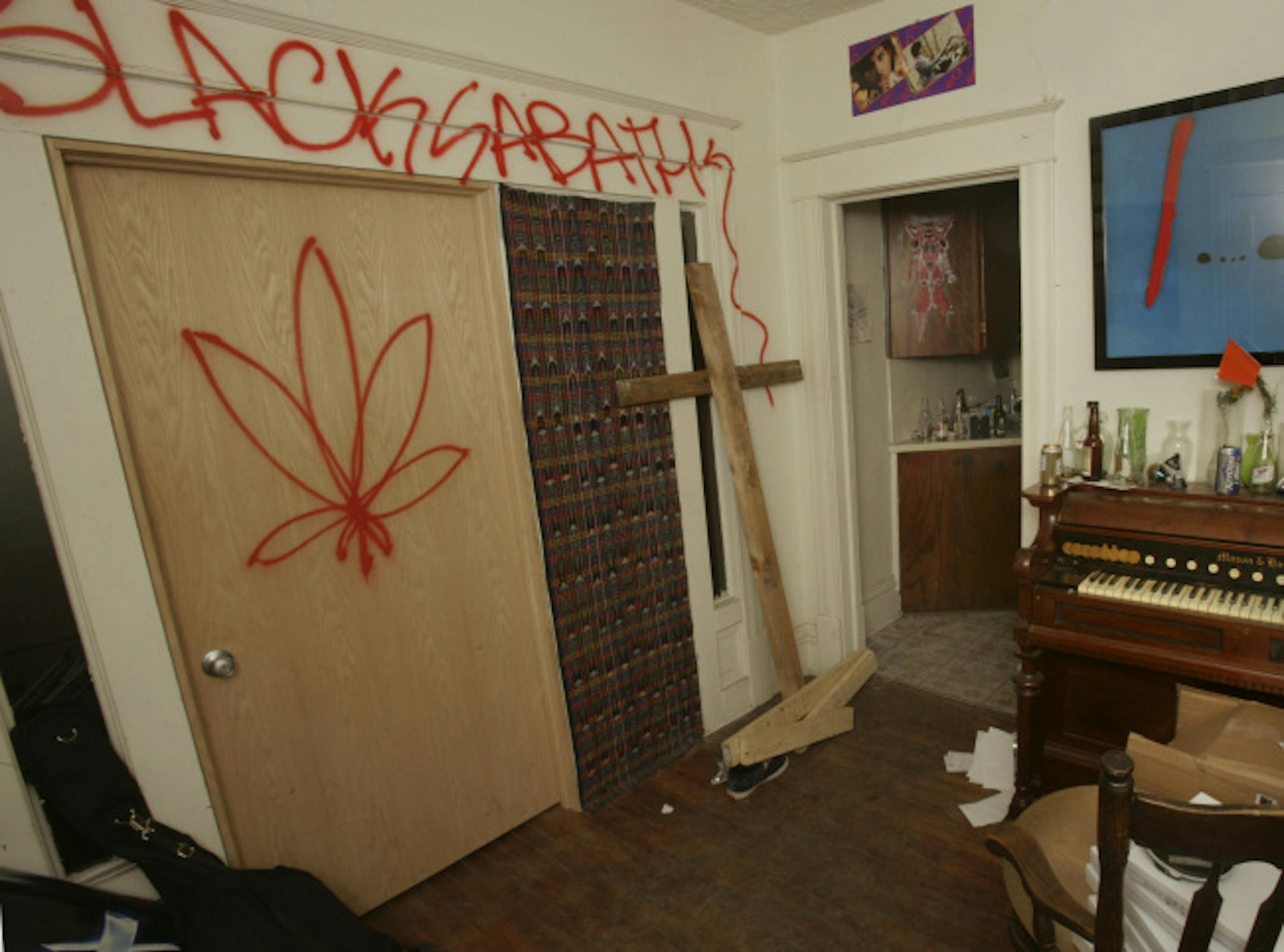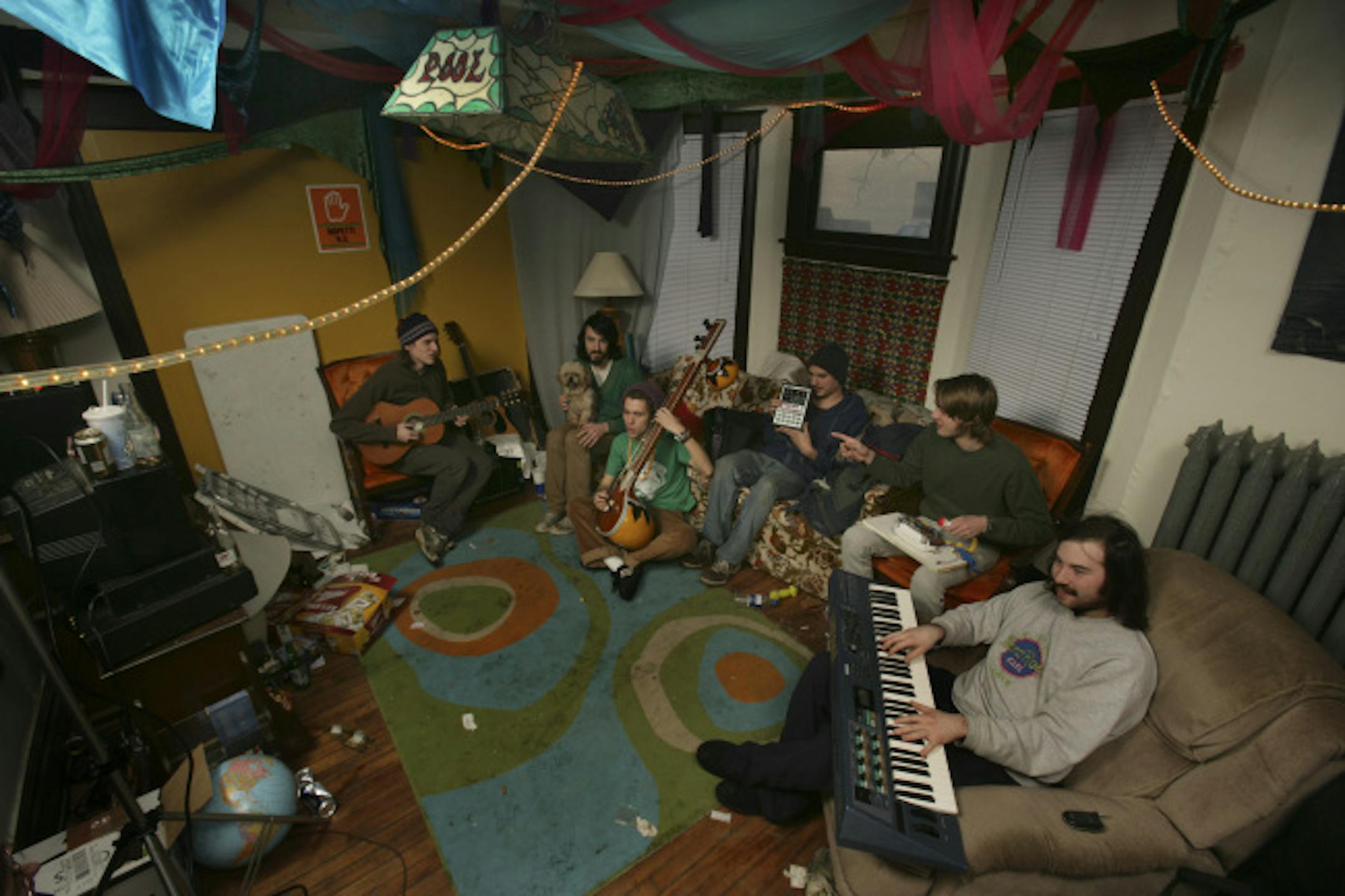
The front door of the rundown rental house in southeast Minneapolis has no doorknob. The roof leaks, there are bats in the attic and asbestos in the basement, according to the six young musicians who live there. But they're not complaining to the landlord. He leaves them alone. And they want to keep it that way. "We're trying to stay under the radar," said Seth Rosetter, a University of Minnesota student who plays guitar in two bands, Sarah Johnson and Voyager. It's a mutually beneficial relationship: The landlord doesn't have to fix up the place; they're free to spray paint on the walls and let beer bottles and dirty dishes pile up while they jam together and host shows featuring other bands in the cave-like basement, which is hung with rugs in an attempt at soundproofing.
"We want people to come," Rosetter said. "But it's not a legally sanctioned venue."
It's a punk house -- a grungy home, practice space and performance stage all rolled into one, where like-minded musicians can pool their creative and financial resources.
Cash-strapped artists have long teamed up to form funky households, from the 19th-century bohemians in their European attics to the 1960s hippies and their crash pads.
Today's punk houses, the latest incarnation, are a natural extension of punk music's evolution, according to Mark Nelson, a volunteer at Extreme Noise, a punk record co-op in Minneapolis.
"Twenty years ago, most shows were at First Avenue or Seventh Street Entry," he recalled. "Then it went slightly underground. Punk wasn't cool for the longest time." Not welcome in mainstream venues, punk bands moved to basement shows. "A big thing in punk is DIY [do-it-yourself]," Nelson said. "A lot of it came out of that."
Documenting ephemera
Now in the HGTV era, with a market niche for every demographic and decor style, punk living has moved from the underground to the coffeetable via a new book: "Punk House: Interiors in Anarchy" by Vermont photographer Abby Banks.