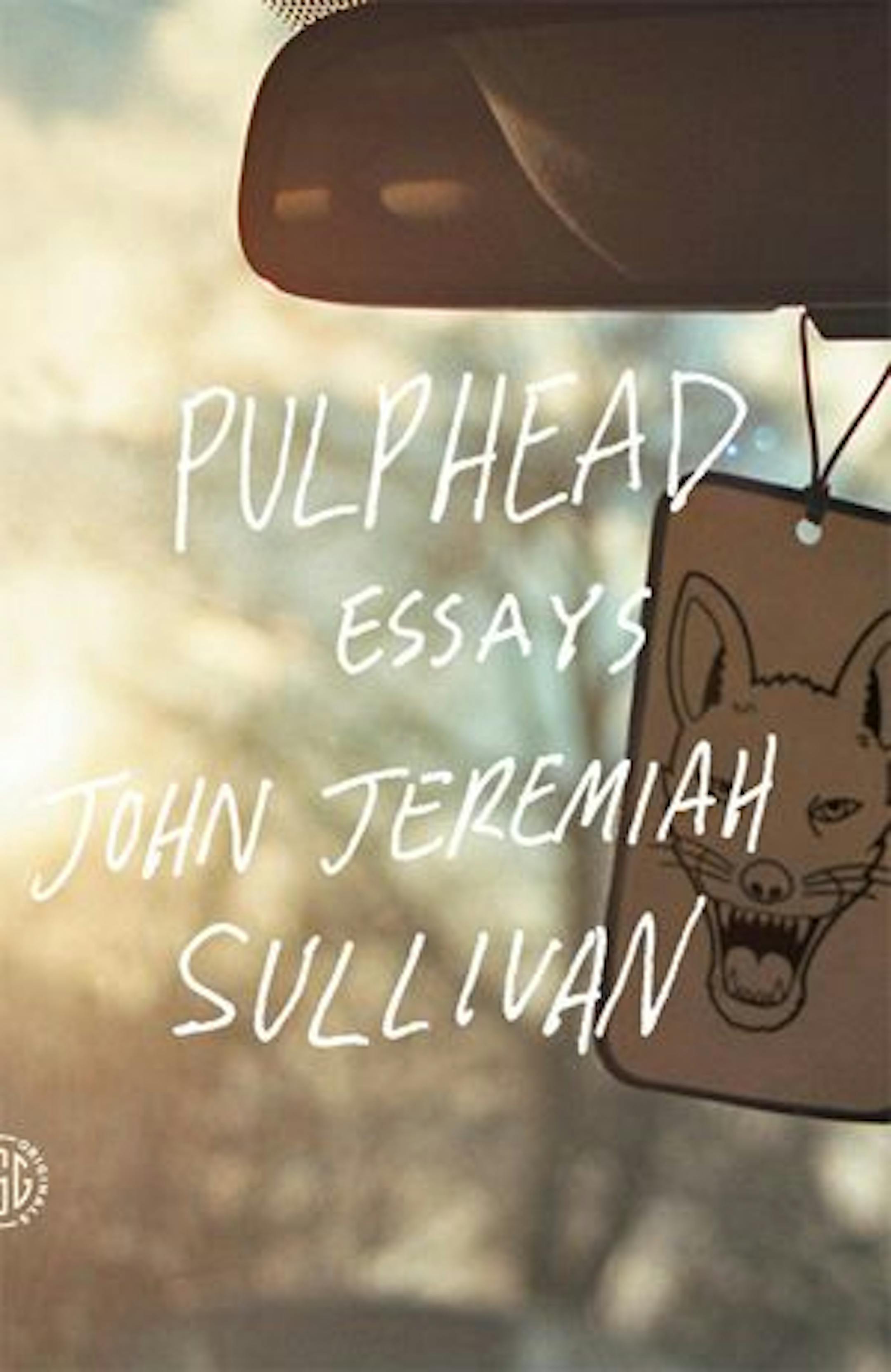
Attend a Christian-rock festival. Unearth prehistoric art. March in Glenn Beck's parade. Look anew at an American icon. Watch television without need of a screen.
In this disparate collection, John Jeremiah Sullivan aims an eye at little-known or seldom-noticed keyholes of culture, then steps aside to let us look for ourselves. He explains while we watch, mixing history, journalism and memoir with wit and spirited commentary. His insights are aimed at his country or himself, and the essays that are aimed at both reach must-share status. In "Upon This Rock," written while attending Godstock, Sullivan doesn't take easy shots at religious rockers. Instead, he takes stock of his own faith. "Knowing it isn't true," he says, "doesn't mean you would be strong enough to believe if it were."
There's no precise formula for this balance of projection and reflection, but Sullivan -- an accomplished magazine writer and the author of "Blood Horses," a melding of memoir and investigation -- writes as though he knows what it is.
In "At a Shelter (After Katrina)," he describes a misunderstood act of kindness offered while in line for gas. "I was thinking," Sullivan says of the ensuing argument, "the whole rest of the wait, this is how it would start, the real end of the world. The others in their cars ... would have climbed out and joined him. It would be nobody's fault." Such capacity to mine beneath the surface creates, in this essay and others, a sheen of authenticity.
Sullivan's original voice also comes from deft detail selection; he seldom states a fact simply because he knows it, but because it serves. This is evident in pieces about music, as he infuses one on old-time blues with a subtle passion that makes you want to track down a Robert Johnson recording. His examination of Axl Rose, more nostalgia than criticism, might only grab readers who came of age with Rose's music in their heads.
But usually -- such as in a "Real World" cast member profile and a narrative about a TV drama filmed inside the author's house -- these essays are more about how than what. Sullivan's prose seems intuitive, written as if he doesn't know where the next sentence will lead. This is meant as a compliment. Because wherever he goes, we must, too. He asks only that we reconsider our assumptions.
As he writes in "Unnamed Caves," in which he trails archeologists digging for ancient artwork: "It's dangerous to read something when you can't really read it. And we can't. Try to see it. That's hard enough."
Tom Swift is the author of "Chief Bender's Burden." He lives in Northfield.