I'm the fortunate friend of some inspiring athletes: an attorney who swam the channel from Alcatraz to San Francisco, an oncologist who attracts a crowd at the gym when she lifts weights, a triathlete who eased up only when he hit his seventh decade.
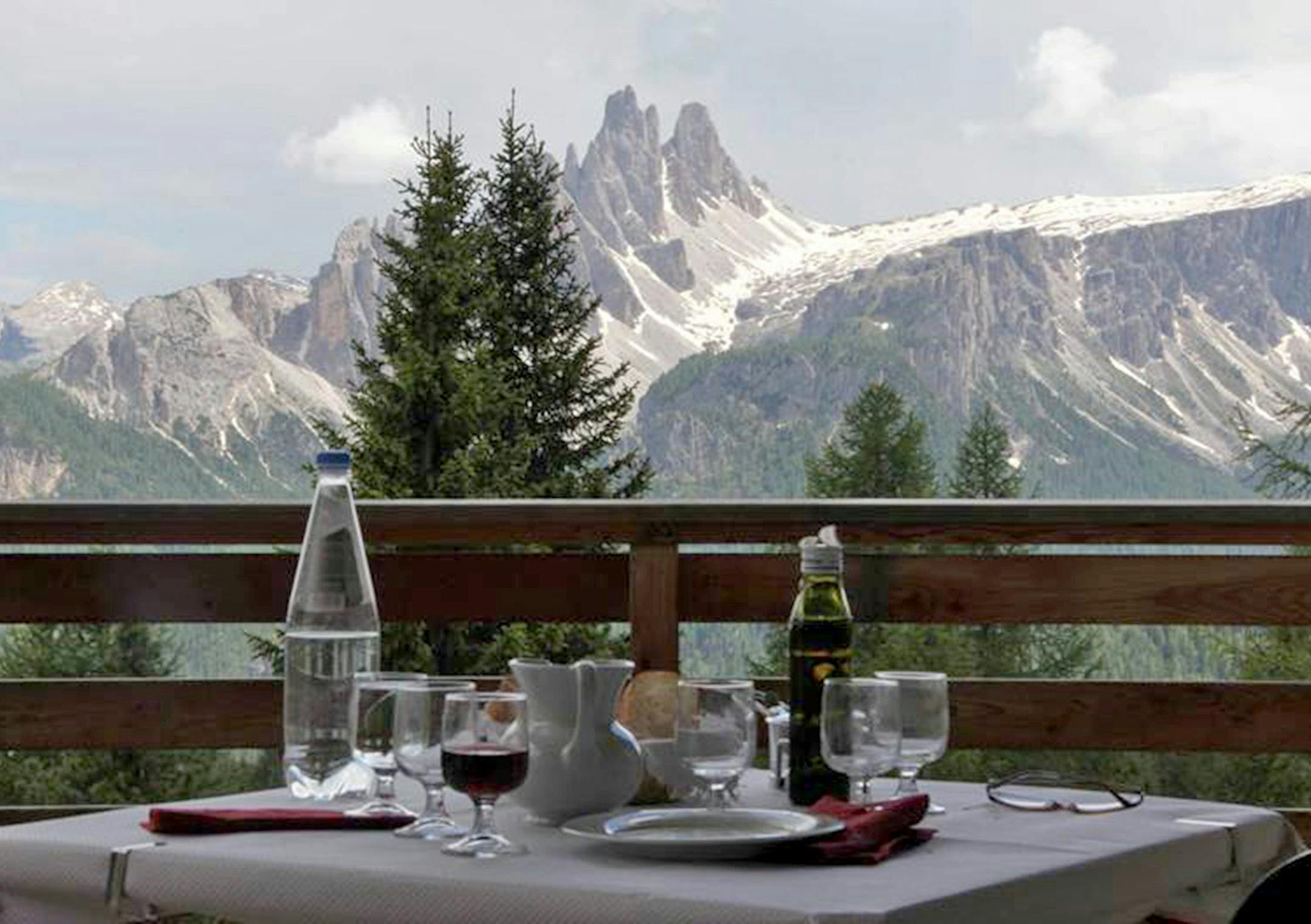
I needed to be in this conversation — but on my own slacker terms — so I came up with three weeks of travel that included well-hedged exertions, a triathlon of my own making. First, bicycling among the castle ruins and vineyards of Provence, in Southern France. Then a week in the same vicinity, hitting the water with a cruise down the Rhône River. Finally, a quick transit out of the gathering heat of late spring, and on to a week of hiking in the cooler, colossal Dolomites, North Italy's Alps.
Another way to avoid work was to outsource the planning. The biking and hiking weeks were self-guided, inn-to-inn package tours, and the river cruise had optional day trips. Each of these three components also works as a stand-alone vacation.
My wife, Linda, and I took it fairly easy. Except, of course, for the need to weave a few thousand years of plague and exaltation, settlement, revolution and migration, art and aggression, of Roman generals, French popes, Cathars, Cistercians, Saracens, Lutherans, Lombards and Ligurians into a sort of grand unification tapestry that makes sense of the human condition. Oooh, that was hard, but it is, after all, the hidden agenda for curious travel.
The biking week began with loop trips around the small town of St. Remy, over the fer- tile landscape that makes much of Provence a big produce market for the rest of France. That soil is also soaked in the blood of centuries of warfare, from the Napoleonic back to the neolithic. They're becalmed for now, the crooked, cobbled lanes of Bonnieux, Ventoux, Beaucaire, Maillane, Mazan … lyrical names for lovely stone villages, châteaux and fortified ruins along our cycling route maps.
With few exceptions, the food and the local wines we came across in these places were brilliant — so good we had to stop for more than one lunch some days, just to sample more diligently. After we granny-geared our way up a long climb to the ancient village of Venasque, for example, the view from our lofty terrace table at the Hôtel Les Remparts' restaurant was rapturous. We gazed into a deep wild gorge, some ruins half-hidden in the forests on the far side. The near view: red mullet and sea bream filet with red cabbage sauce, paper-wrapped chicken with basil sauce, Provençal deer stew, quail preserve with anchovy sauce. We stayed hours.
This was the region where, in 100 B.C., Roman general Marius lay in wait for two years for their arrival, then annihilated the first vast wave of northern Teutonic and Celtic invaders. His victory over the barbarians didn't matter much in the longer run. As you can learn among the extensive archaeological site of a Roman settlement called Glanum, just on the outskirts of St. Remy, the Romans were ultimately overrun.
Just across the road from Glanum is the St.-Paul asylum. It is a strand in a different story, a way station on the Vincent van Gogh pilgrimage route through Provence. This was where the anguished artist was committed after the "ear incident," in 1888. Some of his most revered work, including "Starry Night," was created here.