
Brown: This award-winning philosopher’s big ideas started in Minnesota

Harvard professor Michael Sandel offers us his thoughts on how we might rebuild the fabric of our communities and renew our civic life.

Columnist Icon
The Minnesota Star Tribune
October 14, 2025 at 10:00AM
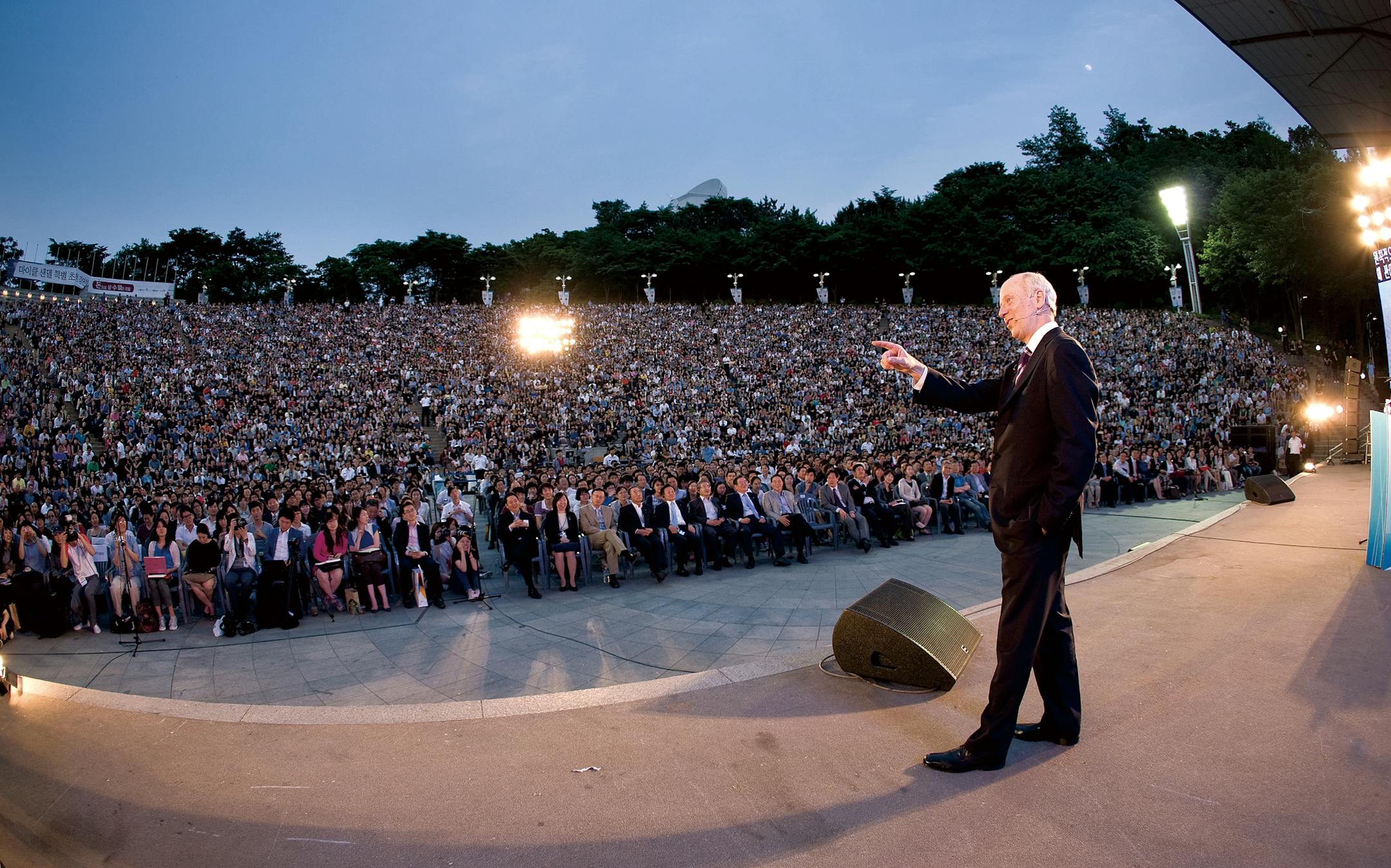
Professor Michael Sandel lectures in South Korea to 14,000 people. The Minnesota-raised philosopher has just won the prestigious Berggruen Prize for Philosophy and Culture. (MiraeN)

Opinion editor’s note: Strib Voices publishes a mix of commentary online and in print each day. To contribute, click here.

•••

Minnesota is special. Just ask Minnesotans; we’ll tell you.

Jokes aside, we have long boasted about our state’s tight social networks, high civic engagement and a shared connection to our land and water.

But many Minnesotans are quick to say that things used to be better. Our political system appears to be broken. Communities feel less cohesive. Individuals seem more apt to feel hopeless in a state that once exuded more optimism than it did Top the Tater.

We should not despair. Minnesota remains special, and we are capable of making things better. So says Harvard professor and world-renowned philosopher Michael Sandel, who grew up in Hopkins. Today, Sandel received the prestigious Berggruen Prize for Philosophy and Culture, a $1 million award recognizing “the impact and reach of his exploration of morality, dignity and the common good.”

Last week, Sandel spoke to me from Germany about the Minnesota origins of his biggest ideas and his suggestions for a renewal of our civic society.

“What I learned growing up and what I absorbed almost without noticing at the time was a certain sense of community and civic responsibility,” said Sandel, who attended elementary school in Hopkins and Talmud Torah in St. Louis Park. “That was almost in the water that we drank, in the spirit of the place, and with it there was a conviction also accepted as a background assumption that civic life was a noble thing.”

Sandel remembers watching the Minnesota Twins play at the Metropolitan Stadium in Bloomington. He said the experience later influenced his thinking about the corrosive effects of class divisions.

“A box seat might have been $4, and a seat in the bleachers cost a dollar,” said Sandel. “Everyone had to eat the same soggy hot dogs and wait in the same long lines to go to the restroom and when it rained everyone got wet.”

But he said this changed in modern ballparks with the addition of expensive skyboxes reserved for corporate sponsors and the wealthy.

“I call it the Skyboxification of America,” said Sandel. “It wouldn’t matter very much if it only happened when you went to a ballgame.”

But it happens everywhere, he said, including in our systems of education, health care, the economy and even the dignity afforded working class people. He said much of it comes from the lack of class and social mixing he saw at the public parks, libraries and swimming pools of his youth.

“Creating these public places and common spaces is more than a matter of providing public services,” said Sandel. “It’s a way of creating a common life, of drawing us together in the course of our everyday lives because this is how we learn to negotiate and to live with our differences and this is how we come to care for the common good.”

Sandel’s family left Minnesota for California when he was 13. As the 18-year-old student body president at Palisades High School, Sandel challenged then-California Gov. Ronald Reagan to a debate. To his surprise, Reagan accepted. Sandel would say that he lost the debate because Reagan understood the importance of emotional connection with the audience, a lesson Sandel would not forget.

We should not be afraid to debate, Sandel told me, and we should talk about the big things that cause disagreement.

“Trying to ask people to leave their moral and spiritual convictions outside when they enter the public square is a mistake,” said Sandel. “It’s a mistake that we make because we’re worried that disagreement will descend into intolerance and coercion, and that’s an important worry. But people want public life to be about big questions that matter, including values and ethical questions that matter.”

Here Sandel talks about the importance of what he calls “democratic listening,” the idea that we do better when we seek to understand the people we disagree with.

“What we’re missing is not agreement,” Sandel said. “What we’re missing is the ability to disagree with civility and mutual respect.”

I asked Sandel what a person should do if they were overwhelmed by the rise of authoritarianism within our borders and around the globe. Of course, he said, we should speak up and use peaceful protest to register our objections, but opposition is not enough. Those who feel this way should seek to understand the feelings at the root of the problem.

“Unless there is an alternative political vision that addresses the legitimate political grievances of working people who have been left behind by the mainstream parties, then there will not be an effective opposition to the authoritarian tendencies of this administration,” Sandel said.

Doing this requires building a shared belief in the common good, he said. That means valuing more than just markets and economic indicators but the way people relate to one another.

“We often assume, without really thinking, that the money people make is the measure of their contribution to the economy,” Sandel said. “This is a mistake.”

The Minnesota that Sandel remembers got it right, and could again.

“We’ve experienced the growing apart of democratic citizens instead of sharing a common life with a sense of community,” Sandel said. “This is what I learned reflecting on my Minnesota roots. There is some wisdom here of how we might reconstruct the civic infrastructure of a shared common life.”

More time in the park, less time on your phone. More time volunteering, less time on social media. Don’t just have an opinion; listen to others, too. This is good advice from one of the world’s great minds.

about the writer

about the writer

Aaron Brown

Editorial Columnist

Aaron Brown is a columnist for the Minnesota Star Tribune Editorial Board. He’s based on the Iron Range but focuses on the affairs of the entire state.

See Moreicon

More from Columnists

See More
card image
Joel Koyama/The Minnesota Star Tribune

Plus: Minneapolis Chamber embezzlement case, rescuing food waste, SilverSneakers fitness program cuts and more.