

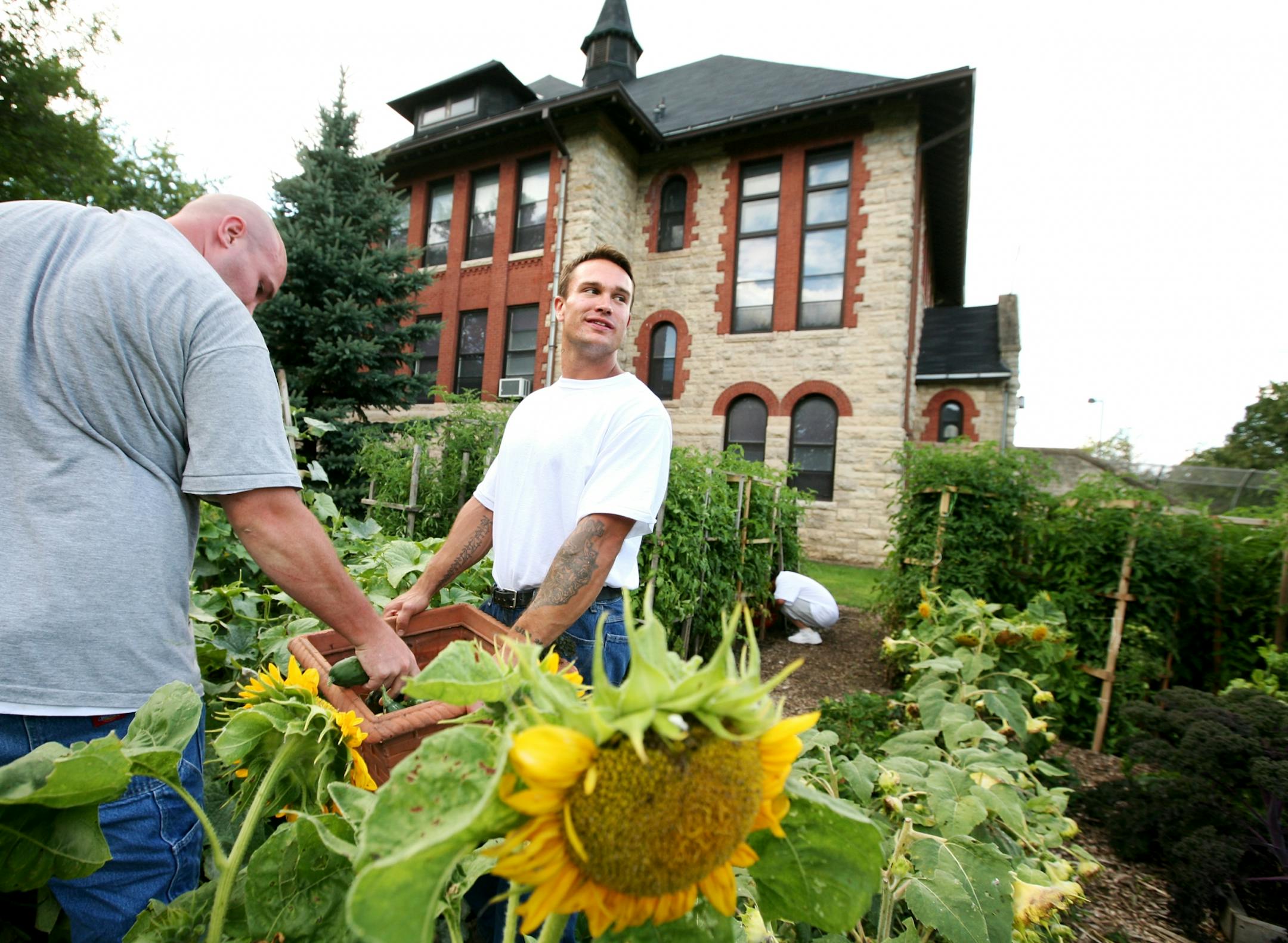
When LeRoy LaCrosse gets a letter from home that tugs at his emotions, he knows where to go: the prison garden.
"You can be alone, say a prayer, get that peace of heart back," he said as he picked tomatoes, filling a plastic pail with ripe produce, on a plot at the state prison work camp in Willow River.
LaCrosse is counting down the days to his release next month. He has a roofing job lined up and has been accepted to technical school. He's eager "to get my life back" after serving time for a drug possession charge. "I've got five boys at home," he said.
During his time at Willow River, he's dropped 23 pounds and developed a "farmer tan" from gardening in his khaki uniform. But he's also changed in less visible ways: The boot-camp regimen, which includes marching in formation, military dress code and mandatory chores, has boosted his confidence and resolve, he said. And he's helped produce thousands of pounds of food for the prison kitchen. "With seven gardens, it's a lot of work, but it feels good," LaCrosse said. "This program is a blessing."
The veggie-growing renaissance that has transformed the landscape of urban neighborhoods and corporate campuses is also making its mark on correctional facilities.
Willow River, which started converting turf grass into gardens several years ago, is one of three state prisons with inmate-tended gardens; the others are in Red Wing and Togo, in Itasca County. Soon there may be more, thanks to a new state law encouraging gardens at other correctional facilities.
The statute, which took effect Aug. 1, directs the Minnesota Department of Corrections (DOC) to consider establishing gardens at facilities where space and security allow. The DOC is considering gardens at prisons in Lino Lakes and Faribault, said spokeswoman Sarah Berg. "Our first priority is treatment and education, but garden programs are a bonus."
At Willow River, about 15 prisoners signed up for garden duty this growing season; for a devoted core group, gardening has become much more than a way to fill time and get outside the barracks. It's a new passion, a new skill, a way to bond with others in constructive ways, inmates say.


