Throwing money at the problem is a classic recipe for disappointment. With expectations high, results are almost sure to fall short.
Except in the case of this year's Jerome Foundation print fellowships, which produced a splendid exhibit, on view through June 26. The $15,000 Jerome grant went to Highpoint Center for Printmaking, an internationally known Minneapolis professional studio, where the chosen artists -- Katinka Galanos, Miles Mendenhall and Justin Terlecki -- were able to work for nine months.
To non-initiates, printmaking is among the fussiest and most mystifying of art forms there are, involving drawing on rocks (lithography), metal plates (etching) or mesh fabric (screen printing). After the images are fixed, artists and technicians set to work using ink, squeegees and heavy equipment to transfer the images to paper. Often they have to run each sheet through the press a dozen or more times, adding a new color with each pass. The effort can take weeks and may result in only a few images. At a studio such as Highpoint, 10 or 15 prints would be a good-sized edition. Such prints are closer to paintings and other unique images than they are to, for example, posters, which can be run off in almost unlimited numbers.
A whiter shade of pale
Galanos' six white-on-white screenprints are extreme examples of the art form. Displayed unframed on specially built white tables at the gallery's entrance, they are a housekeeper's nightmare but, oh, so gorgeous. Every dust mote clouds them and they are, obviously, impossible to reproduce in a newspaper, where a white, postcard-sized rectangle on a 3-feet-tall white page would just look like a blooper. See them in morning light, however, and their ethereal presences hum with quiet beauty.
Into each sheet of thick creamy paper, Galanos has impressed a lemony white rectangle. Seen from the window side, the papers appear to be buff-colored on white tables. But the tones shift if you move into the gallery. Depending on the angle of light and time of day, the rectangles may seem to hover above the paper rather than sinking into it. Or the white ink will acquire an opalescent gleam and reveal soft stripes and even single lines of tiny white-on-white words.
The words are dedications, presumably to friends of the artist: "For Bruno Nuytten" or "For You, M." Maybe it helps to be a myope, afflicted with that extreme form of nearsightedness that reveals a forest of information in every fiber of a printed page. Or maybe Galanos' prints are such a pleasure simply because they transform the act of seeing into a meditative reverie.
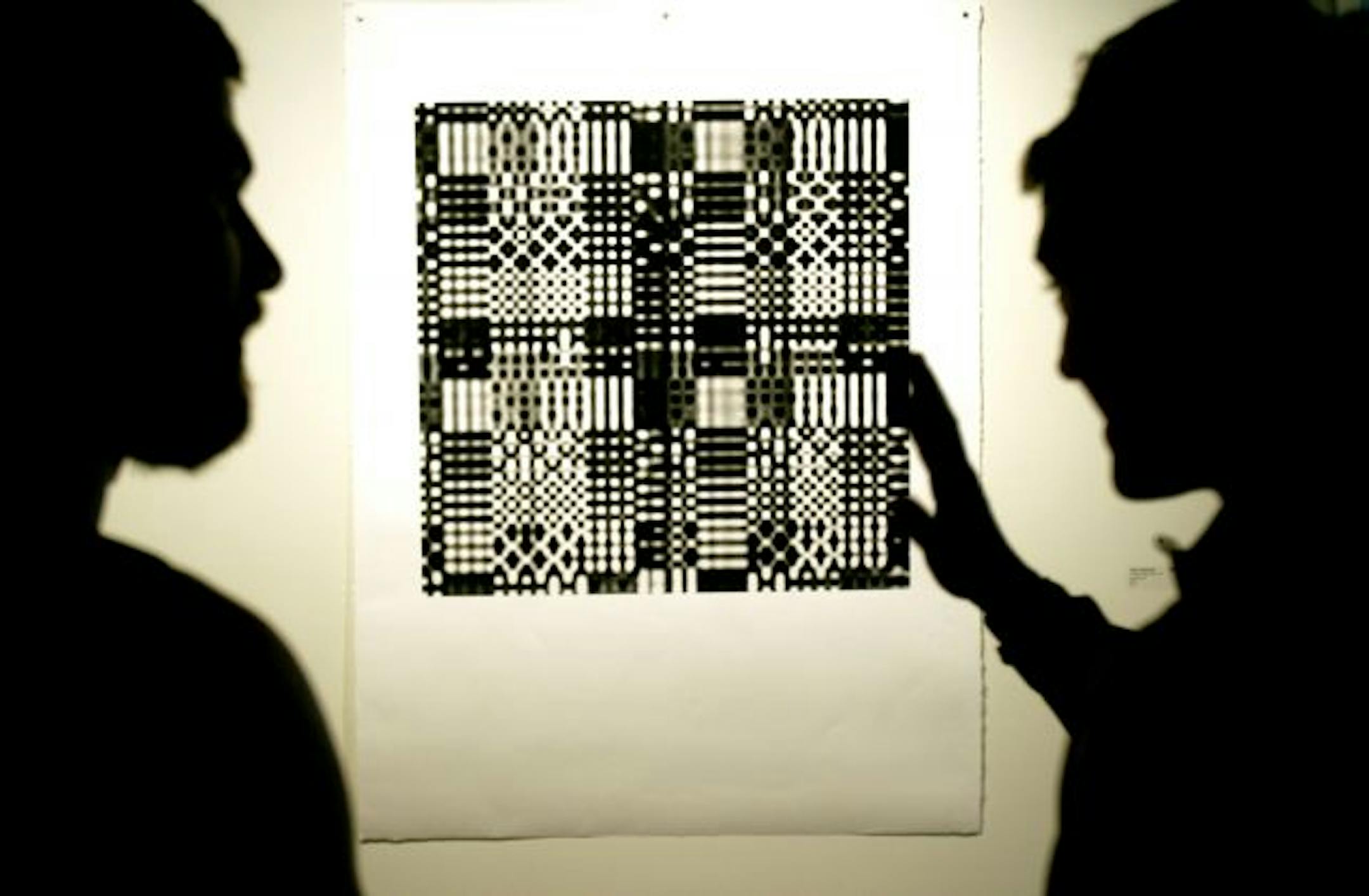
Strictly black and white