

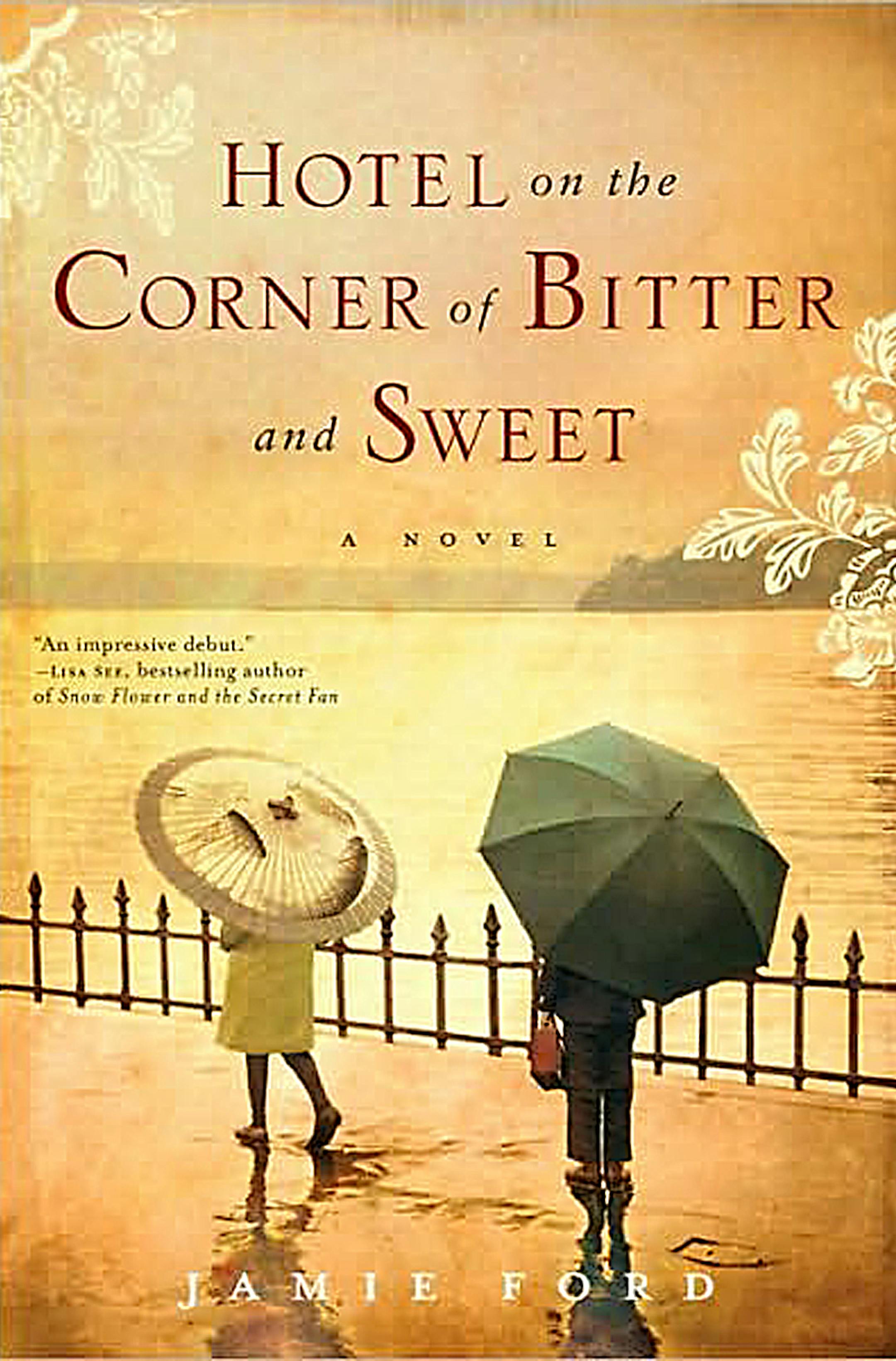
Somewhere, a screenwriter is salivating over Jamie Ford's debut novel. "Hotel on the Corner of Bitter and Sweet" has romantic-movie trappings: historic sweep, doomed love, desire vs. duty, rain-swept streets, tear-stained faces.
Set in Seattle, the story runs on two tracks, one in the 1940s, one in the 1980s. In the first, Henry, a quiet Chinese-American boy whose dreams run up against the duties imposed by his immigrant parents, falls for Keiko, a Japanese-American girl who is sent to an internment camp after Pearl Harbor.
Henry's parents hate the Japanese, who have bloodied their native land and bombed their adopted one. But nasty white kids who make no distinction between Chinese- and Japanese-Americans bully both Henry and Keiko. Luckily, a crusty, chain-smoking white lunch lady and a fatherly black jazz musician help them.
In the modern segments, Henry, a recent widower, struggles to understand his hip college-age son. One day he walks past the long-deserted Panama Hotel as dusty belongings left there by rounded-up Japanese are brought out, reminding him of sweet Keiko. Can Henry tell his son about his lost love?
Most readers will enjoy this poignant story. It features some well-crafted scenes, as when Henry's son's white girlfriend charms him with a bumbling gift of green-tea ice cream -- a Japanese, not Chinese, treat.
This high-minded historical novel's heroes stand for everything good about America, its villains for everything vile bred when patriotism and paranoia couple. But as a work of literature, it has two glaring flaws:
One, it's entirely predictable. One chapter in, you'll know what lies ahead -- next week, next year, 40 years hence.
Two, it's carelessly written. The good guys all talk alike -- earnestly -- and the bad guys say things like, "Where do you think you're going?" Sentence fragments abound. Worst, after people bare their hearts, Ford tells us why they feel that way.


