When a retailer changes, it risks alienating some customers. The PPL SHOP, which opened 22 years ago as a surplus shop in northeast Minneapolis, probably won't have that problem after changing its name to Furnish.
"People never understood the acronym," said Sue Jaqua, chief operations officer. "Some people knew Project for Pride in Living, but hardly anyone knew that SHOP stood for surplus home and office products."
Count me among the clueless. Regardless of the name, PPL always represented, in my opinion, the cheapest place to buy used office furniture. But the selection, especially for home furnishings, was always hit-and-miss. Since the nonprofit store depends mostly on donations, buyers never know what to expect. With the name change, Furnish hopes to narrow the focus on office and home and de-emphasize the charitable roots, at least in name.
As much as nonprofit agencies such as Goodwill or Hope Chest might want to think so, hardly anyone shops at thrift or surplus stores to support the charities. People shop to find deals. Furnish is no exception. If a customer discovers that Furnish supports an on-the-job training program that helps low-income individuals and families achieve self-sufficiency when he's buying a pristine sofa for $99, it's icing on the cake.
Part of Furnish's rebranding is a simplification of an identity that's always been a catch-22. Are we selling new or used? Office or home? Back in the late '80s when the store opened, buyers would find office furniture donated from supporters such as Honeywell and General Mills but also computers, forklifts and knickknacks. Customers could find a used office chair for $20 and a computer with an 8-inch floppy drive for not much more.
Then the store went through a period of buying returns from catalog retailers such as Signals, Wireless and Circa, owned at the time by Minnesota Public Radio. The home accessories, clothing and limited-edition sports memorabilia were great deals. PPL's prices were even lower than at the warehouse sales held by catalog merchandiser Rivertown Traders. When the store went through a Pier 1-type phase with cheaper home goods, customers who had gotten used to the higher-quality catalog goods lamented the decline.
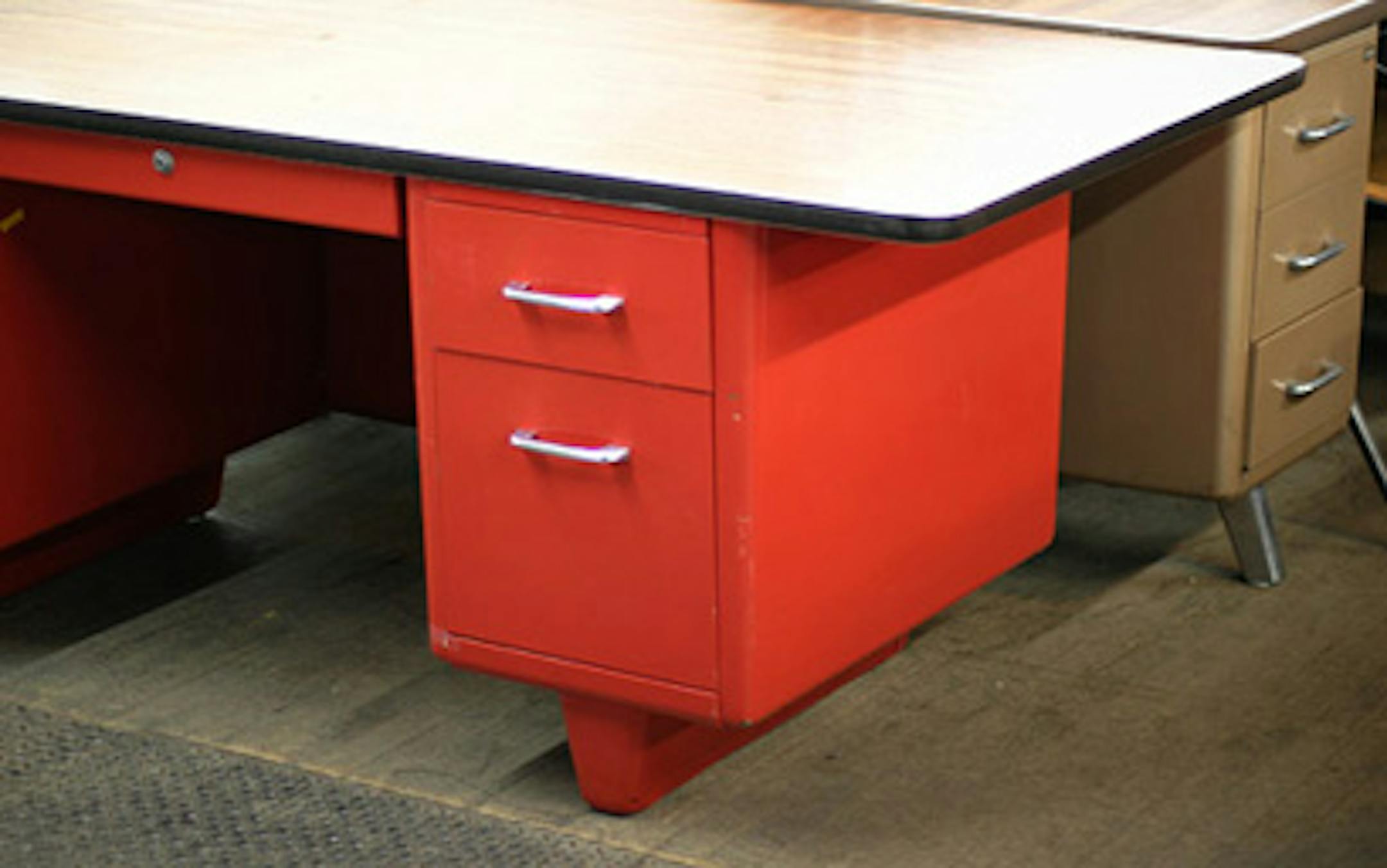
No longer. The quality is back, and the store is cleaner and better organized. Seventy percent of the space is devoted to office furnishings (for home and small businesses), and 30 percent is for home goods (a few sofas, chairs, dining tables, but mostly accent items). Taking a cue from DaytonMarshallMacy's Oval Room, some of the merchandise is now grouped by brand and type. Just as Oval Room customers back in the 1960s might not have known Hanae Mori or Escada at first, Furnish is introducing buyers to high-end office furniture by Herman Miller, Kimball and Meridian.
That's a learning curve for shoppers who think all file cabinets are alike. In response, the store highlights some brand names and provides "compare at" prices from online sources. Web printouts show the price when the piece was new, compared with Furnish's used price, usually 70 to 80 percent lower.