

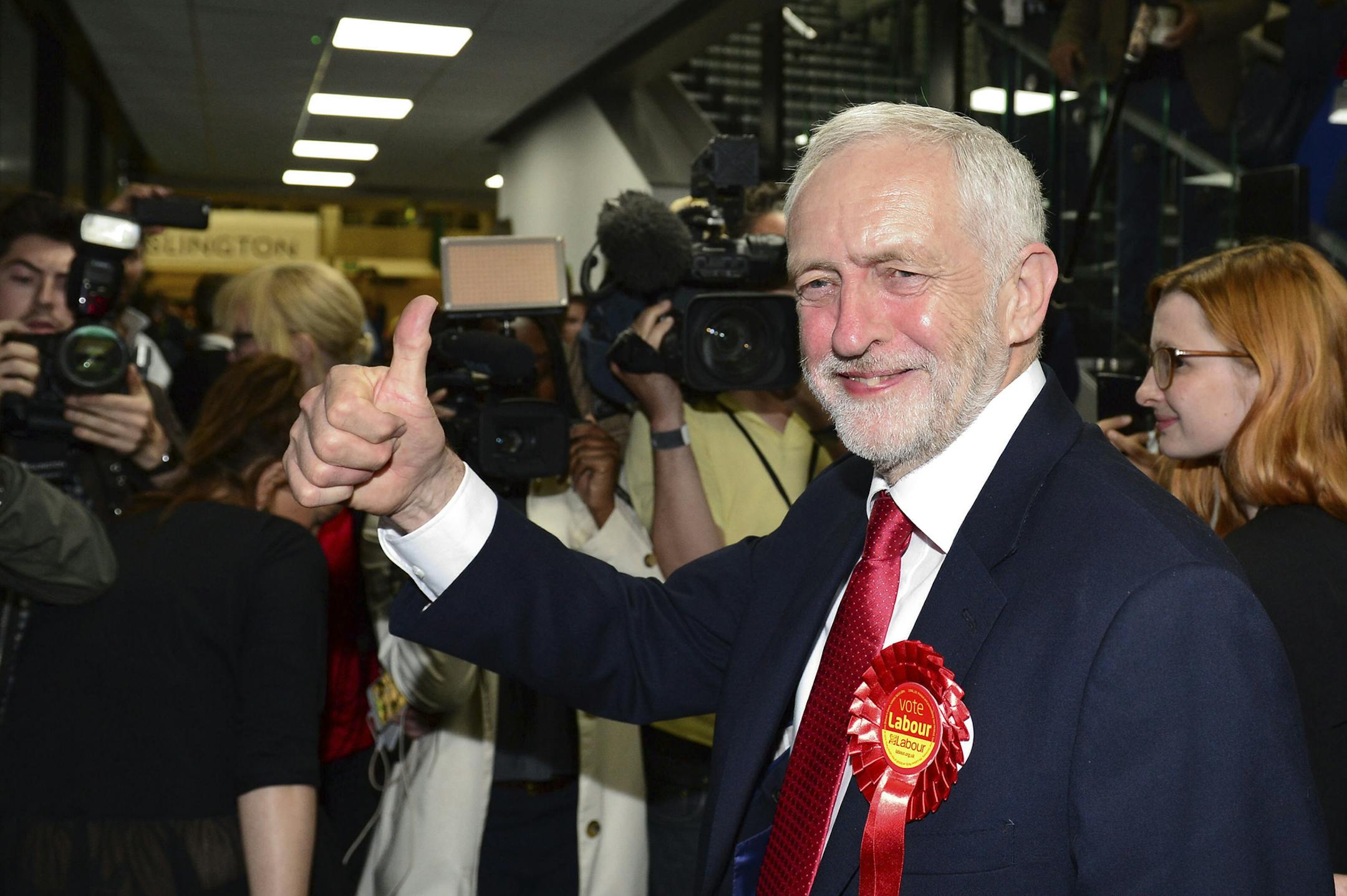
Last week, as the shocking results of the British elections arrived, the most overused sentence in Britain seemed to be: "I was wrong." Another insurgent mass movement following the leftist Syriza party in Greece, Bernie Sanders and Donald Trump in the United States, and the Five Star Movement in Italy had caused a political earthquake. In one of the biggest political upsets in British history, Theresa May of the Conservative Party lost her majority in parliament, and her socialist rival, Jeremy Corbyn, led his Labour Party to its largest increase in its share of the popular vote since 1945.
Yet the eruption of mea culpas by political commentators following this seismic shift had a special pathos to them. For it was not only the British tabloids, reflexively and rowdily right-wing, that had been hostile to Corbyn and his supporters. The center-right and center-left intelligentsia also unanimously saw Corbyn and his supporters as deluded cultists and dead-enders.
One of Corbyn's most vociferous critics, Nick Cohen, a columnist at the left-leaning Observer, predicted in March that Corbyn would lead his party to a "historic defeat" and warned his supporters in the most colorful terms that they should change their minds.
It is now Cohen who has had to change his mind, and to write, "I was wrong." And this bathetic declaration is now so frequent that it is worth asking: How did so many commentators entrusted to get things right get them so spectacularly wrong?
This is no longer an academic question, or dinner-party quibble, since public trust in the media is at an all-time low. A simple explanation is "generation gap" — a phrase last heard widely during the great youth revolt in the 1960s. Most senior media professionals find themselves on the wrong side of the age divide. Their concerns about the future are rather less urgent than those of the young men and women facing student debt, poorly paid internships, zero-hour contracts, long-term unemployment and permanent exclusion from the housing market.
There is also the class gap. Most senior journalists have enjoyed relatively high socioeconomic mobility in recent decades. Their exposure to what for many people are everyday realities — underfunded schools and hospitals, insecure jobs, communities hollowed out by de-industrialization — is limited.
But nothing has dated political vision today more than obsolete ideology — especially among those who claim to be free of it. Most commentators today came of age as the Soviet Union and Eastern Europe revealed the criminal inefficiency of central planning and crisis beset the social-welfare state in Western Europe and America.
In the new wisdom that dawned on Anglo-America in the 1980s, government, as Ronald Reagan put it, was the problem and not the solution, and there was something "magic" about the marketplace when it is left unregulated. As the years passed, the rising tide of globalization seemed to be lifting all boats, in the East as well as the West.


