Choked by sweltering summers, the heavy stink of manure and orchards that go on and on, California's Central Valley seems an odd place to be crowded with poets.
And yet somehow it is. One could draw a map of Fresno using the poems of Poet Laureate Philip Levine alone. Add in the work of Juan Felipe Herrera and two sides of the bilingual California coin come into view.
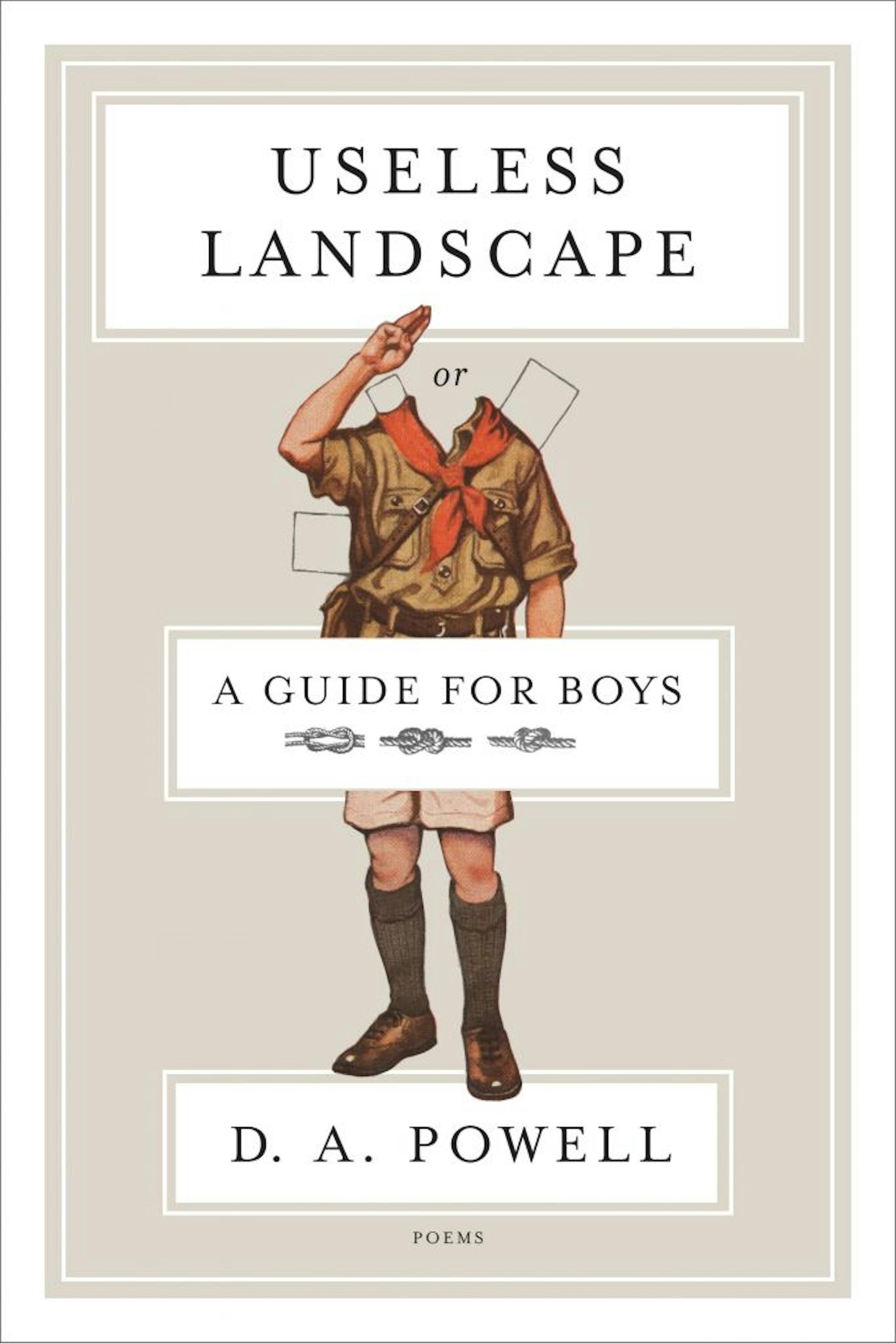
There has never been a Central Valley poet quite like D.A. Powell, though. His first three books made a campy tour of three daily meals -- "Tea," "Lunch," "Cocktails" -- making it clear this poet had taken a bite out of everything offered to him.
In "Chronic," his 2009 volume, Powell began a deepening which becomes complete in "Useless Landscape." Whereas the former volume meditated on love, and the arsonist fires of desire in the age of AIDS, this new book turns to the past and shows how eroticism can grow in the least likely places.
The landscape provides the metaphor. In the Central Valley there are many things living that can survive on dust alone. "The smattering on field and railroad tracks," Powell writes, "both hardy blooms and dainty flowers." Roaming with a botanist's precision, Powell names them all: the dandelions, the Brewer's pea, the cheat and flax.
Powell edges towards memory's blushing, pastoral tone, and then revolts. He has no urge to sanitize. This is a bold, frankly sexual book that eroticizes the liminal spaces outside sock-hops, truck stops, orchards and factory farms, bringing a whole new meaning to the migrations immortalized in John Steinbeck's novels.
"The tractor-trailer rigs would come. / The pickers, singularly or in vans. / And in summer the canneries began."
The doubling of functional environments into bathhouses is beautifully rendered. It names and reclaims. At a riverfront park where men meet to sleep with other men, cars "pass like slinking cats." Clouds, "above ... the spreading fundament," look down on lovers.