
POETRY: "June Fourth Elegies," by Liu Xiaobo, translated by Jeffrey Yang

Poems for the fallen: Powerful and important words from the Nobel prize winner who has been harassed and imprisoned by the Chinese government.

For the Minnesota Star Tribune
April 8, 2012 at 3:14PM
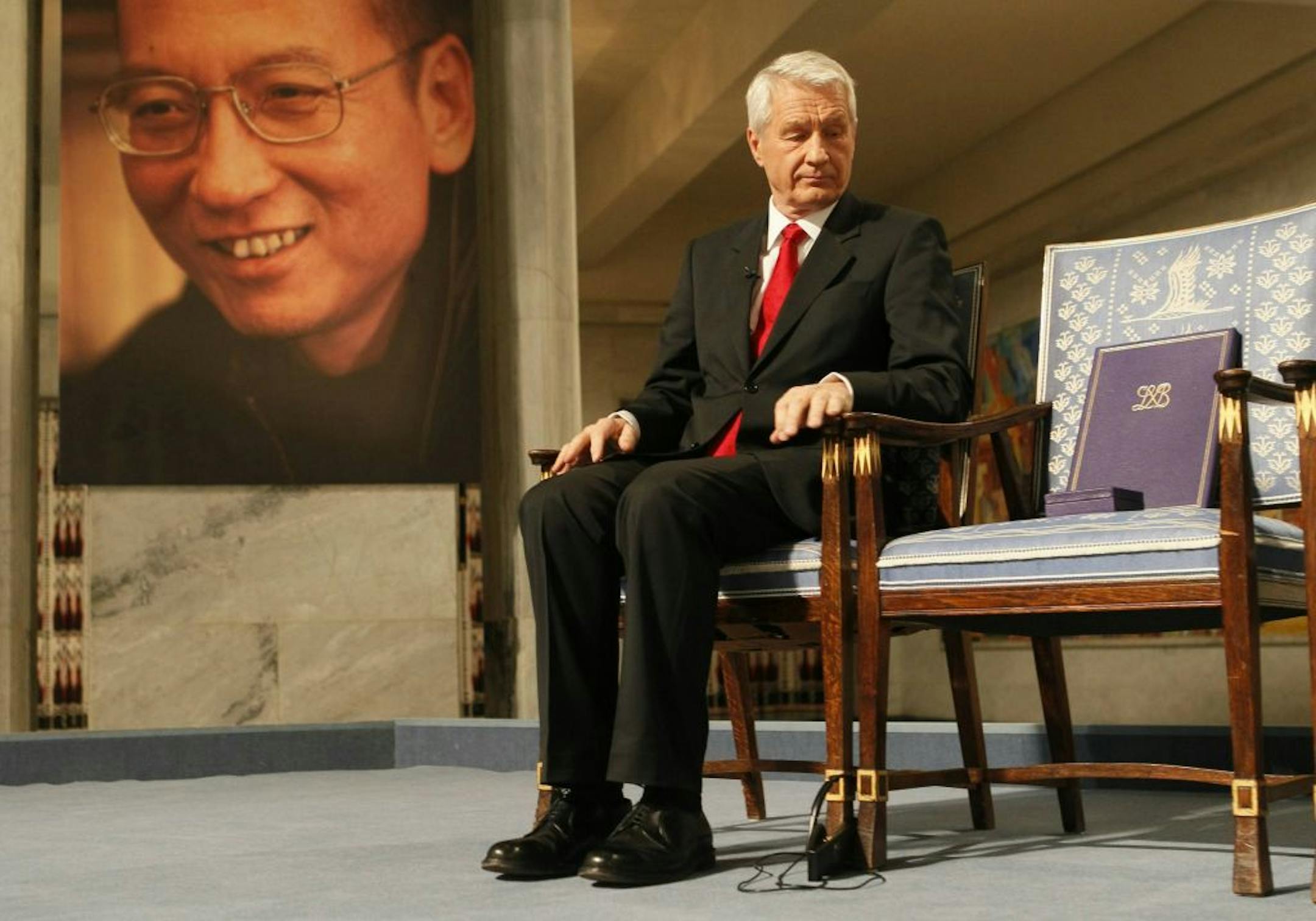
2010: Imprisoned Chinese poet Liu Xiaobo was not allowed to attend the ceremony when he was awarded the Nobel Peace Prize in 2010, so the chairman of the Norwegian Nobel Committee, Thorbjoern Jagland, placed Liu's medal and diploma on an empty chair.
Imprisoned Chinese poet Liu Xiaobo was not allowed to attend the ceremony when he was awarded the Nobel Peace Prize in 2010, so the chairman of the Norwegian Nobel Committee, Thorbjoern Jagland, placed Liu’s medal and diploma on an empty chair. At left stood a portrait of Liu, who is serving 11 years for subversion. (Associated Press/The Minnesota Star Tribune)

'The day / seems more and more distant," writes Liu Xiaobo in the final elegy of this powerful and important book of poems. "And yet for me / it remains a needle inside my body."

The day of which Liu writes is June 4, 1989, known around the world as the Tiananmen Square protests, and within dissident circles in China as the June 4th massacre.

More than two decades later, it is unclear how many activists gave their lives to the struggle. The Chinese government has yet to offer an official apology. One thing, however, is certain. Liu has dedicated his life to remember those who did.

For 20 years, Liu has written an elegy on the anniversary of the event: for mothers who lost sons, for a country he believes lost its hope. They have been written in freedom, and they have been composed from prison.

Between 1989 and 1999, Liu's agitation for change cost him six years of his life. He was released but never left alone. In 2009, after what has been described as constant harassment, he was sentenced to 11 more years in prison. He won the Nobel Peace Prize in 2010 and was celebrated with an empty chair in Stockholm.

China's transformation into a quasi-capitalist economy has been cheered and feared by the West. Liu views it with bitterness in these elegies. "The ease with which money / forgives bayonets and lies," he marvels with disgust in one poem.

Many of these poems look less at the fallen and more at the state Liu believes has betrayed them. In his language China is sick, promiscuous, dying of a disease born from its dynastic roots: a blood lust confused with procreation.

Readers not versed in Chinese history are given some guidance. They are well served by translator Jeffrey Yang's notes. Still, the best poems in this volume earn their horrific vision through imagery that captures the spooky intimacy of life under censorship. "Surveillance devices also recorded / the wails and the weeping," Liu Xiaobo writes in another elegy.
At times Liu Xiaobo's anguish and guilt are almost too much to bear. The repetition of the day begins to feel like madness, and out of the madness comes heaviness, but also a visionary kind of seeing. One year the anniversary passes while Liu Xiaobo is in a bar.

"From within a tear in new clothes / a sudden greenness," he writes.

"Smashed bone remnants / used to settle the check." These are the words of a man who will never forget. Here is a book that will compel you to join him.

John Freeman is the editor of Granta and the author of "The Tyranny of E-mail."

(Star Tribune/The Minnesota Star Tribune)
about the writer

about the writer

JOHN FREEMAN

More from Minnesota Star Tribune

See More
card image
J. SCOTT APPLEWHITE, ASSOCIATED PRESS/The Minnesota Star Tribune

The "winners" have all been Turkeys, no matter the honor's name.

In this photo taken Monday, March 6, 2017, in San Francisco, released confidential files by The University of California of a sexual misconduct case, like this one against UC Santa Cruz Latin Studies professor Hector Perla is shown. Perla was accused of raping a student during a wine-tasting outing in June 2015. Some of the files are so heavily redacted that on many pages no words are visible. Perla is one of 113 UC employees found to have violated the system's sexual misconduct policies in rece