
'Pocket neighborhoods' are neighborly by design

An architect promotes "pocket neighborhoods" as a way to create more-connected communities.

June 4, 2011 at 10:11PM
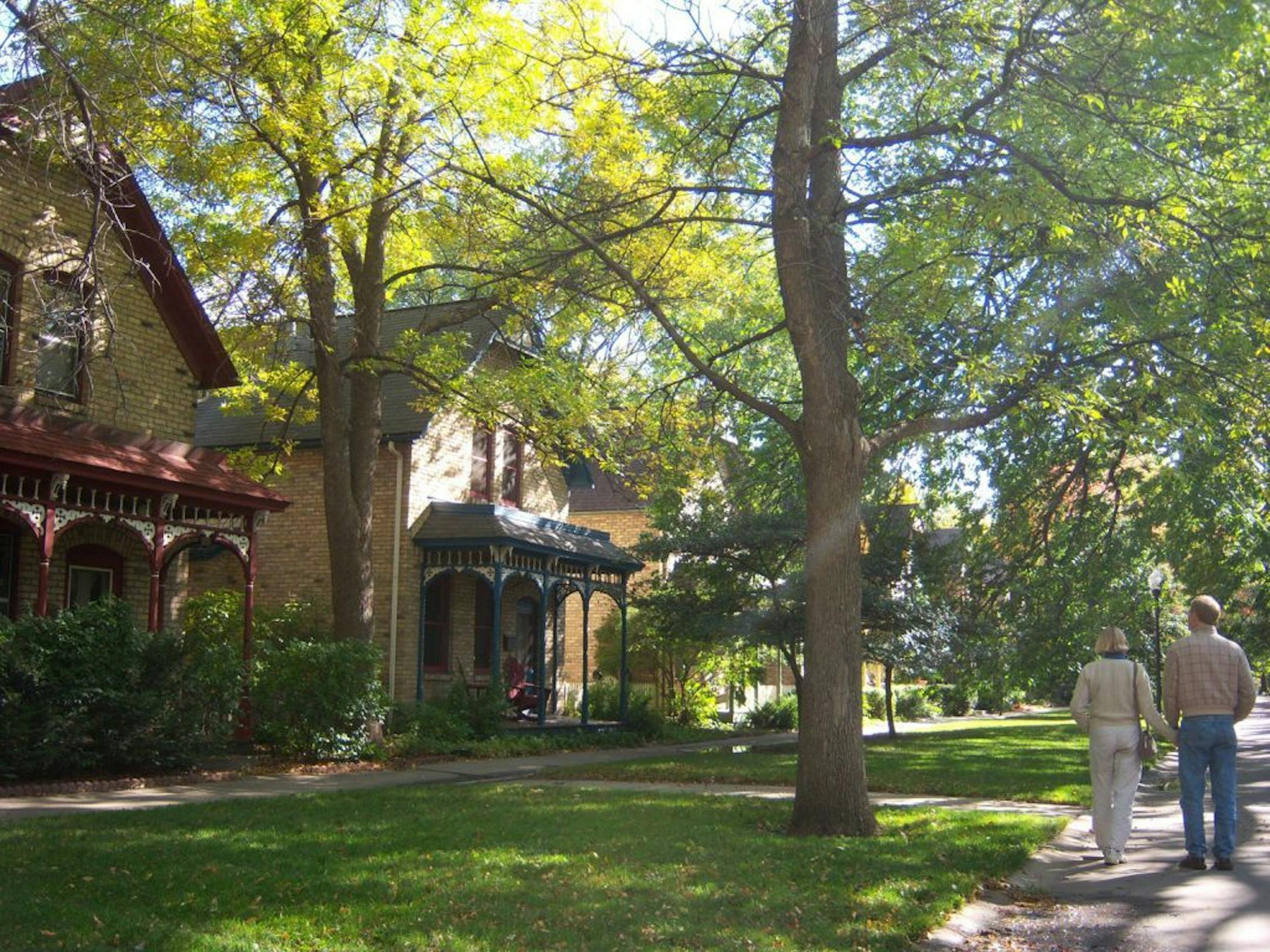
Milwaukee Avenue in Minneapolis is an example cited in "Pocket Neighborhoods" by Ross Chapin.
Milwaukee Avenue in Minneapolis is an example cited in "Pocket Neighborhoods" by Ross Chapin. (Star Tribune/The Minnesota Star Tribune)

Are you comfortable calling on your neighbors for a favor -- or inviting them over for a spur-of-the-moment get-together? If you aren't, maybe it's not you; maybe it's your neighborhood and the way it was planned.

Most modern neighborhoods aren't designed to foster human interaction, according to architect/author Ross Chapin, who has developed an alternative: pocket neighborhoods. We caught up with Chapin, a White Bear Lake native now living in Seattle, to talk about designing for community.

Q So, what is a pocket neighborhood?

A Essentially, it's about nearby neighbors coming together on common ground. It could be a common courtyard. It could be back yards where neighbors take the fences back. It could be a reclaimed alley. Most of the houses being built today are for families, with two or three-car garages, but there are a lot of smaller one- and two-person households that would like a house but do not need a large house and would like a tighter, closer neighborhood.

Q Is this a new concept?

A We've been designing them for 15 years. The first one was in our little town here [Langley, Wash.]. Third Street Cottages is eight cottages oriented around a commons. They sold out immediately, and the response from across the country confirmed my hunch that we need to do something different to meet the needs of people.

Q Where did they come from?

A Pocket neighborhoods have roots in the bungalow courts of Southern California, the campground communities on the East Coast, and before that, in some European communities. There is a natural human propensity to living in a village. But somehow we've gotten the idea that privacy is the ultimate goal. We have thousands of homes in proximity rather than in real neighborhoods.

Q What can pocket neighborhoods do?

A A hundred years ago, with the car, we broke the idea of community within walking distance. We separated work from home, built the national highway system. When kids grow up, they settle thousands of miles away from family. There is a huge number of divorced families. People are living without the support system that existed before the car. Pocket neighborhoods reinforce that network.

Q Why is Minneapolis' Milwaukee Avenue included in your book?

A When I was going to school [at the University of Minnesota], some friends got involved in saving [the homes on Milwaukee Avenue] from demolition. It was a wonderful example of a neighborhood coming together. As I was writing the book, I was in town with my sister, and I said, "Let's look at Milwaukee Avenue." They had reclaimed the street and turned it into a park, a shared garden. It's a shining example of a pocket neighborhood, where the car does not dominate.

Q Is it possible to have privacy in this kind of neighborhood?

A It's a need not to be dismissed. Privacy can be addressed by design rather than distance. Typically, it's addressed with 2 1/2-acre lots and oversized houses. That translates into sprawl and traffic jams. Instead, you can ensure privacy with nested houses, designed so there are three open sides and one closed side. The open sides are open to the common and an active porch. The closed side has high windows and skylights, so there's light, but you're not looking at each other. You can also create layers of space between the street and front door.

Q Are pocket neighborhoods difficult to build?

A The biggest challenge is local zoning codes. They're based on the status quo of big houses and wide streets [on the presumption] that those preserve value. But closer, tighter communities also have value. The other big challenge is the prevailing idea of what a community is, what a home is. It's "bigger is better" vs. "small is beautiful" and "it takes a village." Some people think pocket neighborhoods are a communist thing -- like a commune -- for those kinds of people. But the need for this is as close as an aging parent or a twenty-something struggling to live on their own, without being isolated. I'm trying to raise the flag for the alternative.

Q How can homeowners build community in traditional neighborhoods?

A If you have larger back yards and are on good terms with your neighbors, take the fences back and create a common garden. Have a block party. Share tools. Look for ways in which you can connect and contribute to the neighborhood, by sharing skills or knowledge. Minnesota is a terrific place for this because there's already a climate of community -- Minnesotans seem to always be waving at each other. This openness is really in the spirit of pocket neighborhoods.

Kim Palmer • 612-673-4784

about the writer

about the writer

Kim Palmer

Reporter, Editor

Kim Palmer is editor/reporter for the Homes section of the Star Tribune. Previous coverage areas include city government, real estate and arts and entertainment 

See Moreicon

More from Minnesota Star Tribune

See More
card image
J. SCOTT APPLEWHITE, ASSOCIATED PRESS/The Minnesota Star Tribune

The "winners" have all been Turkeys, no matter the honor's name.

In this photo taken Monday, March 6, 2017, in San Francisco, released confidential files by The University of California of a sexual misconduct case, like this one against UC Santa Cruz Latin Studies professor Hector Perla is shown. Perla was accused of raping a student during a wine-tasting outing in June 2015. Some of the files are so heavily redacted that on many pages no words are visible. Perla is one of 113 UC employees found to have violated the system's sexual misconduct policies in rece