

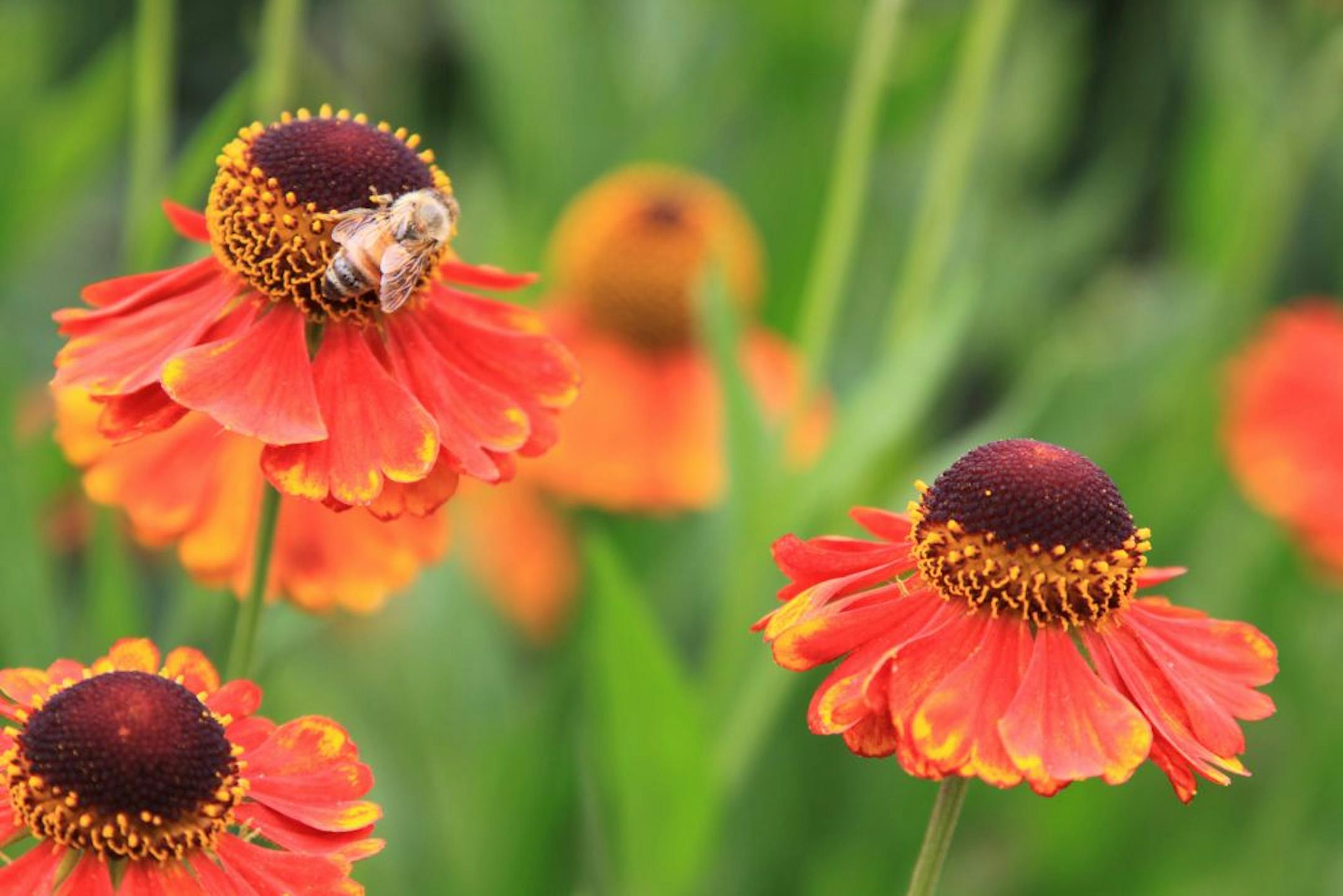
It's hard to imagine a Minnesota summer without sweet strawberries, juicy melons and tangy apples. But that's what we'd be missing if it weren't for the insects that pollinate those plants and many others. In fact, every third bite of the food we eat is courtesy of bees and other pollinators. They're also responsible for assisting 80 percent of the world's flowering plants.
While alarming reports of bee colony collapse have highlighted the plight of pollinators in commercial agriculture, home gardeners should be concerned, as well. We need pollinators to help us produce those coveted back-yard tomatoes and walkway wildflowers.
While bees are the most efficient pollinators, hummingbirds, butterflies, moths, flies, wasps, ants, beetles and even mosquitoes also transfer pollen from a flower's male anther to another's female stigma as they search for pollen protein and/or nectar.
Because they perform this essential task for us, the least we can do is garden with them in mind.
Draw them in
It's important to plant a wide variety of flowering plants to attract the widest array of pollinators. Because of their unique physical characteristics, pollinators need flowers that have a certain color or shape.
Many bees have short tongues, so they prefer flowers with spiky stems and lots of little florets, such as lavender, salvia and blazing star, which offer easy-to-reach pollen and nectar. Bumblebees, butterflies and hummingbirds have long tongues that can probe deeper into tubular blossoms such as snapdragon and penstemon.
Ants and beetles are attracted to certain colors, specifically the duller reds and browns found in the blooms of wild ginger.


