
Plant right, plant now

Most Minnesotans are in the habit of planting trees in spring. But many trees do just dandy when planted in fall, as long as you give them a little TLC.

October 5, 2010 at 8:43PM
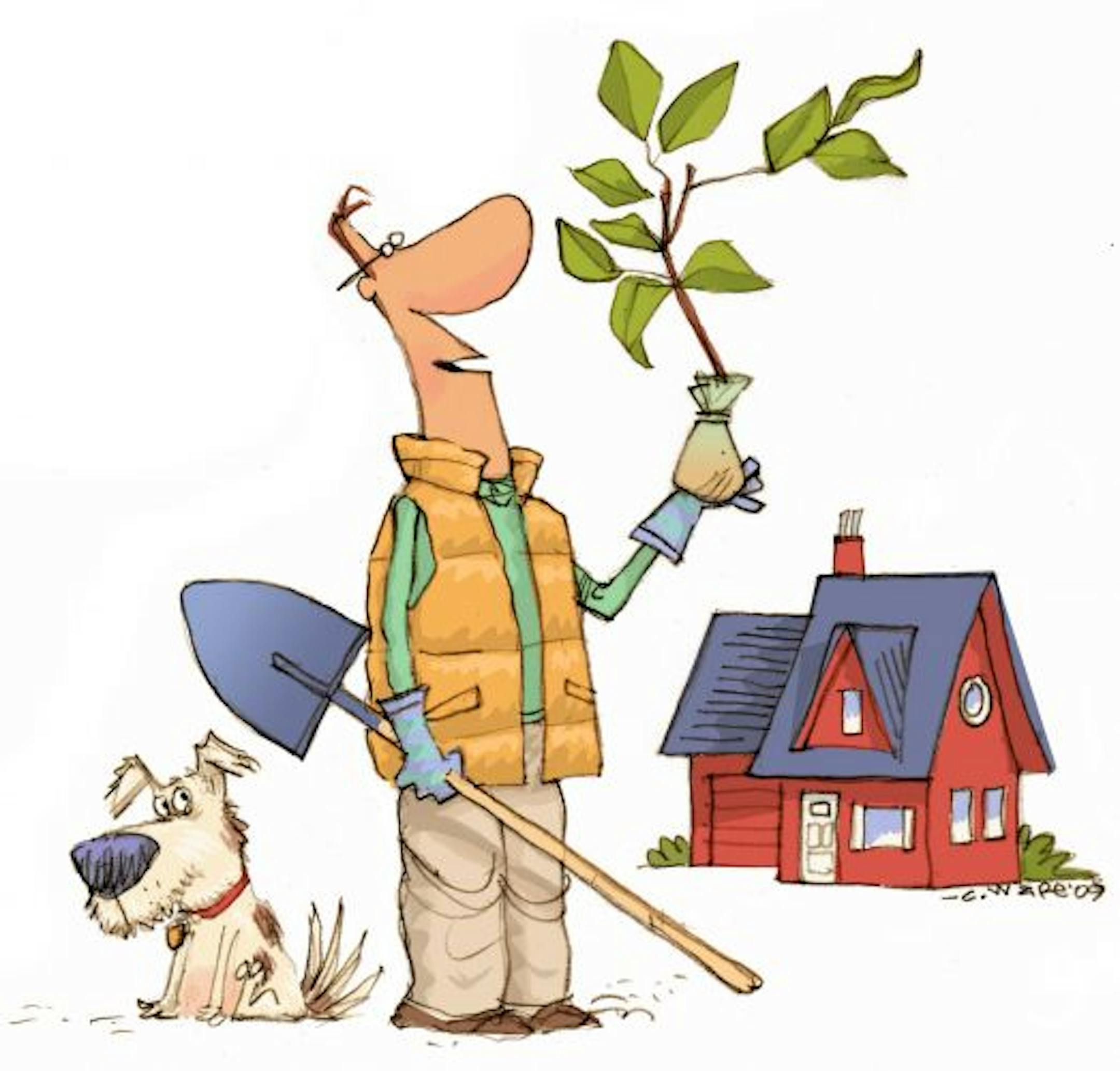
300 dpi Chris Ware color illustration of man about to plant a tree; can be used with stories about fall being a great time to plant a tree. Lexington Herald-Leader 2009<p> 10000000; 10004003; 2009; cat; FEA; krt; krt2009; krtcampus campus; krtfeatures features; krtgarden garden gardening; krthobby hobby; krtlifestyle lifestyle; krtnational national; krtworld world; LEI; leisure; LIF; lx contributed; mctillustration; tree; dog; planting; krtfall fall; ware
300 dpi Chris Ware color illustration of man about to plant a tree; can be used with stories about fall being a great time to plant a tree. Lexington Herald-Leader 2009 10000000; 10004003; 2009; cat; FEA; krt; krt2009; krtcampus campus; krtfeatures features; krtgarden garden gardening; krthobby hobby; krtlifestyle lifestyle; krtnational national; krtworld world; LEI; leisure; LIF; lx contributed; mctillustration; tree; dog; planting; krtfall fall; ware (MCT/The Minnesota Star Tribune)

Conventional wisdom says that the best time to plant trees is in the spring, after the frost has disappeared, but before the buds have broken. And, for certain trees, that's true.

Oaks do best when planted in the spring, as do birch, firs and most fruit trees, including apples. But many other trees -- maples, buckeye, alder, catalpa, elms and pines -- do just as well when planted in the fall.

It's not known why some trees do better than others when planted in fall. The general rule is that trees with a fine, fibrous root system close to the surface of the soil do well, while trees with a large taproot tend to have a lower chance of survival when planted in autumn.

But because lots of nurseries cut their prices on trees, this may be a good time for you to plant if you're interested in one of the many trees that shine in fall.

More TLC

Spring has been considered the best time to plant, in part because we tend to get plenty of rain in spring. That means you don't have to worry about watering. But if you're good about watering regularly, planting in fall should be fine.

Spring also ensures that a tree will have plenty of time to grow new roots, since roots continue to grow until the temperature of the soil dips below about 45 degrees. Trees planted in the fall don't have as much time to get established, but most will be OK, as long as you don't wait until the ground is frozen to plant. An exception to this rule is evergreens such as pines.

Early for evergreens

Evergreens can be planted in fall, but they should be in the ground before the middle of October so they have the best chance of surviving winter. Unlike deciduous trees, evergreens don't drop their "leaves" in fall. Instead, they keep their needles, which are exposed to the air. When the dry winter winds blow, evergreens lose more water than do leafless deciduous trees.

To resupply their leaves with water, they need to pull water from as extensive a root system as possible. And if they haven't had time to develop much of a root system, they'll be in trouble.

Water well

No matter what kind of tree you're planting in fall, you'll need to make sure it's well watered into early winter. Newly planted trees should be given 5 to 10 gallons of water once a week if the weather is dry. If you have sandy soil, water twice a week. Without regular water, your tree's chance of surviving the winter will diminish severely.

Smaller is better

Whether you're planting in fall or spring, trees that are smaller tend to have a better chance of surviving than larger ones. That's because smaller trees don't suffer as much from transplant shock.

In most cases, a tree that has a trunk diameter of 1 to 2 inches is the best size to plant. Larger trees can do fine, but they generally take a longer time to recover. It may take them as long as four or five years to start to grow at the same rate that they did before they were transplanted.

Know before you plant

All trees do best if you're careful to remove any potting soil from above the uppermost roots before you plant. Also, make sure that those upper roots are even with the top of the hole into which you're planting the tree. Planting too deeply can cause the roots to grow across the buried stem, eventually strangling the tree.

Jeff Gillman is an associate professor of horticulture at the University of Minnesota and wrote "How Trees Die," "The Truth About Garden Remedies" and "The Truth About Organic Gardening" (Timber Press, $12.95).

about the writer

about the writer

JEFF GILLMAN, Contributing Writer

More from Minnesota Star Tribune

See More
card image
J. SCOTT APPLEWHITE, ASSOCIATED PRESS/The Minnesota Star Tribune

The "winners" have all been Turkeys, no matter the honor's name.

In this photo taken Monday, March 6, 2017, in San Francisco, released confidential files by The University of California of a sexual misconduct case, like this one against UC Santa Cruz Latin Studies professor Hector Perla is shown. Perla was accused of raping a student during a wine-tasting outing in June 2015. Some of the files are so heavily redacted that on many pages no words are visible. Perla is one of 113 UC employees found to have violated the system's sexual misconduct policies in rece