

Windows and birds don't mix, it's a simple truth. Collisions with glass claim up to 1 billion birds in the United States alone each year.
A billion birds. Think about that number for a moment, and here's some context: The largest window-kill death toll is among land birds, and most of these are the songbirds we know and love. Estimates for the total population of this group range from 5 billion to 10 billion in the spring of each year. So our home windows and glass buildings could be killing 10 to 20 percent of the birds most of us are familiar with, year after year.
There's nothing Darwinian about this: We're not removing unfit individuals from the breeding pool by building glass structures in birds' migratory paths or next to their nesting areas. No, windows kill indiscriminately, slaughtering everything from big-brained blue jays to smart-as-they-need-to-be warblers.
Along the avian highway
During spring and fall migration, especially, the metro area is inundated with migrating birds. "We're on a major migration route, and the cities are a key stopover site for migrants," says Joanna Eckles, who is Bird-friendly Communities manager for Audubon Minnesota, when asked about birds in the metro area. "But even our resident birds are vulnerable to collisions with windows and sheets of glass."
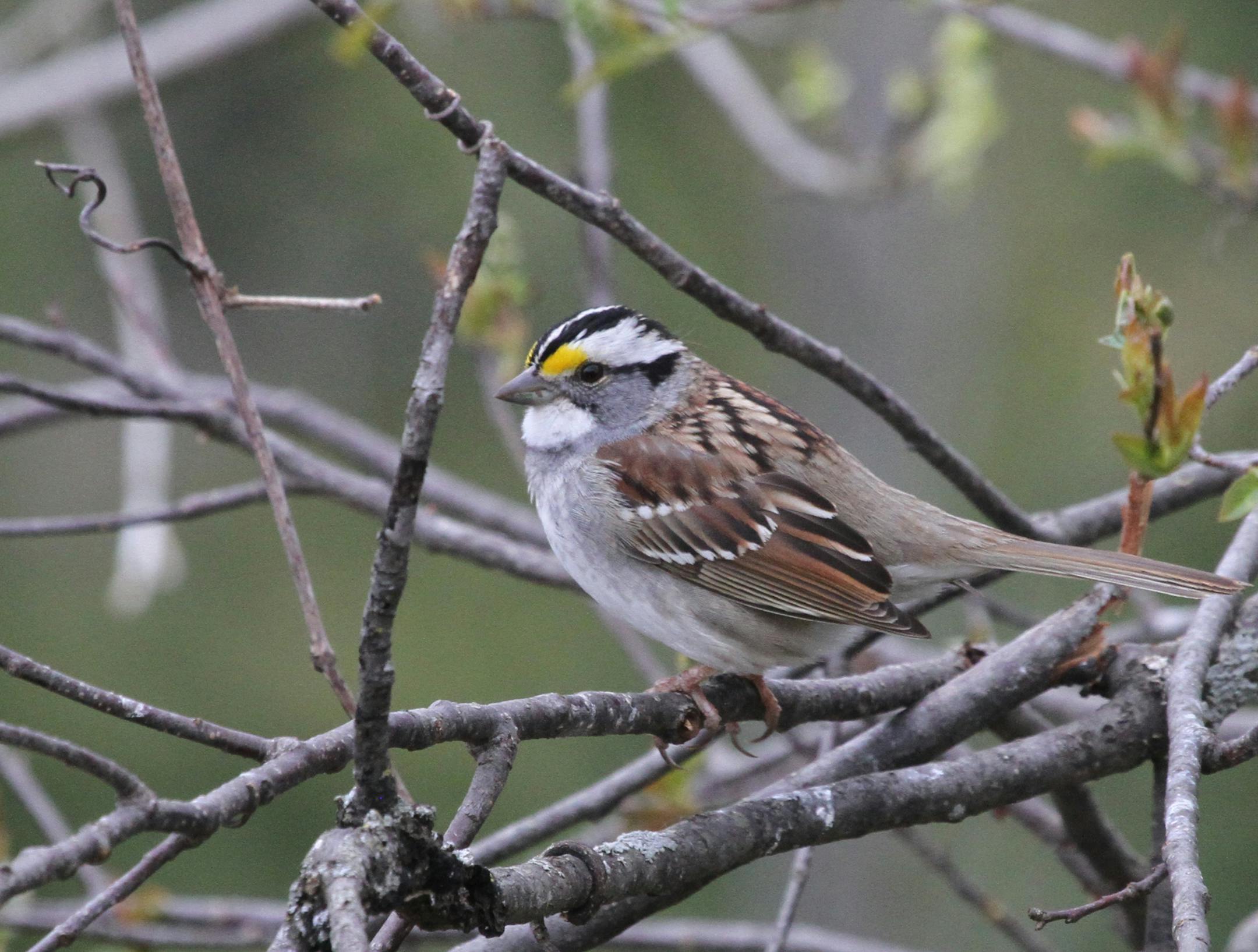
Many of our favorite birds are killed in window collisions, including ruby-throated hummingbirds, song sparrows, hermit thrushes, many kinds of warblers, cardinals, indigo buntings, black-capped chickadees and gray catbirds.
And it's not birds' fault, as some seem to think. Birds crash into windows because they simply don't perceive them. They see the landscape — trees and sky and clouds — reflected in the glass and think they can fly right through. The "sight tunnels" created when a window on one side of a structure looks across to a window on the opposite side also fool them. Birds don't realize that there's anything to stop them from flying to that other view.
Changing course?
So why don't birds just fly a different route, some ask. It's not that easy. Migratory birds speed to their northern breeding grounds each spring and back in the fall guided by an internal map and their own life experiences. And for most of the migrating birds passing through our area, that map takes them up the Mississippi River Valley, starting at the Gulf of Mexico. In the fall they fly along the river southward. This is the Mississippi Flyway, a key migratory highway for birds.
When a new hazard appears along the flyway, such as the now-under-construction Vikings stadium, birds are put at risk. Their brains are hard-wired to stick to the same route that's worked for eons, meaning thousands move along the river valley and adjacent areas each day and night during migration. In the spring, after having flown thousands of miles, migrants will be nearly at the finish line, with only a few hundred miles to go to reach their breeding grounds. But for some, the journey will be abruptly ended by a collision with glass.


