

On the outskirts of the humble county seat of Pipestone, in the southwest corner of Minnesota, lies an unusual plot of land called the Pipestone National Monument. With prairie grasses and a bubbling waterfall set amid plots of cornfields, it is a quiet place, where the rustle of bluestem in the wind acts as a back beat to a chorus of bird song.
For centuries, Plains Indians have gathered here -- not only for the natural beauty of the landscape, but for the rare rock that lies beneath the surface. Tribes, from Crow to Sioux, have quarried the soft red stone known as pipestone because it is used to carve pipes (and figurines). They still quarry today; only American Indians enrolled in a tribe recognized by the U.S. government are allowed to do so. Some believe the red stone represents their flesh or that it contains the blood of their ancestors, and that the land is a sacred place to all tribes.
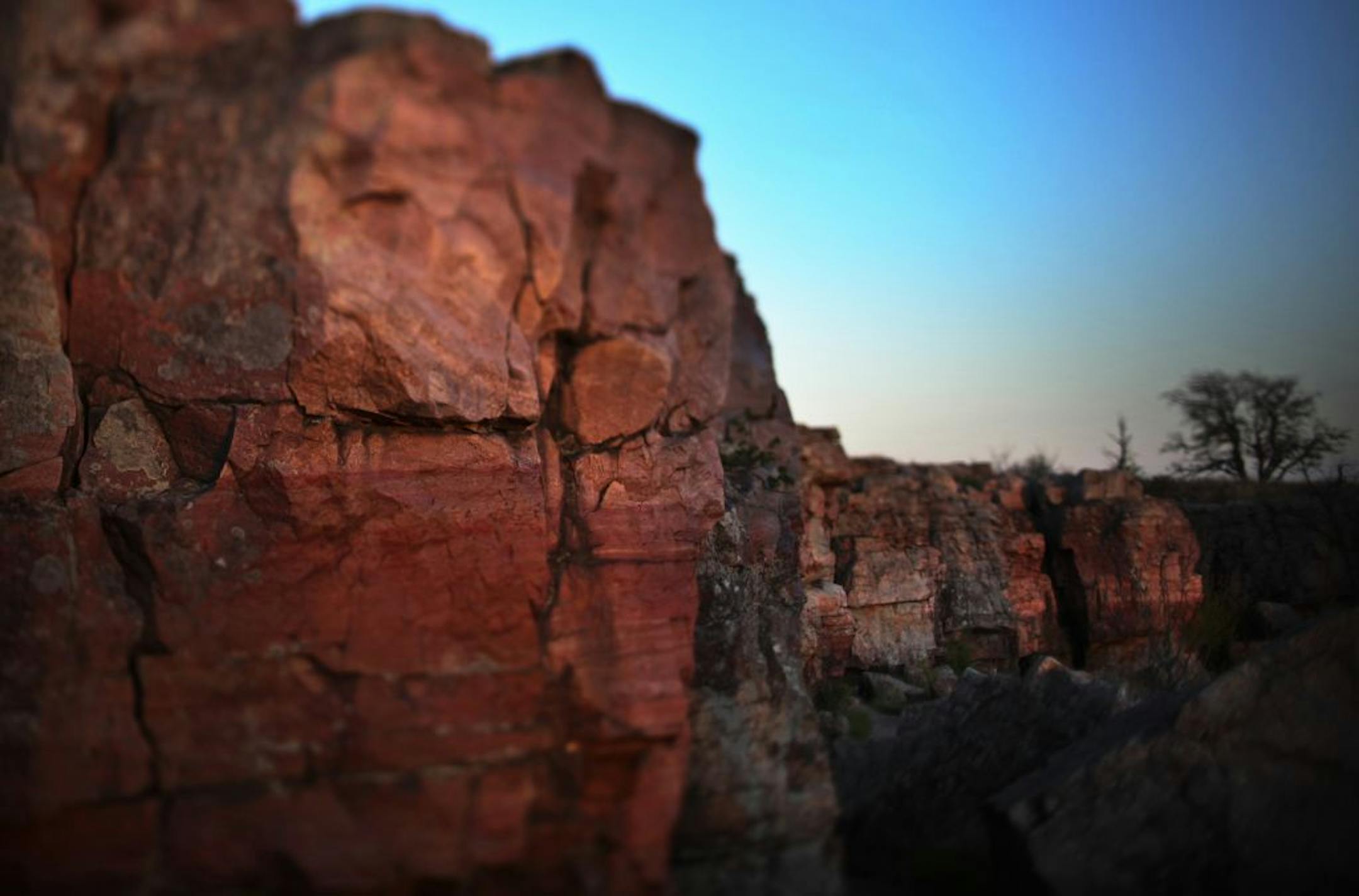
As you walk the pathways, feel the power of a waterfall (rare in these flatlands) and see the auburn-hued rock outcroppings, it's an idea that can't be dismissed.
WHY GO NOW
On Aug. 25, Pipestone National Monument will host a 75th anniversary celebration. Activities will include a carving demonstration, guided walking tours and a ceremony with traditional prayers and drum song. Historic photographs will be on display at the visitor center.
THE EXPERIENCE
During my several visits to the national monument, I have seen the painstaking work of quarrying in person only once. That is not a problem, though, because at the visitor center, I can always see "Pipestone: An Unbroken Legacy," a 22-minute film that thoughtfully and movingly lays out the history and importance of the quarries through interviews with the people who know it best, the Indians who extract the stone there. On the screen, you see a family hammering away at hard quartz to get to the pipestone beneath and, better yet, you hear what drives them to do the backbreaking work.
The visitor center also has a museum detailing the area's history, displays of some exquisite pipestone carvings from the past and a gift shop where you can pick up a wide array of goods, from books to small pipestone carved turtles to intricate beadwork necklaces. Only Indians can sell handcrafted goods at the store, and many items come with a little sheet of paper describing the person and his or her tribal connections.
The heart of the monument, though, is a -mile paved trail that winds through native tallgrass prairie, past ancient pipestone quarries and along a stream that crashes over cliffs to create Winnewissa Falls. A trail guide available at the visitor center points out areas of interest, including a rock outcropping called Old Stone Face because it looks like an Indian in profile.
DON'T MISS
Explorer Joseph Nicollet left his mark on the land, literally. When he and his expedition came to map the area in 1838, expedition member Joseph Laframboise carved his initials, plus "J.N. Nicollet" on rock. The carving is still evident today, and is among highlights noted in the trail guide.


